
Role of Affiliate Marketing in Influencer Campaigns
Influencer marketing has grown from a trendy promotional activity into a billion-dollar pillar of digital strategy. Meanwhile, affiliate marketing — once considered a side-channel for bloggers and coupon-websites — has evolved into a performance-driven ecosystem where brands only pay for real conversions.
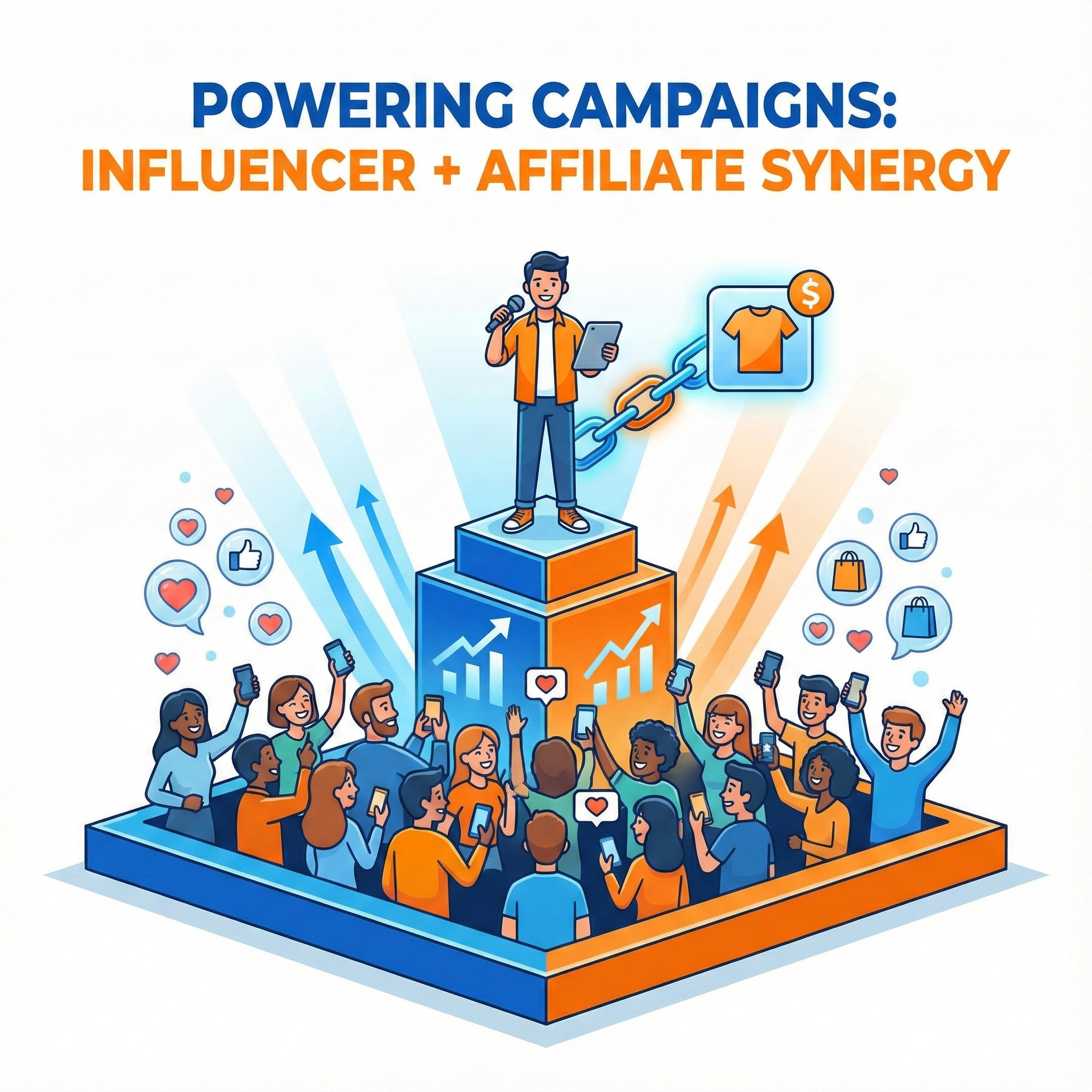
Today, when you blend these two powerhouses, you unlock one of the most profitable strategies in modern marketing: Influencer-led Affiliate Marketing Campaigns.
This article breaks down the role, structure, implementation roadmap, challenges, and future potential of how affiliate marketing strengthens influencer campaigns — supported by examples, strategies, KPIs, monetization models, and real-world applications.
1. Understanding the Foundation
What is Influencer Marketing?
Influencer marketing involves partnering with individuals who have an engaged audience on platforms like Instagram, YouTube, TikTok, LinkedIn, Twitter/X, or blogs. Influencers help brands drive awareness, credibility, and purchase decisions through content.
What is Affiliate Marketing?
Affiliate marketing is a performance-based model where a brand pays commission only when a referred customer completes a desired action (sale/lead/registration).
Where They Intersect
Influencer campaigns historically focused on reach and awareness, while affiliate marketing focused on sales and measurable ROI.
When combined:
| Influencer Marketing Provides | Affiliate Marketing Adds |
|---|---|
| Trust, storytelling, content | Performance accountability |
| Audience engagement | Sales-based payouts |
| Brand visibility | Trackable conversions |
Result = High-trust audience + measurable revenue performance
2. Why Affiliate Marketing Is Becoming the Backbone of Influencer Campaigns
Traditional influencer campaigns are expensive. Brands pay upfront and hope the campaign works. But modern businesses want ROI transparency — not vanity metrics.
Here’s how affiliate integration changes the game:
✔ Performance-over-Payments
Instead of flat fees only, influencers get paid based on results (CPS/CPA).
Brands only pay for conversions, not impressions.
✔ Scalable Without Exponential Cost
One influencer drives revenue → increase commission or onboard more creators.
You scale output, not budget.
✔ Long-Term Creator Motivation
Influencers now become revenue partners — not one-time promoters.
They continue pushing the product organically for continuous earning.
✔ Higher Authenticity
Influencers only promote products they believe will convert well.
This improves credibility compared to sponsored posts.
✔ Data Intelligence
Affiliate links track:
-
Clicks
-
Conversions
-
Revenue generated
-
AOV
-
Customer journey
With data, brands can optimize influencer content, offers, and platform strategy.
3. How Affiliate Marketing Works Inside an Influencer Campaign
Step-by-Step Workflow
-
Define campaign goals
-
Sales? Signups? App installs? Subscription renewals?
-
-
Select influencers according to niche & audience
-
Micro, macro, celebrity — mix based on goals
-
-
Create affiliate tracking system
-
Provide unique referral links, coupon codes, UTM tags
-
-
Create exciting offer for their audience
-
Discounts, free trials, limited access, exclusive bundles
-
-
Influencer promotes through content
Formats:-
YouTube review
-
Instagram reel
-
TikTok comparison
-
Blog recommendation
-
Twitter/X threads
-
Email newsletter
-
Live shopping streams
-
-
User clicks → visits brand → completes purchase
-
Influencer earns commission
-
Brand tracks performance & scales top performers
4. Types of Influencers Suitable for Affiliate Campaigns
| Influencer Tier | Followers | Best Use Case |
|---|---|---|
| Nano (1k-10k) | Highly engaged audience | Local businesses, niche products |
| Micro (10k-100k) | Tight community | High conversion potential |
| Mid-tier (100k-500k) | Balanced reach + engagement | Launches + affiliate scaling |
| Macro (500k-1M) | Huge reach | Awareness + traffic surge |
| Celebrities (1M+) | Massive influence | Brand perception + viral visibility |
For affiliate models, micro & mid-tier creators often deliver highest ROI.
5. Compensation Models in Influencer-Affiliate Campaigns
| Model | Description | Best For |
|---|---|---|
| CPS (Cost Per Sale) | Commission per sale generated | E-commerce, D2C |
| CPA (Cost Per Action) | Payment for signup/demo/lead | SaaS, finance apps |
| Hybrid Model | Base fee + commission | Big creators, high stakes |
| Rev-Share | Percentage of lifetime revenue | Subscription products |
| CPC (Cost Per Click) | Per-click payout (less common) | Traffic generation |
Example structure:
-
₹0 fixed + 10% commission per sale
-
₹15,000 base + 7% commission
-
30% recurring commission for SaaS subscription
6. Content Strategies That Work Best
Influencer + Affiliate = Content that sells
High-performing content formats:
Product review & demo
Trust trigger: seeing product in use
Before vs After transformation
Especially effective in fitness, beauty, skincare, SaaS, tools
Comparison videos
“Why this product > competitor”
Unboxing & first impressions
Creates curiosity + impulse buying
Affiliate discount CTA
“Use my code NITIN20 for 20% OFF!”
User journey storytelling
Why they chose it, results, feedback
Evergreen educational content
Blog/reel “Best tools for marketers”
Evergreen content = long-term affiliate conversions.
7. Tracking & Analytics: The Heart of Affiliate Success
Tools/Platforms:
-
Impact.com
-
Refersion
-
ShareASale
-
CJ Affiliate
-
Amazon Associates
-
Awin
-
Shopify Collabs
-
FirstPromoter (SaaS)
-
GoAffPro
Metrics to track:
| KPI | Meaning |
|---|---|
| CTR | Click-through rate on affiliate links |
| Conversion Rate | Sales converted per click |
| AOV | Average order value |
| Customer LTV | Long-term revenue |
| ROI/ROAS | Return on spend |
| Earnings Per Click (EPC) | Profitability metric |
Brands use these to:
-
Identify top-performing influencers
-
Allocate higher budget to ROI winners
-
Remove non-converting creators
-
Optimize content angles
8. Benefits for Brands & Influencers
For Brands
-
Low-risk marketing spend
-
Measurable results
-
High scalability
-
Boosts content creation at zero internal cost
-
Builds diverse revenue-driving creator network
For Influencers
-
Passive recurring income
-
More earning potential than flat sponsorship
-
Freedom to choose products they trust
-
Long-term partnership possibilities
-
Authority-building within niche
9. Real-World Examples
Amazon Associates + Influencers
Thousands of YouTubers review gadgets, books, kitchen products.
Revenue is commission-based — Amazon pays only when a sale happens.
D2C Beauty & Skincare Brands
Mamaearth, Plum, Minimalist frequently use influencer codes to track sales and reward creators.
SaaS Tools
Canva, Shopify, Notion, HubSpot run affiliate programs with high lifetime commissions.
10. Challenges & Solutions
| Challenge | How to Solve |
|---|---|
| Influencers promote products only for money | Shortlist creators who genuinely use similar products |
| Hard to track conversions accurately | Use affiliate platforms, UTM tracking, cookies |
| Low sales despite large audience | Improve CTA, offer bigger discount, change content format |
| Fraud or fake conversions | Use approval-based payout models |
| Influencer burnout | Gamify with tiers, bonuses, exclusive deals |
11. Future of Influencer-Affiliate Marketing
Trends shaping the next decade:
-
AI-driven creator selection
-
Performance-first influencer contracts
-
Live shopping + instant affiliate purchases
-
Blockchain-based transparent commission payouts
-
More niche micro-influencer programs
-
UGC + affiliate mixed campaigns
-
Influencers becoming brand partners & equity owners
The industry is shifting to pay-for-performance influencer marketing, and affiliate integration is leading the transformation.
Conclusion
Affiliate marketing is no longer just a monetization option — it has become the growth engine powering influencer campaigns. This blend of creativity and performance ensures brands get measurable ROI, while influencers generate recurring income beyond one-time sponsorships.
For businesses, integrating affiliates into influencer strategy means scaling reach + sales simultaneously.
For creators, affiliate partnerships mean financial freedom, long-term partnerships, and trust-based promotion.
In the digital era, the brands that win will be those that treat influencers not as promoters, but as revenue partners.

Author