
How to Automate SEO Tasks with AI Tools: The Complete Guide for 2026
Introduction
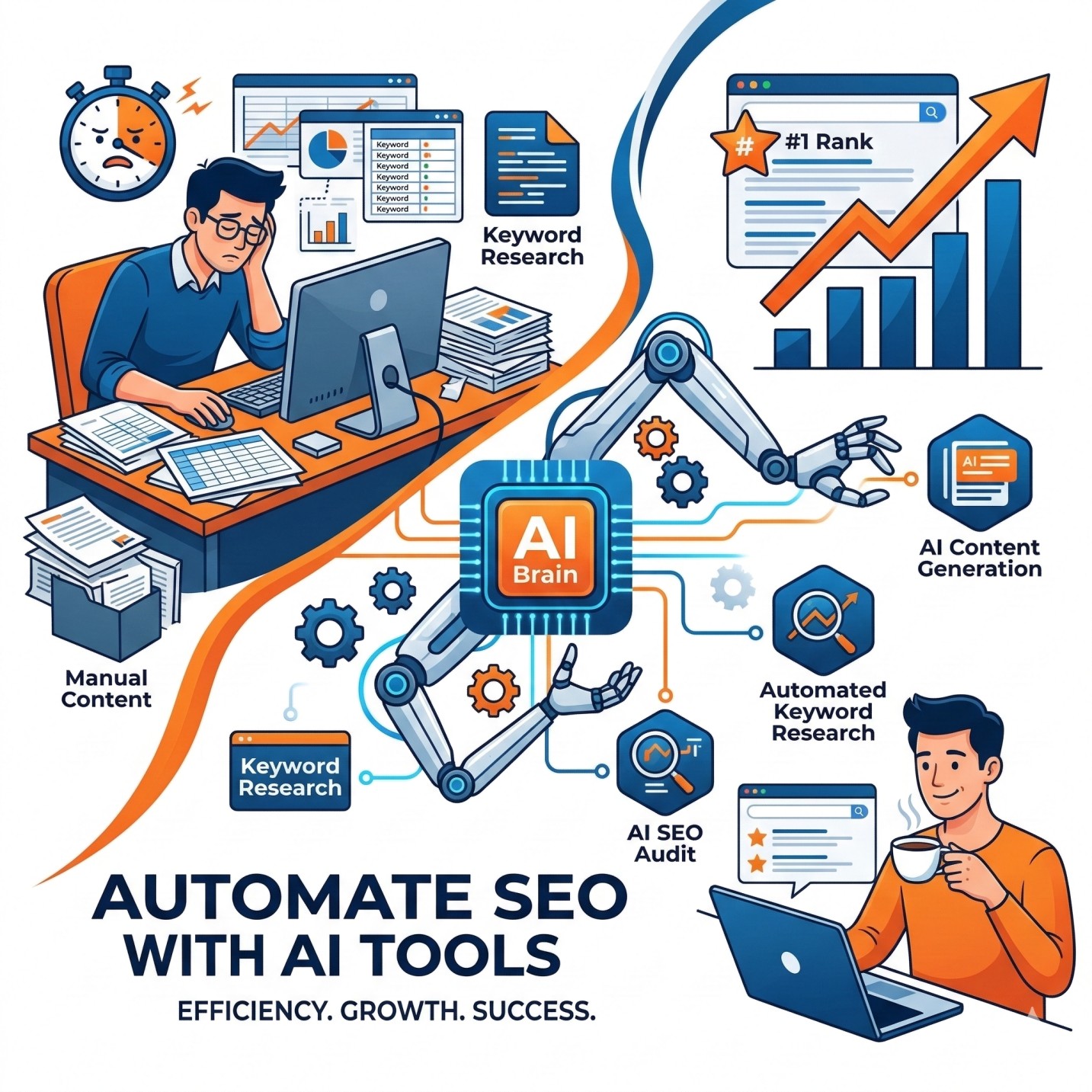
Search engine optimization has always been a labor-intensive discipline — one that demands constant keyword research, content production, technical audits, competitor analysis, link monitoring, and performance tracking. For years, even the most experienced SEO professionals spent hours each week on repetitive, data-heavy tasks that, while necessary, left little time for the creative and strategic thinking that truly moves the needle.
That reality has changed dramatically. Artificial intelligence has fundamentally reshaped what it means to “do SEO.” Modern AI tools can now draft optimized content briefs in seconds, crawl thousands of URLs for technical issues in minutes, cluster thousands of keywords by intent in a fraction of the time a human would need, and even predict which content is most likely to rank before a single word is written.
But knowing that AI can help is not the same as knowing how to deploy it strategically. This guide walks you through every major category of SEO work, the specific tasks that can be automated within each, the best tools available today, and the practical workflows that let you move fast without sacrificing quality.
1. Why AI-Powered SEO Automation Matters
Before diving into tactics, it is worth understanding what makes AI automation so uniquely powerful for SEO — and why it is no longer optional for competitive teams.
Scale Without Proportional Cost
Traditional SEO scaled linearly: more traffic required more content, more content required more writers, more writers required more editors and strategists. AI breaks that linear relationship. A lean team can now produce, optimize, and publish content at a scale that previously required dozens of people.
Speed of Iteration
Google’s algorithm is never static. What ranked six months ago may not rank today. AI-powered workflows allow teams to audit, adjust, and re-publish far more quickly, compressing the feedback loop between insight and action.
Data Processing at Depth
The modern web generates petabytes of SEO signal — search queries, click-through rates, backlink data, page speed metrics, structured data errors, competitor content gaps. No human team can process all of it meaningfully. AI can ingest, pattern-match, and surface actionable insights from data volumes that would otherwise be ignored.
Consistency and Elimination of Human Error
Manual SEO workflows are prone to inconsistency — a forgotten canonical tag here, a missing alt attribute there, inconsistent heading hierarchy across hundreds of pages. AI-driven audits and content pipelines enforce consistency at scale.
2. Automating Keyword Research
Keyword research is perhaps the task most immediately and dramatically transformed by AI. What once took days of spreadsheet work — pulling data from multiple tools, clustering by intent, mapping to pages, estimating difficulty — can now be compressed into hours or even minutes.
AI-Powered Keyword Discovery
Tools like Semrush’s Keyword Magic Tool, Ahrefs’ Keywords Explorer, and dedicated AI platforms such as Surfer SEO and Clearscope now use large language models and machine learning to:
- Generate thousands of semantically related keyword variations from a single seed
- Automatically identify long-tail opportunities with high intent and low competition
- Surface “People Also Ask” and “People Also Search For” clusters that reveal how users actually frame their queries
- Predict seasonal or trending keyword surges before they peak
Practical workflow: Feed your core topic into an AI keyword tool. Export the raw keyword list. Then use an AI clustering tool (or a custom GPT prompt) to group keywords by semantic similarity and user intent — informational, navigational, commercial, or transactional. This gives you a topic map that can drive an entire content calendar.
Intent Classification at Scale
Manually tagging 5,000 keywords by search intent is a mind-numbing task. LLMs excel at it. A simple prompt like:
“For each keyword below, classify the likely search intent as: informational, navigational, commercial investigation, or transactional. Provide one sentence of justification.”
…fed to Claude, GPT-4, or Gemini with a batch of keywords will produce intent classifications faster and often more accurately than junior SEO analysts working manually.
SERP Feature Identification
AI tools can now analyze which SERP features (featured snippets, image packs, video carousels, local packs) appear for target keywords and advise on how to optimize content to capture those features. SE Ranking, Moz Pro, and BrightEdge all offer some level of SERP feature tracking with AI-driven recommendations.
3. Automating Content Creation and Optimization
Content is the core of modern SEO, and it is also the area where AI automation has generated the most enthusiasm — and the most misuse. Done right, AI dramatically accelerates content production without sacrificing quality. Done wrong, it produces thin, undifferentiated content that never ranks.
AI-Generated Content Briefs
Before a word of content is written, an AI tool can generate a detailed brief that includes:
- Target keyword and semantic variants to include
- Ideal word count based on top-ranking competitors
- Recommended heading structure (H1, H2, H3 hierarchy)
- Questions to answer (pulled from PAA boxes and Reddit/Quora discussions)
- Competitor content gaps — topics covered by competitors that your current page misses
- Internal linking suggestions
- Recommended schema markup
Tools like Frase, MarketMuse, Clearscope, and Surfer SEO automate most of this. The result is a brief that a writer (human or AI) can follow to produce content that is structurally and semantically aligned with what Google is rewarding.
AI-Assisted Drafting
Several workflows exist for using AI to draft SEO content. The most effective is a human-AI collaboration model:
- Use AI to generate a first draft based on the content brief
- Have a subject matter expert or editor review, correct, and enrich with firsthand experience, original data, or unique perspective
- Run the draft through a content optimization tool (Surfer, Clearscope) to check semantic coverage
- Publish with schema markup automatically generated by an AI tool
This workflow can reduce content production time by 50–70% while preserving the depth and originality that search engines — and readers — reward.
Content Optimization for Existing Pages
One of the highest-ROI applications of AI in SEO is optimizing existing content rather than creating new pages. Tools like Alli AI, INK, and Content Harmony can audit your existing pages against current top-ranking results and generate specific, prioritized recommendations: add this entity, expand this section, restructure this heading, add an FAQ block here.
This is often faster and more impactful than writing new content from scratch, because existing pages already have domain authority, backlinks, and index history.
Automated Meta Tag Generation
Writing compelling, keyword-optimized title tags and meta descriptions at scale is tedious. AI tools — including custom scripts using the Claude or OpenAI APIs — can generate optimized meta tags for hundreds or thousands of pages at once. The key is prompting the model with:
- The target keyword
- The page’s core value proposition
- Character limits (typically 55–60 characters for titles, 150–160 for descriptions)
- Brand voice and tone guidelines
The output can be reviewed in a spreadsheet and pushed to your CMS in bulk, saving hours of manual work.
4. Automating Technical SEO Audits
Technical SEO — the discipline of ensuring that search engines can efficiently crawl, index, and render your website — involves a vast checklist of potential issues. AI doesn’t just check boxes; it prioritizes findings, explains their impact, and suggests fixes.
Intelligent Site Crawling
Traditional crawlers like Screaming Frog or Sitebulb produce enormous spreadsheets of issues. Modern AI-enhanced platforms go further:
- DeepCrawl (Lumar) and BotifyAnalytics use machine learning to prioritize which technical issues are most likely to affect rankings and traffic, rather than treating all errors as equally urgent
- Google Search Console Insights applies AI to surface anomalies in crawl data, indexing, and Core Web Vitals
- Alli AI can automatically generate and deploy fixes for common on-page issues directly to your CMS
Key areas where AI audit automation shines:
- Crawlability issues: Identifying misconfigured robots.txt rules, redirect chains, and orphaned pages
- Indexing problems: Flagging pages blocked by noindex tags incorrectly, duplicate content issues, or pages not appearing in Google’s index despite being submitted
- Core Web Vitals: Diagnosing LCP, CLS, and INP issues with root cause analysis (not just metrics)
- Structured data: Validating schema markup and identifying markup errors or missing opportunities
- Hreflang errors: Detecting broken or inconsistent hreflang implementations for international sites
- Canonical tag issues: Finding self-referencing canonical errors, canonical chains, or pages where the canonical points to an undesirable URL
Log File Analysis
Server log files contain raw data about how Googlebot actually crawls your site — but they are large, unwieldy, and difficult to analyze manually. AI-powered log analysis tools (including Botify and Screaming Frog’s log analyzer) can process millions of log entries and surface insights like:
- Which high-priority pages Googlebot is visiting less frequently than expected
- Which sections of the site are wasting crawl budget on thin or low-value pages
- Whether crawl frequency correlates with ranking changes
Automated Fix Deployment
Some platforms can now move beyond identifying issues to actually deploying fixes. Alli AI, for instance, can push title tag changes, alt text additions, and schema markup updates directly to a connected CMS without requiring developer involvement. This dramatically reduces the time between audit and remediation.
5. Automating Competitor Analysis
Understanding what your competitors are doing — and identifying gaps you can exploit — is a continuous, resource-intensive process. AI makes it scalable.
Content Gap Analysis
AI-powered tools can compare your content coverage against multiple competitors simultaneously and identify:
- Topics your competitors rank for that you do not cover at all
- Topics where competitors rank highly but you rank on page 2 or 3 (opportunity pages)
- Topics where you rank but competitors are gaining momentum (defense priorities)
Semrush’s Keyword Gap tool and Ahrefs’ Content Gap feature both automate much of this analysis. For deeper customization, you can feed competitor URLs and your own into an LLM and ask it to identify thematic differences.
Competitor Content Monitoring
AI-powered change detection tools can monitor competitor websites for content updates, new page launches, pricing changes, or structural shifts. Platforms like SimilarWeb, Visualping, and Competitor.io offer various levels of this monitoring. When a competitor publishes new content targeting your key terms, you want to know immediately — not three weeks later.
Backlink Gap Analysis
Identifying sites that link to multiple competitors but not to you is a classic link-building tactic. AI tools can now process thousands of backlink profiles simultaneously and surface the highest-priority link prospects. Ahrefs’ Link Intersect and Semrush’s Backlink Gap tool automate this analysis in minutes.
6. Automating Link Building
Link building remains one of the most time-consuming and difficult aspects of SEO. While AI cannot fully automate relationship-building (nor should it — authentic outreach still converts better), it can eliminate enormous amounts of the manual labor involved.
Prospect Research and Qualification
Finding relevant, high-authority sites to pitch requires sifting through thousands of potential targets. AI tools can:
- Score prospects by domain authority, topical relevance, and likelihood of response
- Identify the right contact person and email address using tools like Hunter.io combined with LinkedIn AI features
- Assess whether a site’s backlink profile suggests it is a link farm or part of a private blog network (PBN) — patterns that could actually hurt your SEO
Personalized Outreach at Scale
One of the biggest advances in AI-assisted link building is the ability to generate personalized outreach emails at scale. Rather than sending identical templates that get ignored, tools like Pitchbox, BuzzStream, and custom GPT integrations can:
- Read the target page and identify a specific angle for your pitch
- Reference recent content the prospect published
- Tailor the value proposition based on the type of site (e.g., blogger vs. journalist vs. brand)
The key is using AI to personalize at scale — not to send spam at scale. Quality outreach that references something specific about the recipient consistently outperforms generic mass emails.
Broken Link Building Automation
The broken link building tactic — finding dead links on high-authority pages and suggesting your content as a replacement — has long been effective but tedious to execute. Tools like Ahrefs’ Broken Link Checker and Semrush can identify broken link opportunities automatically. AI can then draft the outreach email for each opportunity.
HARO and Digital PR Automation
Platforms like Help a Reporter Out (HARO) and Connectively connect journalists with sources. Monitoring these platforms for relevant queries and drafting rapid, high-quality responses used to require constant attention. AI tools can now monitor incoming queries, flag relevant ones, and draft response pitches that align with your expertise and include natural opportunities to mention your brand or earn a link.
7. Automating Local SEO
For businesses that rely on local search — restaurants, service businesses, healthcare providers, retail stores — AI has brought significant automation capabilities.
Google Business Profile Optimization
Keeping Google Business Profile (GBP) listings accurate, complete, and active is essential for local rankings. AI tools can:
- Audit GBP completeness across multiple locations simultaneously
- Generate and schedule regular GBP posts
- Monitor and flag incorrect information in third-party local directories
- Suggest categories, attributes, and services based on competitor profiles
BrightLocal, Whitespark, and Yext all offer AI-assisted features for managing local listings at scale, particularly valuable for multi-location businesses.
Review Monitoring and Response
Online reviews are a significant local ranking factor, and responding to them promptly signals active engagement to Google. AI tools can:
- Monitor review platforms (Google, Yelp, TripAdvisor, industry-specific sites) in real time
- Classify reviews by sentiment and topic
- Draft personalized, brand-appropriate responses for human approval
- Identify recurring themes in negative reviews that indicate operational issues to address
Tools like Podium, Birdeye, and Reputation.com offer varying levels of AI-powered review management.
Local Citation Building and Cleanup
Inconsistent NAP (Name, Address, Phone) data across local directories undermines local rankings. AI tools can audit hundreds of citation sources simultaneously, identify inconsistencies, and in many cases push corrections automatically through partnerships with data aggregators.
8. Automating SEO Reporting and Analytics
Data without insight is noise. AI transforms SEO reporting from a backward-looking documentation exercise into a forward-looking decision-support tool.
Automated Anomaly Detection
Rather than waiting for your weekly or monthly report to notice that organic traffic dropped 20%, AI-powered monitoring tools alert you immediately when something unusual occurs. Google Analytics 4’s built-in intelligence features, along with third-party tools like Semrush’s Position Tracking and AccuRanker, can surface anomalies and provide preliminary explanations — “Traffic to your blog section dropped; this correlates with a 15-position ranking drop for 8 high-traffic keywords beginning on March 3.”
Natural Language Report Generation
One of the most time-consuming parts of an SEO manager’s job is turning data into narratives for stakeholders who do not speak SEO. Tools like Looker Studio with AI-generated summaries, or custom integrations using LLM APIs, can automatically generate plain-language summaries of performance data: what changed, why it likely changed, and what actions are recommended.
Automated Rank Tracking and Alerting
Tracking hundreds or thousands of keywords across multiple devices, locations, and search engines is essential but tedious. Platforms like STAT Search Analytics, AccuRanker, and Nightwatch automate rank tracking and can send automated alerts when keywords cross certain rank thresholds — for example, alerting you when a previously top-5 keyword drops off the first page, or when a page-2 keyword moves up to a position where a targeted push could get it to page 1.
Traffic Attribution Modeling
Understanding which SEO activities drove which traffic outcomes is notoriously difficult. AI-powered attribution models (available in platforms like Rockerbox, Triple Whale, and increasingly in GA4) can provide more nuanced answers than last-click attribution, helping teams understand the compound effect of their content, link-building, and technical work.
9. Automating Schema Markup and Structured Data
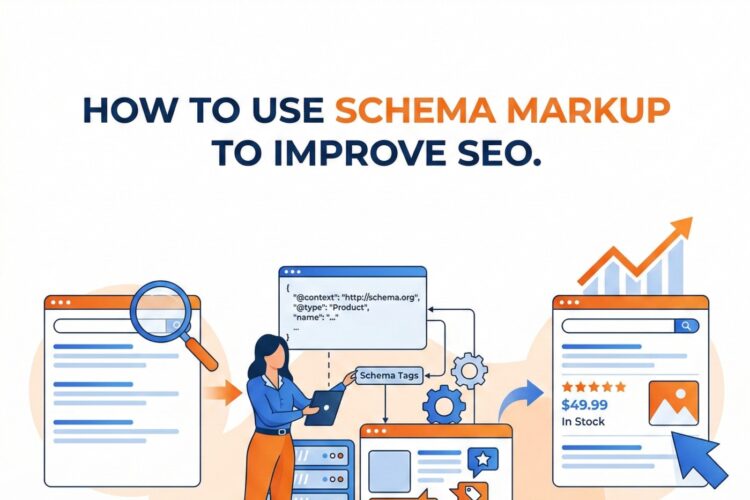
Structured data helps search engines understand the context of your content and can unlock rich results — star ratings, FAQs, how-to steps, product prices — that dramatically increase click-through rates.
AI-Generated Schema Markup
Writing valid JSON-LD schema markup manually is error-prone and time-consuming. AI tools can:
- Analyze a page and suggest the most appropriate schema type(s) (Article, Product, FAQ, HowTo, Recipe, LocalBusiness, etc.)
- Generate syntactically correct JSON-LD code that can be pasted into the page or injected via tag manager
- Validate the output against Google’s structured data guidelines
Tools like Schema App, Merkle’s Schema Markup Generator, and custom Claude/GPT prompts can all generate schema markup efficiently.
Dynamic Schema at Scale
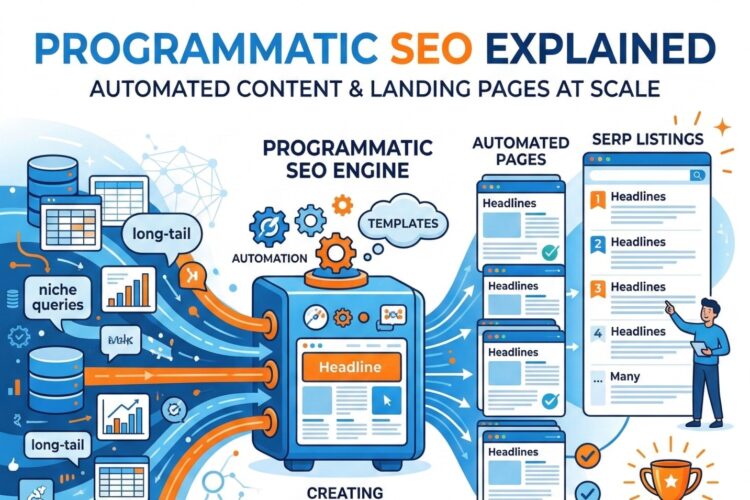
For e-commerce sites with thousands of product pages, or news sites with thousands of articles, manually managing schema markup is not realistic. AI-powered systems can dynamically generate and inject schema markup based on page templates and database fields — ensuring that every product page has up-to-date price, availability, and review data in its markup.
10. AI Tools Landscape: What to Use and When
With hundreds of tools claiming AI capabilities, it helps to have a clear map of the landscape.
All-in-One SEO Platforms with AI Features
- Semrush — keyword research, competitor analysis, content optimization, site audit, link building
- Ahrefs — backlink analysis, keyword research, content gap, rank tracking
- Moz Pro — domain authority metrics, keyword research, rank tracking, site audit
- SE Ranking — end-to-end SEO platform with AI content tools
Dedicated AI Content Tools
- Surfer SEO — content briefs, content editor, SERP analysis
- Clearscope — content grading and keyword optimization
- MarketMuse — content planning, briefs, and page optimization
- Frase — research, brief creation, and content drafting
Technical SEO and Crawling
- Screaming Frog — site crawling with integrations to GA4, Search Console, and PageSpeed
- Sitebulb — visual crawl reporting with prioritized issue lists
- Lumar (DeepCrawl) — enterprise technical auditing with AI prioritization
- Botify — enterprise crawl and log analysis with machine learning insights
Link Building
- Pitchbox — outreach automation with AI personalization
- BuzzStream — link prospecting and outreach management
- Hunter.io — email discovery for link prospects
Local SEO
- BrightLocal — local audit, citation tracking, and GBP management
- Yext — enterprise local listings management
- Birdeye — review monitoring and response
Reporting and Analytics
- Looker Studio — custom dashboards with GA4 and Search Console integration
- STAT Search Analytics — enterprise rank tracking at scale
- AccuRanker — fast rank tracking with AI-powered SERP feature tracking
General-Purpose LLMs for Custom SEO Workflows
- Claude (Anthropic) — content briefs, keyword clustering, meta tag generation, schema markup, analysis
- GPT-4 / ChatGPT — similar use cases, with Custom GPTs for SEO-specific workflows
- Gemini — integration with Google Workspace and Search Console for SEO workflows
11. Building an AI-Powered SEO Workflow
Having individual tools is not enough. The real leverage comes from connecting them into coherent workflows that minimize human touchpoints for routine tasks while preserving human judgment for strategic decisions.
Sample Weekly SEO Workflow
Monday — Monitoring & Triage (Mostly Automated)
- Automated rank tracking report delivered to inbox (AccuRanker / STAT)
- AI anomaly alerts reviewed from GA4 and Search Console
- Competitor monitoring alerts reviewed (new content, ranking changes)
- Review monitoring alerts triaged; AI-drafted responses approved and published
Tuesday — Content Production
- AI-generated content briefs reviewed and approved
- Writers (human or AI-assisted) producing content against briefs
- Completed drafts run through Surfer/Clearscope for optimization scoring
- AI-generated meta tags reviewed and staged for publication
Wednesday — Technical SEO
- Automated weekly site crawl report reviewed (Screaming Frog / Lumar)
- Prioritized technical issues reviewed; fixes assigned or auto-deployed
- Core Web Vitals dashboard reviewed for regressions
- Structured data validation report reviewed
Thursday — Link Building
- AI-qualified link prospects reviewed and approved for outreach
- Personalized outreach emails reviewed, adjusted if necessary, and sent
- HARO / digital PR opportunities reviewed; AI-drafted responses finalized
Friday — Strategy and Reporting
- AI-generated weekly performance summary reviewed
- Keyword opportunity list updated based on ranking movements
- Content calendar updated with new AI-identified opportunities
- Stakeholder report finalized (AI draft + human narrative)
12. What AI Cannot (and Should Not) Automate
For all its power, AI-driven SEO automation has real limits. Understanding them prevents costly mistakes.
Strategic Judgment
AI can surface data, but deciding which opportunities to pursue requires business context that tools do not have. Which traffic is actually worth chasing? Which audiences convert? What is the brand’s long-term positioning? These are human decisions.
Genuine Expertise and Experience
Google’s Helpful Content guidelines and E-E-A-T (Experience, Expertise, Authoritativeness, Trustworthiness) framework explicitly reward content that demonstrates first-hand experience and deep expertise. AI cannot fake having diagnosed 10,000 patients, managed a $50M ad budget, or spent 20 years perfecting a recipe. Human expertise, woven into AI-assisted content, is what separates rankable content from forgettable filler.
Relationship-Based Link Acquisition
The most powerful links — from top-tier publications, from genuine partnerships, from industry thought leaders — come from relationships that require authentic human interaction. AI can assist the process, but it cannot replace the trust that drives real editorial coverage.
Brand Voice and Creative Differentiation
AI-generated content, when used without careful oversight, tends toward blandness. The tonal consistency, creative voice, and brand personality that make content memorable and shareable require human creative direction. AI is an accelerant, not a replacement.
Ethical Oversight
AI tools can optimize for ranking signals in ways that technically comply with guidelines but undermine user trust or produce misleading content. Human editorial oversight is essential to ensure that automated content workflows produce material that is accurate, fair, and genuinely helpful.
13. Getting Started: A Practical Action Plan
If you are new to AI-powered SEO automation, here is a phased approach to building your capabilities without overwhelming your team.
Phase 1: Quick Wins (Weeks 1–4)
- Set up rank tracking with automated weekly alerts
- Implement AI-assisted meta tag generation for your top 50 underperforming pages
- Use an LLM to cluster your existing keyword research and identify your top 10 content gaps
- Set up Google Search Console and GA4 with AI-generated anomaly alerts
Phase 2: Content Workflow (Months 2–3)
- Select and implement a content optimization tool (Surfer, Clearscope, or MarketMuse)
- Build a content brief template driven by AI research
- Establish a human-AI co-authoring workflow for new content
- Automate schema markup generation for your primary content types
Phase 3: Technical and Link Building (Months 3–6)
- Implement automated monthly site crawl and triage workflow
- Set up competitor monitoring for your top 5 competitors
- Test AI-assisted outreach for link building and measure response rates
- Build a local SEO monitoring dashboard if applicable
Phase 4: Integration and Scaling (Months 6–12)
- Connect tools through APIs or platforms like Zapier or Make to reduce manual data transfer
- Develop custom LLM prompts tailored to your specific content categories and brand voice
- Build automated reporting dashboards for stakeholders
- Train your team on AI-assisted workflows and establish editorial quality standards
Conclusion
AI-powered SEO automation is not about replacing SEO professionals — it is about radically expanding what a skilled SEO professional or team can accomplish. The practitioners who will dominate search in 2026 and beyond are those who combine deep SEO knowledge with the ability to deploy AI tools strategically, build efficient workflows, and maintain the human judgment and creative quality that no tool can replicate.
The tools available today are already extraordinary. Keyword research that once took a week can be done in hours. Content briefs that once required senior strategist time can be generated in minutes. Technical audits that once required expensive agencies can be automated and scheduled. Link prospects that once required manual research can be surfaced and scored automatically.
The investment required to build these workflows is modest relative to the compounding returns they generate. Start with the highest-impact, lowest-friction automations — rank tracking, meta tag optimization, content gap analysis — and build systematically from there.
The teams that treat AI as a complement to their expertise, rather than a substitute for it, will produce more content, earn more links, fix more technical issues, and ultimately drive more organic growth than was previously possible for any team of their size.
SEO has always rewarded those who work smarter. AI makes working smarter more accessible than ever.

Author