

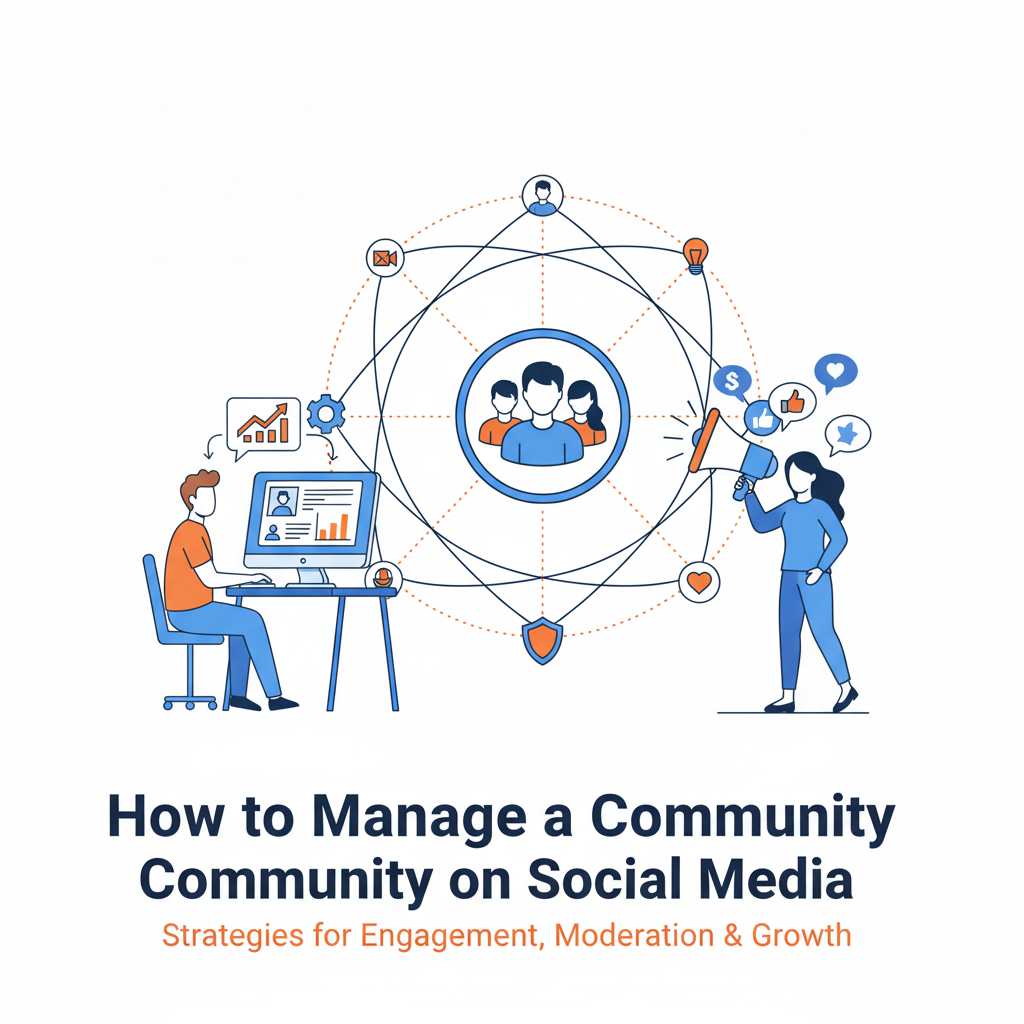
How to Manage a Community on Social Media
1. Introduction: The Power of Community in the Digital Era
In the world of digital marketing, building a social media community is one of the most powerful ways to create loyal audiences, strengthen brand trust, and drive long-term business growth.
Unlike followers who passively consume content, a community actively participates — engaging with your posts, sharing ideas, providing feedback, and even advocating for your brand.
But here’s the truth: managing a community isn’t about chasing numbers — it’s about nurturing relationships and creating belonging.
In this detailed guide, you’ll learn how to build, manage, and sustain an active social media community — step-by-step.
2. What Is a Social Media Community?
A social media community is a group of people gathered around a shared interest, goal, or value on a social platform — often centered around a brand, industry, or cause.
It’s not just about having followers or likes. A true community is built when:
Members interact with each other, not just with the brand.
Discussions, collaborations, and feedback loops thrive.
There’s a sense of mutual value and trust.
Examples of Social Media Communities
Nike Run Club (Facebook, Strava): Encourages fitness tracking and motivation.
Notion Creators Group: Where Notion users share templates and productivity tips.
Glossier’s Beauty Community: Customers discuss skincare routines and product reviews.
Reddit’s r/SEO or r/Entrepreneur: Peer-led communities around expertise.
3. Why Community Management Matters
Community management is the backbone of brand engagement on social media.
Here’s why it’s critical:
3.1 Builds Brand Loyalty
Engaging meaningfully with members fosters emotional connection. When people feel heard, they stay loyal.
3.2 Drives Organic Growth
A happy community shares your brand, recommends it, and defends it online — turning members into unpaid ambassadors.
3.3 Provides Real-Time Feedback
You get instant insights into customer opinions, pain points, and product suggestions — helping improve offerings.
3.4 Boosts Retention and Lifetime Value
Brands with strong communities retain customers 2x longer and see higher Customer Lifetime Value (CLV).
3.5 Enhances Customer Support
Active communities often self-help — members answer each other’s queries, reducing pressure on support teams.
4. The Community Management Framework
To manage a social media community effectively, you need a clear, replicable framework.
Here’s a proven 7-step approach:
Step 1: Define Your Community’s Purpose
Before you build or manage a community, answer:
Why does it exist? (Support, education, inspiration, networking?)
What value will members get from joining?
How does it align with your brand’s mission?
A clear purpose ensures every post, event, and conversation has direction.
Example Purposes
A SaaS brand: “Helping users get the most out of our software.”
A fitness coach: “Motivating people to stay consistent with workouts.”
A fashion brand: “Empowering customers to express confidence through style.”
Step 2: Choose the Right Platforms
Every community thrives differently based on the platform’s ecosystem.
| Platform | Best For | Example Use |
|---|---|---|
| Facebook Groups | Long discussions, polls, mentorships | Hobbyist or brand communities |
| Visual storytelling, quick engagement | Fashion, beauty, lifestyle brands | |
| B2B networking, thought leadership | Professional and niche industry groups | |
| X (Twitter) | Fast-paced updates, trending topics | Tech, news, media |
| Discord | Real-time chats, subgroups, bots | Gaming, startups, crypto, creator brands |
| In-depth topic-based discussions | Product enthusiasts, niche interests | |
| Telegram / WhatsApp | Private, exclusive updates | VIP or membership-based groups |
👉 Tip: You don’t need to be everywhere. Focus on 1–2 platforms where your audience already interacts most.
Step 3: Establish Community Guidelines
Community guidelines are essential to maintain a healthy, respectful environment.
Core Elements of Good Guidelines:
Tone & values: Define what the community stands for.
Acceptable behavior: What is and isn’t allowed.
Content rules: What type of posts can be shared.
Consequences: What happens when rules are broken.
Example (Short Version):
Be kind, stay respectful, no spam, no self-promotion without permission, keep discussions on-topic.
This clarity keeps discussions positive and reduces conflict.
Step 4: Create a Content & Engagement Plan
Once the foundation is set, focus on consistent, interactive, and member-driven content.
Types of Content That Foster Engagement
Welcome Posts: Introduce new members weekly.
Polls & Questions: Invite opinions to increase participation.
User-Generated Content (UGC): Highlight community contributions.
Challenges & Contests: Encourage creativity and fun.
Behind-the-Scenes Stories: Humanize the brand.
Live Q&A or AMA Sessions: Enable real-time connection.
Educational Posts: Tutorials, tips, and resources.
Celebrations: Member milestones, anniversaries, or achievements.
Posting Frequency:
Small to mid-sized community: 3–4 posts per week.
Large community: 1–2 high-quality posts daily.
Engagement Tip:
Respond to every comment or tag within 12–24 hours. Engagement fuels visibility and trust.
Step 5: Build Relationships, Not Just Followers
Community management isn’t about managing numbers — it’s about nurturing authentic relationships.
Strategies for Relationship Building
Personalize interactions: Use member names when replying.
Show empathy: Address pain points genuinely.
Encourage peer conversations: Step back and let members help each other.
Reward loyalty: Highlight top contributors.
Use DMs wisely: For private thank-yous or conflict resolution.
Golden Rule:
Make members feel like co-creators, not just an audience.
Step 6: Monitor, Moderate, and Maintain
A well-managed community requires constant observation and moderation.
Monitoring Tasks:
Approve or decline new members (if private group)
Track ongoing conversations
Identify spam or toxic behavior
Address conflicts early
Respond to member feedback
Ensure posts align with guidelines
Tools to Help:
Meta Business Suite (for Facebook/Instagram)
Sprout Social or Hootsuite
Discord Bots (for moderation and automation)
Brandwatch or Mention (for sentiment analysis)
Automation helps, but human judgment is irreplaceable for empathy and authenticity.
Step 7: Measure Community Performance
You can’t improve what you don’t measure.
Define KPIs (Key Performance Indicators) that align with your goals.
Common Community KPIs:
| Objective | KPI |
|---|---|
| Engagement | Comments, shares, likes, reactions |
| Growth | New members, follower growth rate |
| Retention | Active members vs inactive ones |
| Advocacy | Number of brand mentions or referrals |
| Customer Support | Questions resolved via community |
| Sentiment | Positive vs negative mentions |
Example Tools for Analytics:
Facebook Group Insights
Twitter/X Analytics
Instagram Insights
Discord Analytics Bots
Sprinklr or Sprout Social
Track monthly metrics and adjust strategy accordingly.
5. How to Handle Challenges in Community Management
Managing a social community can be rewarding, but not without challenges.
5.1 Handling Negative Comments or Trolls
Stay calm and avoid public arguments.
Respond politely once; if toxic, block or report.
If valid criticism, acknowledge and take feedback seriously.
5.2 Managing Conflicts Between Members
Intervene early before it escalates.
Move heated discussions to DMs.
Reinforce community rules neutrally.
5.3 Dealing with Low Engagement
Reassess your content mix (is it too brand-focused?).
Run surveys or polls to ask what members want.
Highlight user-generated posts — they spark conversation.
Post at optimal engagement times (use analytics).
5.4 Handling Spam or Self-Promotion
Use keyword alerts or auto-moderation tools.
Set limits for promotional posts.
Encourage genuine contributions instead.
6. Advanced Strategies for Scaling Community Management
Once your community grows, managing it manually becomes difficult.
Here’s how to scale without losing authenticity:
6.1 Empower Community Moderators
Recruit active, trusted members as volunteer moderators.
Train them on:
Tone and communication style
Conflict resolution
Rule enforcement
Escalation procedures
Recognition and small perks (freebies, early access, etc.) keep them motivated.
6.2 Create Subgroups or Channels
For large or diverse communities, segment by interest or region.
Examples:
A travel brand: “Solo Travelers,” “Couples,” “Adventure Seekers.”
A software brand: “Beginners,” “Advanced Users,” “Developers.”
This increases relevance and engagement for each subgroup.
6.3 Host Virtual Events and Live Sessions
Live interaction creates stronger emotional bonds.
Examples:
Webinars or workshops
AMA (Ask Me Anything) sessions
Product demos
Community appreciation livestreams
Record and repurpose highlights as social content later.
6.4 Encourage User-Generated Content (UGC)
Reward members for creating content:
Feature them on brand pages
Offer shoutouts or rewards
Run UGC contests (e.g., best product photo, best hack)
UGC builds credibility and strengthens community ownership.
6.5 Introduce Gamification
Gamification makes engagement fun and sticky.
Ideas:
Badges for top contributors
“Member of the Month” highlights
Point systems for activity
Leaderboards and challenges
Tools like Discord bots or Facebook badges can automate this.
7. The Role of Community Managers
A community manager is both a marketer and a relationship builder.
Key Responsibilities:
Moderation – Keep the group safe, respectful, and spam-free.
Engagement – Start conversations and reply to comments.
Listening – Track sentiment, feedback, and member concerns.
Content creation – Curate and post valuable content.
Analytics – Measure engagement and growth.
Advocacy building – Turn active members into brand ambassadors.
Essential Skills for Community Managers:
Empathy and communication
Conflict resolution
Social media analytics
Content planning
Time management
Creative thinking
A great community manager can turn a casual audience into a movement.
8. Measuring the ROI of Community Management
Yes, communities can be measured in terms of ROI — both tangible and intangible.
Tangible ROI
Increased customer retention and repeat purchase rate
Higher engagement and organic reach
Reduced customer service costs
Sales generated through community referrals
Intangible ROI
Brand loyalty and trust
Improved product development via feedback
Positive word-of-mouth and advocacy
Higher lifetime value (LTV)
Use tracking links, referral codes, and surveys to quantify impact.
9. Case Studies: Brands with Strong Communities
1. LEGO Ideas
Lego’s community allows fans to submit and vote on new product ideas. Winning designs become real sets — turning fans into creators.
Lesson: Empower community contribution to strengthen engagement.
2. Glossier
Built a brand by listening to customers in online forums before launching products. Their community literally shapes product development.
Lesson: Let your audience co-create with you.
3. Notion
Notion’s global ambassador program created a network of creators who share templates and tutorials.
Lesson: Use ambassadors and micro-influencers to scale authentic community growth.
4. Duolingo
Gamified learning, community events, and relatable social humor made Duolingo one of the most engaged social brands.
Lesson: Use humor, gamification, and relatable content to keep your community active.
10. The Future of Social Media Community Management (2025 & Beyond)
Community management is evolving rapidly. Here’s what’s shaping the future:
AI-Powered Moderation: Tools that detect spam or sentiment automatically.
Private Membership Models: Exclusive, paid online communities (like Patreon or Discord).
Decentralized Communities: Blockchain-based, owned by members.
Social Listening AI: Predictive tools analyzing emotion and intent.
Integration with CRM Systems: Connecting social data to customer profiles.
The future community manager will blend human empathy with tech-driven insight.
11. Key Takeaways
A social media community thrives on connection, purpose, and engagement.
Define clear guidelines and maintain consistency in voice and values.
Focus on relationships, not reach.
Measure growth, engagement, and sentiment — not just likes.
Scale with structure, empower moderators, and use data smartly.
Communities are long-term assets that compound in value over time.
12. Final Thoughts
Managing a social media community is not a campaign — it’s a commitment.
It requires patience, consistency, and genuine care for your members.
When done right, your community becomes your most powerful marketing channel — driving organic growth, brand advocacy, and trust that no advertisement can buy.

Author