
Cold Traffic Campaigns: Awareness and Lead Capture
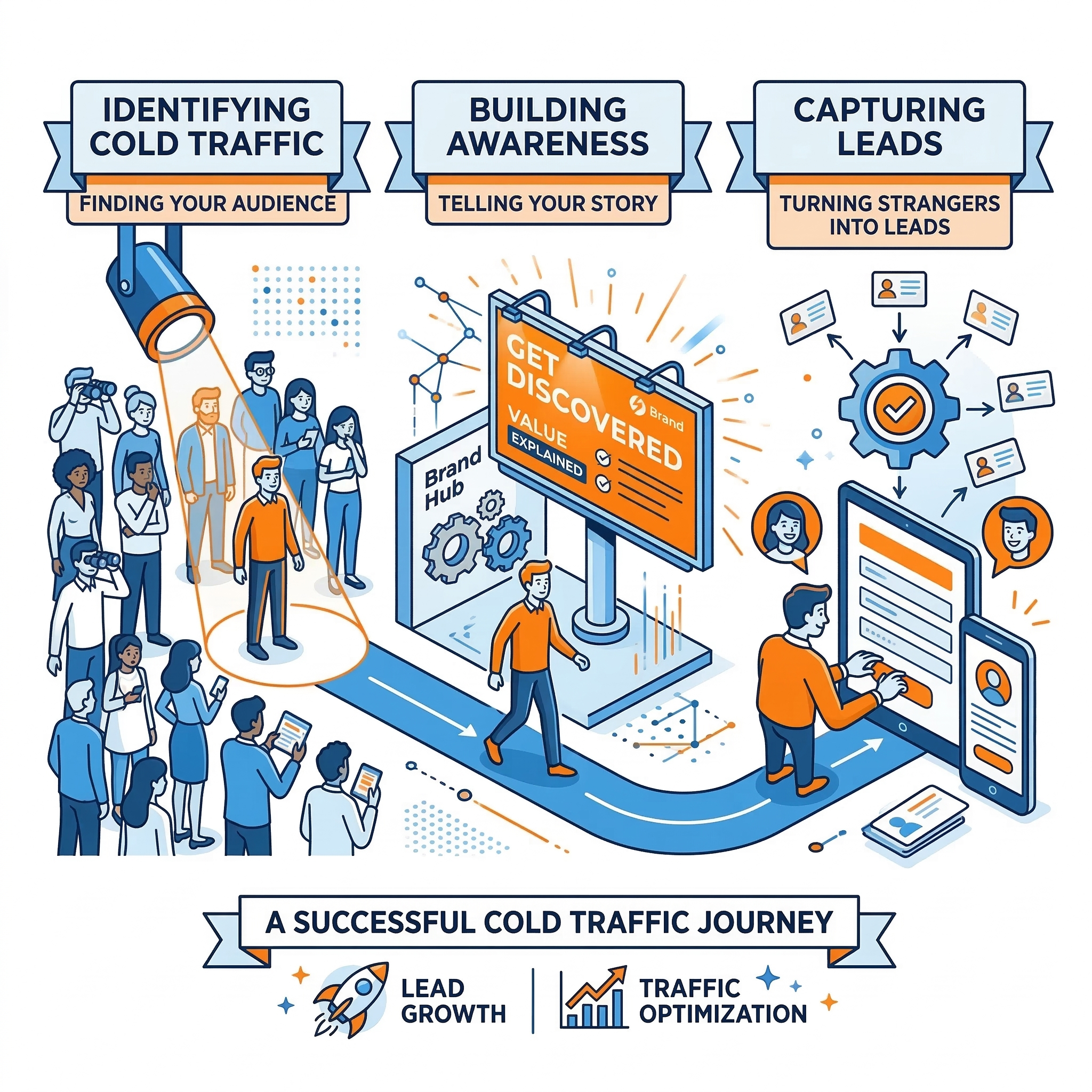
Cold traffic campaigns are one of the most important strategies in modern digital marketing. Many businesses fail in paid advertising not because the platform is ineffective, but because they try to sell immediately to people who have never heard of their brand before. Cold audiences are unfamiliar with your business, so the primary goal is not immediate sales, but building awareness and capturing leads.
Cold traffic campaigns are designed to introduce your brand to new audiences, educate them about your value, and gradually move them into your marketing funnel. When done correctly, these campaigns create a steady pipeline of potential customers who can later be converted through retargeting and nurturing strategies.
This article explains cold traffic campaigns in detail, including their importance, strategies, campaign structure, creative approach, and lead capture methods.
Understanding Cold Traffic in Digital Marketing
Cold traffic refers to people who have no prior interaction with your brand, website, or marketing channels. These individuals do not know who you are, what you offer, or why they should trust your business.
Cold audiences typically come from:
Paid advertisements on social media platforms
Search engine advertising
Display advertising networks
Video advertising platforms
Influencer collaborations
Programmatic advertising campaigns
Because these audiences are unfamiliar with your brand, they are usually not ready to buy immediately. Instead, they require education, awareness, and trust-building before they consider making a purchase.
This is why cold traffic campaigns focus on awareness and lead capture rather than direct conversions.
Why Cold Traffic Campaigns Are Essential
Cold traffic campaigns play a critical role in building a scalable marketing funnel. Without cold traffic, businesses rely only on existing audiences, which limits growth.
Expanding Market Reach
Cold traffic campaigns allow brands to reach new audiences beyond their current customer base. This expansion is essential for businesses looking to grow and enter new markets.
Building Brand Awareness
Most customers need multiple interactions with a brand before making a purchase decision. Cold traffic campaigns introduce your brand and establish initial familiarity.
Filling the Marketing Funnel
A healthy marketing funnel requires a continuous flow of new prospects entering at the top. Cold traffic campaigns ensure that your pipeline remains full of potential customers.
Generating Qualified Leads
Cold campaigns often collect leads through email forms, downloads, webinars, or free offers. These leads can later be nurtured through email marketing, remarketing, and personalized campaigns.
Reducing Future Advertising Costs
Once cold audiences interact with your brand, they can be retargeted. Retargeting campaigns are usually much cheaper and more effective than advertising to completely new audiences.
Cold Traffic vs Warm Traffic vs Hot Traffic
Understanding audience temperature helps marketers create the right campaigns for each stage.
Cold Traffic
Cold traffic includes users who have never interacted with your brand. These individuals need awareness and education before considering a purchase.
Typical cold traffic campaigns focus on:
Educational content
Brand introduction
Lead magnets
Value-driven messaging
Warm Traffic
Warm traffic consists of people who have interacted with your brand in some way, such as visiting your website, engaging with your social media posts, or watching your videos.
These users already recognize your brand and may be interested in learning more.
Hot Traffic
Hot traffic refers to people who are ready to buy or are very close to making a purchase decision. These users may have added items to cart, visited pricing pages, or requested demos.
Cold traffic campaigns are responsible for feeding the warm and hot traffic stages of the funnel.
The Cold Traffic Funnel Structure
Successful marketers build structured funnels rather than running random ads.
Stage 1: Awareness
The first stage introduces your brand to a new audience. The focus is on education, storytelling, and delivering value rather than selling.
Common content formats include:
Educational blog posts
Short-form videos
Infographics
Social media content
Industry insights
Problem awareness content
Stage 2: Engagement
Once the audience becomes aware of your brand, the next step is to increase engagement.
This can be done through:
Free resources
Interactive content
Video content
Educational webinars
Helpful guides
Engagement helps move users from cold to warm audiences.
Stage 3: Lead Capture
At this stage, the goal is to convert engaged visitors into leads by collecting their contact information.
Lead capture strategies include:
Free ebooks
Checklists
Templates
Free trials
Webinars
Email newsletters
Platforms for Running Cold Traffic Campaigns
Different advertising platforms offer unique advantages for reaching cold audiences.
Social Media Advertising
Platforms like Facebook, Instagram, LinkedIn, and TikTok are powerful for cold traffic campaigns because they allow detailed audience targeting.
Marketers can target users based on:
Interests
Demographics
behaviors
job roles
industry categories
These targeting capabilities make social media ideal for awareness campaigns.
Search Engine Advertising
Search engine ads allow businesses to capture users who are actively searching for solutions.
These campaigns target keywords related to problems your audience is trying to solve.
For example:
“best CRM software for small business”
“how to improve website conversion rate”
Search ads often attract high-intent cold traffic.
Video Advertising
Video platforms are excellent for storytelling and brand awareness.
Short videos can:
Demonstrate product benefits
Explain complex concepts
Build emotional connection with audiences
Video content often generates higher engagement compared to static ads.
Display Advertising
Display advertising allows brands to show banner ads across thousands of websites.
This strategy is useful for large-scale awareness campaigns and remarketing.
Targeting Strategies for Cold Traffic
Targeting is one of the most important elements of successful cold traffic campaigns.
Interest-Based Targeting
Interest targeting allows advertisers to reach users based on hobbies, preferences, and online behaviors.
For example:
Marketing professionals
Fitness enthusiasts
Technology lovers
Entrepreneurs
This method helps businesses reach audiences likely to be interested in their products.
Demographic Targeting
Demographic targeting focuses on attributes such as:
Age
gender
income level
education
job title
This strategy ensures ads reach relevant audience segments.
Lookalike Audiences
Lookalike audiences are created by analyzing existing customers and finding new users with similar characteristics.
This method is extremely effective for scaling cold traffic campaigns because it targets people who resemble your best customers.
Broad Targeting with AI Optimization
Modern advertising platforms use artificial intelligence to optimize campaigns.
Instead of strict targeting rules, marketers can use broad targeting and allow algorithms to identify the best-performing audiences.
Creative Strategies for Cold Traffic Ads
Creative content determines whether cold audiences stop scrolling and engage with your ads.
Problem-Focused Messaging
Cold audiences respond well to messaging that highlights problems they are experiencing.
Example:
Instead of promoting a product, an ad might say:
“Struggling to generate leads from your website?”
This approach captures attention by addressing real challenges.
Educational Content
Educational ads perform well with cold audiences because they provide value without requiring commitment.
Examples include:
tips and tutorials
industry insights
quick how-to guides
expert advice
Educational content builds trust and authority.
Storytelling
Storytelling creates emotional connections and improves engagement.
Brands can share stories about:
customer success
business challenges
transformation journeys
behind-the-scenes experiences
Stories help humanize the brand.
Curiosity-Based Hooks
Curiosity-driven headlines can increase click-through rates.
Examples include:
“The marketing strategy most businesses ignore”
“Why 90% of websites fail to convert visitors”
These hooks encourage users to click and learn more.
Lead Capture Strategies for Cold Traffic
Once cold audiences show interest, the next step is capturing their contact information.
Lead Magnets
Lead magnets are free resources offered in exchange for contact information.
Examples include:
ebooks
templates
checklists
reports
industry research
cheat sheets
High-value lead magnets significantly increase conversion rates.
Free Webinars
Webinars allow businesses to educate audiences while building trust.
These events can include:
industry training
product demonstrations
expert interviews
case study presentations
Webinars often generate high-quality leads.
Free Tools and Calculators
Interactive tools attract attention and encourage engagement.
Examples include:
ROI calculators
marketing audit tools
budget planners
performance analyzers
Users provide contact information to access results.
Email Newsletter Subscriptions
Newsletters are a simple but effective lead capture method.
Providing valuable insights, trends, and industry updates encourages users to subscribe.
Landing Page Optimization for Lead Capture
Sending cold traffic directly to a homepage often results in poor performance. Instead, dedicated landing pages should be used.
Effective landing pages include:
Clear Value Proposition
The landing page must clearly explain what the user will gain.
Minimal Distractions
Remove unnecessary navigation links to keep users focused on the offer.
Strong Visual Hierarchy
Important elements such as headlines, benefits, and forms should stand out.
Social Proof
Testimonials, case studies, and user reviews build trust.
Simple Lead Forms
Forms should request only essential information to reduce friction.
Metrics for Measuring Cold Traffic Campaign Success
Tracking the right metrics ensures that campaigns are performing effectively.
Impressions and Reach
These metrics indicate how many people saw your ads.
Click-Through Rate (CTR)
CTR measures how many people clicked your ad after seeing it.
Higher CTR usually indicates strong creative and messaging.
Cost Per Click (CPC)
CPC measures how much you pay for each ad click.
Lower CPC means your campaigns are efficient.
Cost Per Lead (CPL)
CPL measures how much it costs to generate a lead.
This is one of the most important metrics for lead generation campaigns.
Engagement Rate
Engagement metrics include likes, comments, shares, and video views.
Higher engagement often indicates strong audience interest.
Common Mistakes in Cold Traffic Campaigns
Many marketers struggle with cold traffic campaigns due to common mistakes.
Trying to Sell Too Early
Cold audiences are not ready to buy immediately. Attempting aggressive sales messaging often results in poor performance.
Poor Audience Targeting
Incorrect targeting wastes advertising budget and reduces campaign effectiveness.
Weak Creative Content
Low-quality visuals and generic messaging fail to capture attention.
Sending Traffic to the Wrong Pages
Sending cold traffic to product pages instead of educational content often results in low conversions.
Ignoring Retargeting
Cold traffic campaigns should always be supported by retargeting strategies to nurture interested users.
The Role of Retargeting After Cold Traffic
Retargeting plays a crucial role in converting cold audiences into customers.
Once users interact with your ads or website, they can be retargeted with more focused messaging.
Retargeting campaigns can promote:
product demonstrations
customer testimonials
limited-time offers
detailed product benefits
This multi-step approach significantly improves conversion rates.
Conclusion
Cold traffic campaigns are the foundation of scalable digital marketing. They introduce new audiences to your brand, educate potential customers, and generate leads that can be nurtured over time.
Instead of focusing on immediate sales, successful marketers design campaigns that build awareness, create engagement, and capture valuable leads. By combining effective targeting, compelling creative content, strong lead magnets, and optimized landing pages, businesses can transform cold audiences into loyal customers.

Author