

The idea of advertisements appearing inside ChatGPT has moved from speculation to serious industry discussion, signaling a potential shift in how conversational artificial intelligence platforms may be monetized in the future.
Developed by OpenAI, ChatGPT has so far operated without traditional advertising, relying instead on subscription plans and enterprise offerings. However, as the platform’s global user base continues to expand rapidly, the conversation around introducing ads—carefully and selectively—has gained momentum across the tech and marketing ecosystem.
Why Ads in ChatGPT Are Being Discussed
Running large-scale AI systems comes with enormous infrastructure costs, including compute power, data processing, and ongoing model training. Industry experts believe that advertising could provide a sustainable revenue stream, allowing AI tools like ChatGPT to remain accessible while funding further innovation.
Unlike conventional digital ads, ads in a conversational AI environment would not follow the banner or pop-up model. Instead, they are expected to be contextual, intent-driven, and minimally intrusive, aligning with what users are actively searching for or discussing.
How Ads Could Appear in Conversational AI
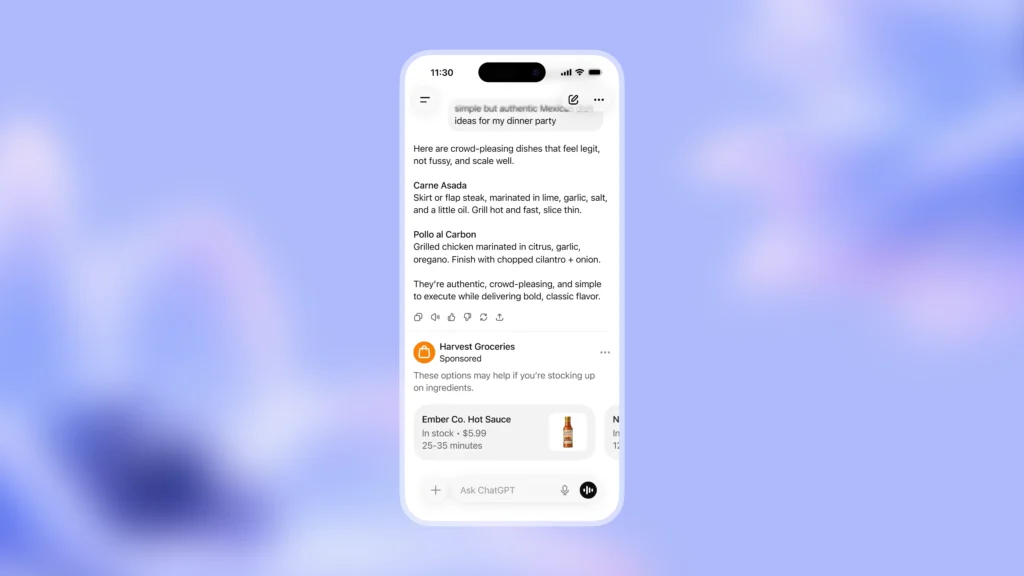
Rather than interrupting conversations, ads in ChatGPT are likely to be integrated subtly. For example, when a user asks about the “best project management software,” a sponsored recommendation might appear alongside organic suggestions—clearly labeled to maintain transparency.
This approach mirrors the evolution of search engine advertising, where relevance and user intent determine ad placement, but with a deeper, more personalized conversational layer.
Impact on Users and Trust
User trust remains the biggest concern. ChatGPT’s popularity is built on the perception of neutrality and usefulness. Any advertising model would need strict safeguards to ensure:
- Clear disclosure of sponsored content
- No manipulation of factual responses
- Strong separation between ads and core AI reasoning
If handled poorly, ads could undermine credibility. If done right, they could enhance discovery while keeping the experience clean and helpful.
A New Opportunity for Digital Marketers
For marketers, ads in ChatGPT could open an entirely new performance channel—often described as “intent at the speed of conversation.” Unlike social or display ads that rely on passive attention, conversational ads would target users when they are actively seeking solutions, advice, or recommendations.
This could redefine how brands approach search, content marketing, and even SEO, blending them into a single conversational ecosystem.
The Road Ahead
While no aggressive ad rollout has been formally confirmed, the discussion itself marks a turning point. As AI tools become central to how people search, learn, and make decisions, monetization models will inevitably evolve.
Ads in ChatGPT, if introduced thoughtfully, could represent the next generation of digital advertising—less noisy, more relevant, and deeply integrated into how humans interact with information.
For now, the industry is watching closely, aware that how ads enter AI conversations may shape the future of both advertising and artificial intelligence itself.
