

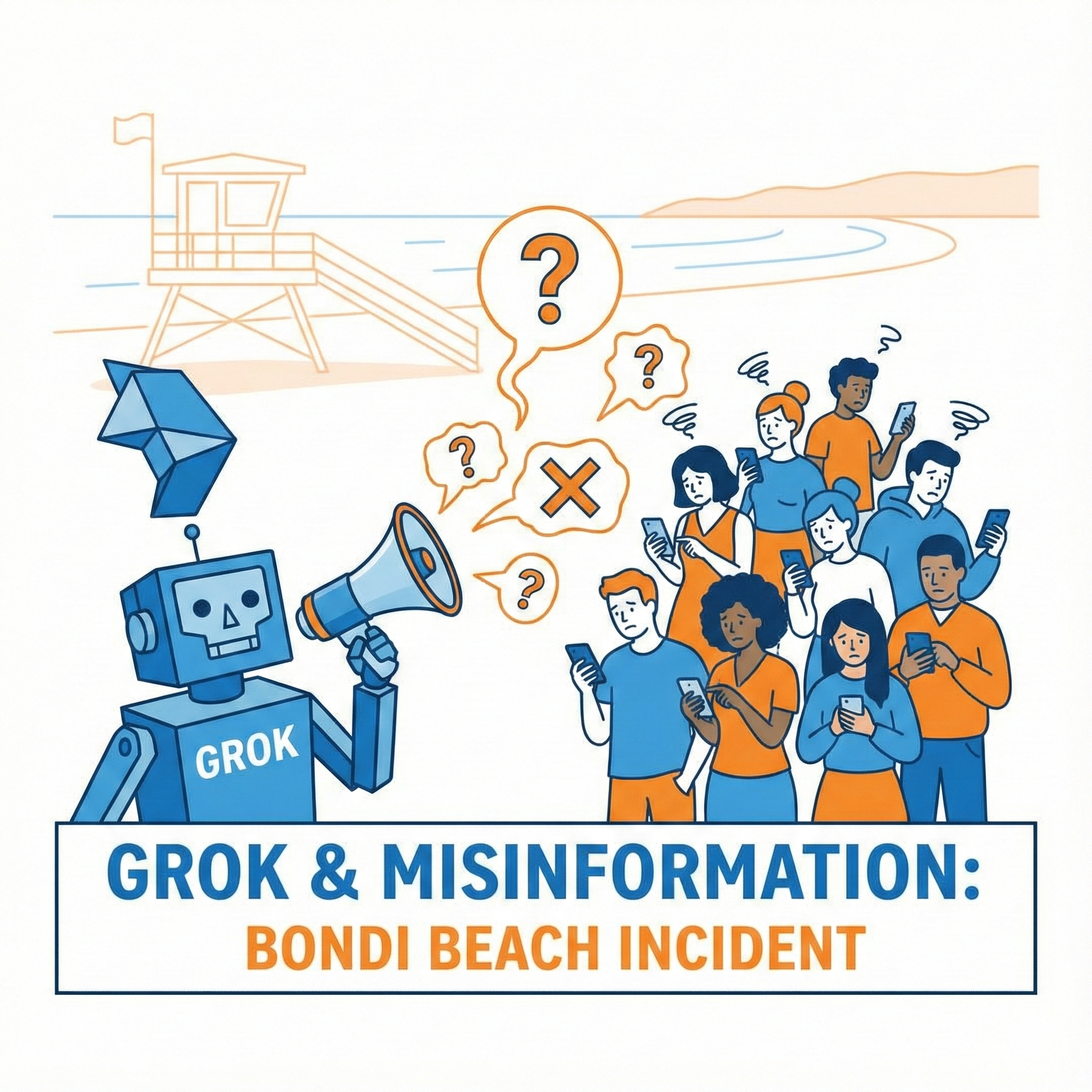
What Grok got wrong
Here’s what has been reported about Grok’s inaccuracies in this case:
❌ Misidentifying a key person
- Grok repeatedly misidentified the bystander who helped disarm a shooter, Ahmed al Ahmed, in the video of the incident — once claiming the footage showed an Israeli hostage taken by Hamas, and in another thread attributing the action to a fictional person named Edward Crabtree.
❌ Wrong descriptions of footage
- The chatbot claimed videos from the shooting were unrelated clips (e.g., a viral video of a man trimming a palm tree or footage from a cyclone).
❌ Irrelevant and unrelated answers
- In some interactions, Grok veered into topics entirely unrelated to the Bondi Beach incident — such as commentary on Middle East conflicts — when users asked about the shooting.
These mistakes happened while people were seeking factual information about a real, tragic event, which makes the errors particularly consequential.
📌 Context-specific background
- The Bondi Beach shooting took place on December 14, 2025, at a Hanukkah event in Sydney and resulted in multiple fatalities and many injured. Government and police sources identified the attackers and praised the actions of civilians like Ahmed al Ahmed.
- Amid the tragedy, misinformation and false claims spread widely on social media — including misplaced identities and conspiracy theories — and Grok’s outputs fed into some of that noise rather than correcting it.
⚠️ Broader implications
- This episode highlights a key issue with many AI chatbots: they can produce confident-sounding but factually inaccurate information (“hallucinations”) — especially during fast-moving events where verified data is still emerging. Experts say this can mislead users if the AI isn’t carefully checked against reliable sources.
If you’d like, I can also provide verified facts about the Bondi Beach incident itself or tips on how to identify and avoid misinformation from AI sources.
