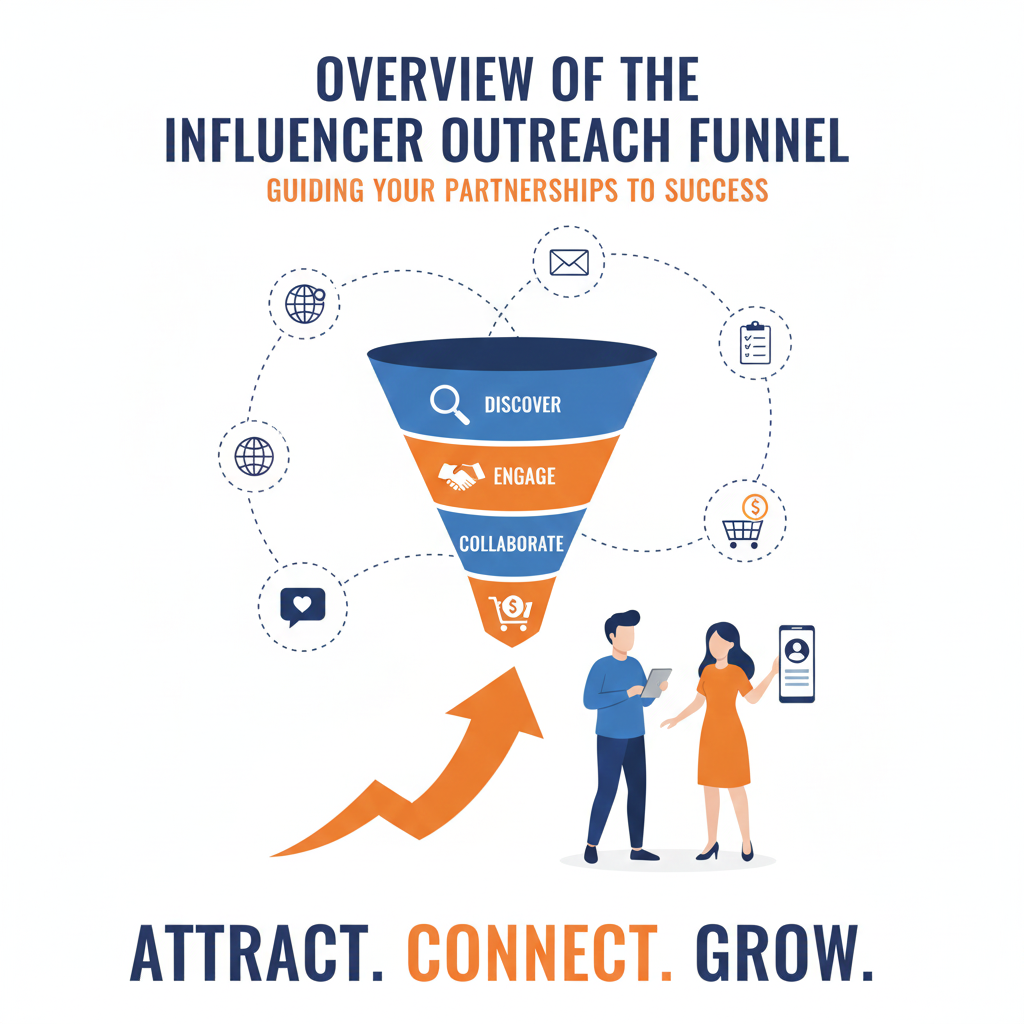
Overview of the Influencer Outreach Funnel
Your influencer outreach funnel should follow the same logic as a traditional marketing funnel:
| Funnel Stage | Goal | Action Examples |
|---|---|---|
| Awareness | Identify and attract influencers | Research, social listening, lists |
| Interest | Engage and qualify leads | Likes, comments, soft touches |
| Consideration | Pitch your value | Personalized DM/email outreach |
| Collaboration | Onboard and brief influencers | Send deliverables, timelines |
| Advocacy | Retain, nurture, and scale | Long-term partnerships, referrals |
🎯 Step-by-Step Breakdown
1. Define Your Influencer Goals
Before building the funnel, clarify:
Campaign objectives (brand awareness, UGC, lead gen, conversions)
Platform focus (Instagram, YouTube, LinkedIn, TikTok, etc.)
Budget and incentive model (paid, barter, affiliate)
🎯 Example Goal: Generate 100K reach from 10 mid-tier fitness influencers in 30 days.
2. Build a Target Influencer Profile
Outline your Ideal Influencer Persona based on:
Niche or industry relevance
Audience size & engagement rate
Content quality (tone, consistency)
Location/language
Platform alignment
📋 Template Example:
Niche: Sustainable fashion
Platform: Instagram + TikTok
Followers: 10K–50K
Engagement Rate: 3%+
Must use storytelling + UGC style
3. Discovery & Lead Sourcing
Use tools or manual research to find prospects.
🛠️ Tools for Discovery:
Free: Instagram search, TikTok Creator Marketplace, LinkedIn
Paid: Modash, Upfluence, Heepsy, HypeAuditor, BuzzSumo
Chrome Extensions: Snov.io, Hunter (for email capture)
✅ Create a spreadsheet with:
Name
Handle
Email
Follower count
Niche
Recent collaboration examples
Engagement rate
4. Warm Up Your Leads
Before pitching, engage softly to build familiarity:
Follow them
Like/comment on their posts
Share their stories
Send a genuine DM complimenting their work
⏳ Allow 3–7 days of warm-up before sending a pitch.
5. Outreach (Pitch) Stage
Send a personalized pitch that emphasizes:
What you like about their content
Why they’re a great fit
What’s in it for them (value)
Clear call to action (CTA)
Can I share more details?
📌 Tips:
Use their name
Keep it short (under 150 words)
Avoid generic “Hey influencer!” tones
6. Qualify and Segment Responses
Not every reply = collaboration. Qualify influencers based on:
Interest level
Rate vs. budget alignment
Timeline compatibility
Audience fit (ask for media kit if needed)
Create tiers:
Tier A: Ready to collab (move to onboarding)
Tier B: Good fit, but delayed
Tier C: Not a fit now (add to nurture list)
7. Onboard Collaborators Smoothly
Send a clear brief with:
Campaign goals
Content requirements (format, tone, hashtags, mentions)
Deadlines and deliverables
Compensation or incentive details
Approval workflow (if required)
🧾 Use tools like:
Google Docs/Notion for briefs
Airtable/ClickUp for tracking
Signed contracts or influencer agreements (PDF or eSign)
8. Track and Measure Results
Monitor performance via:
UTM links or custom URLs
Affiliate codes
Platform analytics (Instagram Insights, TikTok Stats)
Google Analytics (referral traffic)
📊 Key Metrics:
Engagement (likes, comments, saves)
Reach/impressions
Click-through rate (CTR)
Conversions (sales/leads)
Use a shared dashboard for ongoing campaigns.
9. Nurture for Retention
After a successful collab:
Send a thank-you message
Offer to feature their content on your channels
Ask for feedback
Offer future campaign invites
Include in brand ambassador program or referral list
🤝 Relationship > Transaction. Influencer marketing is built on trust.
🧠 Pro Tips for a Scalable Funnel
Automate follow-ups using tools like GMass, Lemlist, or Mailshake
Keep a “warm lead” CRM in Notion, Airtable, or HubSpot
Use Zapier to automate actions (e.g., “Add influencer to ClickUp when form submitted”)
Create outreach email sequences for cold, warm, and hot stages
Segment influencers by persona, past performance, or region
Author