Understanding Email Retargeting and How It Works
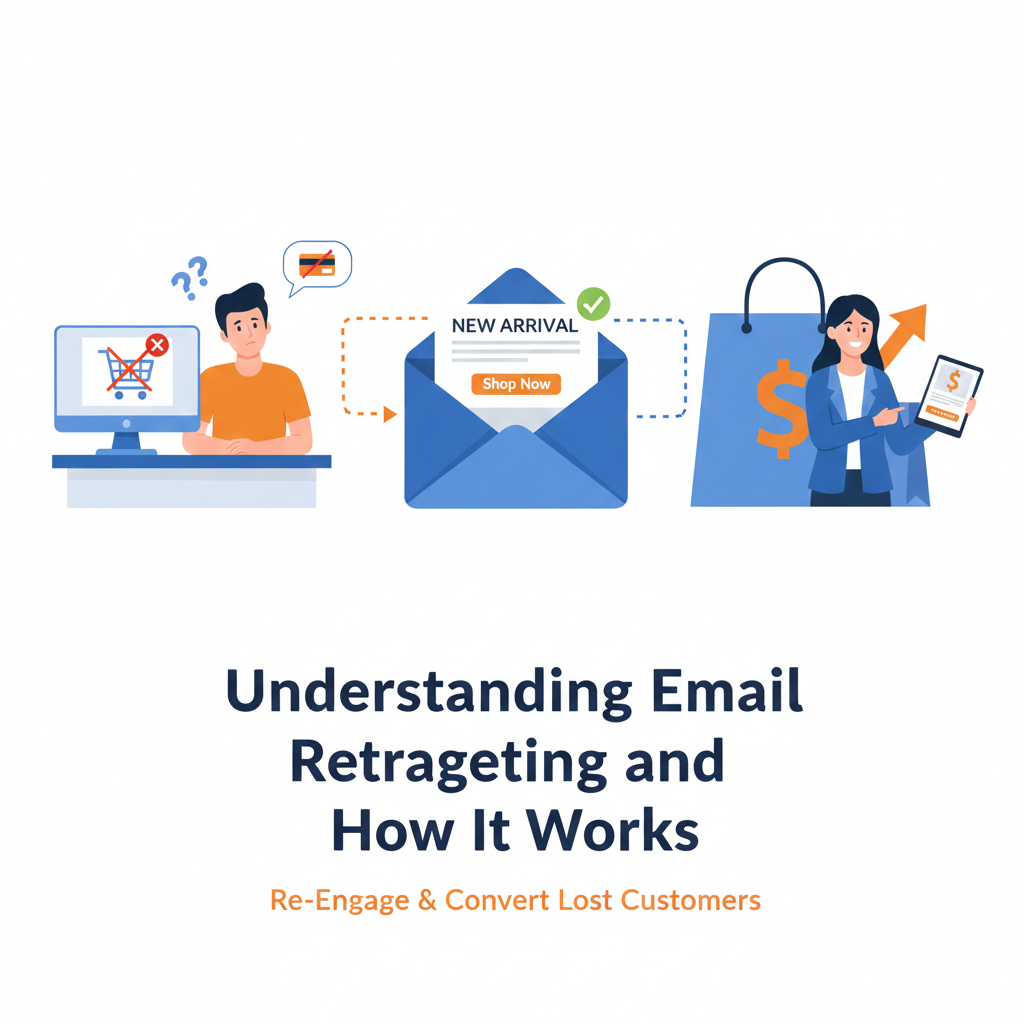
In the fast-paced world of digital marketing, it’s easy for potential customers to slip through the cracks. They visit your website, browse your products, maybe even add something to the cart — but then they disappear. Fortunately, email retargeting helps marketers re-engage those lost visitors and guide them back into the conversion funnel.
Email retargeting is a powerful, data-driven strategy that combines the precision of behavioral targeting with the personalization of email marketing. When executed correctly, it becomes one of the most efficient and ROI-positive channels in a marketer’s toolkit.
This article dives deep into what email retargeting is, how it works, its types, examples, tools, benefits, challenges, and strategies to get it right.
1. What Is Email Retargeting?
Email retargeting is the process of sending personalized emails to users based on their previous interactions with your website, app, or brand. The goal is to re-engage potential customers who showed interest but didn’t convert.
In simpler terms, email retargeting bridges the gap between interest and action. It reminds users of what they viewed, encourages them to return, and nudges them toward completing the desired goal — whether that’s making a purchase, signing up for a webinar, or downloading an eBook.
Example:
-
A visitor adds a pair of sneakers to their cart but leaves without buying.
-
You send an automated email an hour later with the subject line:
“Still thinking about those sneakers? Here’s 10% off to complete your purchase.” -
The user clicks, returns to the cart, and converts.
That’s email retargeting in action.
2. The Psychology Behind Email Retargeting
Retargeting works because it leverages psychological triggers that influence decision-making:
-
Recency Bias: People tend to remember recent interactions. Sending an email soon after engagement keeps your brand fresh in their mind.
-
FOMO (Fear of Missing Out): Limited-time offers or product scarcity push users to act fast.
-
Personalization Effect: Personalized content creates emotional connection and trust.
-
Commitment & Consistency: Once someone has taken an action (like adding to a cart), they’re psychologically more likely to complete it later.
By combining data and psychology, email retargeting helps you tap into intent-driven audiences who are already halfway down the funnel.
3. How Email Retargeting Works
Email retargeting operates through data tracking, audience segmentation, and automation. Here’s a step-by-step breakdown of the process:
Step 1: Tracking User Behavior
Your website or app uses tracking pixels, cookies, or tags to monitor user actions:
-
Pages visited
-
Products viewed
-
Time spent on site
-
Cart additions
-
Abandoned checkouts
This behavioral data is collected and stored in your CRM or email marketing platform.
Step 2: Segmentation
Based on the behavior, users are segmented into categories like:
-
Abandoned cart users
-
Product viewers
-
Returning visitors
-
Inactive subscribers
-
Engaged users who haven’t converted
Step 3: Trigger Setup
Automated triggers are defined — for example:
-
If a user abandons a cart for 1 hour → send reminder email.
-
If a user views a product but doesn’t add to cart → send product recommendation.
Step 4: Email Automation
The system automatically sends the right email to the right person at the right time, using personalized content, dynamic images, or discount codes.
Step 5: Tracking and Optimization
Once the campaign is live, marketers track KPIs such as open rates, click-through rates (CTR), and conversions, refining the campaign based on performance.
4. Types of Email Retargeting Campaigns
Email retargeting isn’t one-size-fits-all. Different strategies cater to different user behaviors and goals.
1. Cart Abandonment Emails
Triggered when a user adds items to their cart but doesn’t check out.
Example: “Your cart is waiting — complete your purchase before it sells out!”
2. Browse Abandonment Emails
Sent when users browse a product or service but don’t take further action.
Example: “You viewed these items. Here are some similar picks you might like.”
3. Post-Purchase Retargeting
Aimed at nurturing relationships and encouraging repeat purchases.
Example: “You loved our moisturizer — here’s a 10% discount on our night cream.”
4. Win-Back (Re-Engagement) Campaigns
Target users who haven’t interacted with your emails or site for a while.
Example: “We miss you! Come back and enjoy 20% off your next order.”
5. Cross-Sell and Upsell Campaigns
Encourages customers to buy complementary or upgraded products.
Example: “You bought a camera — how about a lens kit to go with it?”
6. Onboarding or Welcome Retargeting
For new users who signed up but didn’t explore further.
Example: “Welcome aboard! Here’s how to get the most out of your account.”
5. Tools and Platforms for Email Retargeting
There are several marketing automation tools that help execute retargeting seamlessly. Some of the most popular include:
| Platform | Key Features |
|---|---|
| Klaviyo | E-commerce focused, deep Shopify integration, behavior-based segmentation |
| Mailchimp | Affordable, user-friendly automation for small businesses |
| HubSpot | Powerful CRM + email automation + behavioral triggers |
| ActiveCampaign | Advanced automation workflows, tagging, and personalization |
| Drip | Built for D2C brands, dynamic product recommendations |
| Omnisend | Multichannel automation (email + SMS + push) |
| ConvertKit | Great for creators, personalized automation and tagging |
6. Benefits of Email Retargeting
Email retargeting offers numerous marketing and financial advantages:
1. Higher Conversion Rates
Retargeted users are 2–3x more likely to convert since they’ve already shown intent.
2. Improved ROI
Retargeting focuses on warm leads rather than cold audiences, significantly lowering customer acquisition costs.
3. Increased Customer Lifetime Value (CLV)
Post-purchase retargeting nurtures loyalty and encourages repeat transactions.
4. Enhanced Personalization
Emails can dynamically display products viewed or left in the cart, improving engagement.
5. Strengthened Brand Recall
Frequent and relevant follow-ups keep your brand top-of-mind.
6. Better Segmentation Insights
Tracking data helps you understand user behavior patterns and optimize future campaigns.
7. Best Practices for Successful Email Retargeting
To ensure your retargeting campaigns deliver maximum ROI, follow these best practices:
1. Time Your Emails Right
Send the first retargeting email within 1–3 hours of user action, when interest is still high.
2. Personalize Deeply
Use first names, product recommendations, dynamic images, and behavioral triggers.
3. Use a Clear CTA
Every retargeting email should have one strong call to action — e.g., “Complete your order” or “See your saved items.”
4. Add Incentives
Limited-time offers, discounts, or free shipping can push users to complete the purchase.
5. Optimize Subject Lines
Your subject line determines whether the email gets opened. Keep it short, relevant, and curiosity-driven.
Example: “Your cart called — it’s missing you 🛒”
6. Limit Frequency
Avoid spamming users. A 2–3 email sequence over a week works best for most cart abandonment cases.
7. Test and Optimize
A/B test subject lines, timing, visuals, and CTA placements to refine performance.
8. Common Challenges and How to Overcome Them
| Challenge | Solution |
|---|---|
| Low Open Rates | Personalize subject lines and test send times |
| Email Fatigue | Segment users and limit frequency |
| Data Privacy Concerns | Be transparent and comply with GDPR/CCPA |
| Deliverability Issues | Maintain clean lists, authenticate domains (SPF/DKIM), and monitor spam complaints |
| Unsubscribes | Offer easy preferences, such as pausing emails or reducing frequency |
9. Measuring Email Retargeting Success
The following metrics help evaluate performance:
| Metric | What It Indicates |
|---|---|
| Open Rate | How compelling your subject line is |
| Click-Through Rate (CTR) | Engagement and relevance of email content |
| Conversion Rate | The ultimate goal — how many users completed an action |
| Revenue per Email (RPE) | Financial performance of each campaign |
| Bounce Rate | Email list hygiene and deliverability |
| Unsubscribe Rate | Content relevance and email frequency |
Tracking these KPIs helps optimize your strategy for consistent performance improvements.
10. Real-World Example: Amazon’s Email Retargeting Mastery
Amazon is a global leader in email retargeting.
Their system:
-
Tracks user behavior at every step.
-
Sends immediate, personalized emails (e.g., “Still interested in [Product Name]?”).
-
Uses product images, ratings, and recommendations for cross-sells.
-
Keeps follow-ups subtle and valuable, not intrusive.
This constant personalization and value-driven follow-up are key reasons why Amazon maintains one of the highest e-commerce conversion rates in the world.
11. The Future of Email Retargeting
As technology and privacy laws evolve, so does email retargeting.
Emerging trends include:
-
AI-Driven Personalization: Predictive analytics to anticipate what users want next.
-
Omnichannel Integration: Combining email with SMS, push notifications, and ads for unified experiences.
-
First-Party Data Strategy: Relying on consent-based tracking due to cookie depreciation.
-
Interactive Emails: Incorporating quizzes, carousels, and live product updates inside emails.
-
Hyper-Segmentation: Targeting micro-audiences with pinpoint accuracy.
12. Conclusion
Email retargeting is not just a tactic — it’s a revenue recovery system that helps you maximize every lead. It bridges the gap between interest and conversion, nurturing users through personalized, timely, and relevant communication.
When done strategically — with behavioral data, automation, and empathy — email retargeting can deliver exceptional ROI, build customer loyalty, and boost your brand’s long-term growth.
Quick Summary
| Aspect | Details |
|---|---|
| Goal | Re-engage users who didn’t convert |
| Key Triggers | Cart abandonment, browse behavior, inactivity |
| Tools | Klaviyo, HubSpot, ActiveCampaign, Mailchimp |
| Benefits | Higher conversions, ROI, personalization |
| Challenges | Deliverability, privacy compliance, fatigue |
| Future | AI personalization, omnichannel automation |

Author