
Programmatic SEO Explained: A Complete Guide to Scaling Organic Traffic
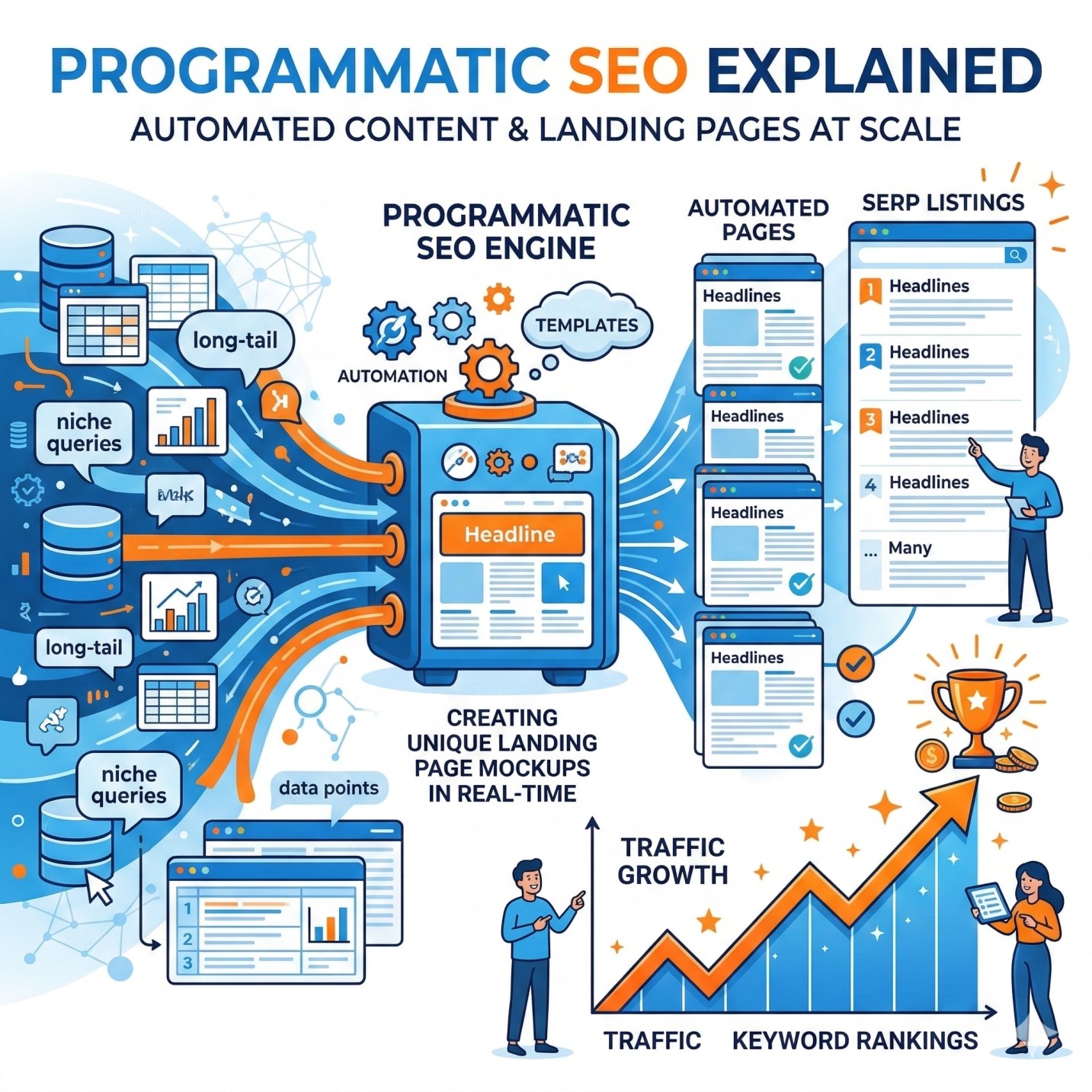
Programmatic SEO (pSEO) is one of the most powerful modern SEO strategies used by large websites to generate thousands or even millions of pages automatically based on structured data and search demand. Many of the world’s biggest websites — such as travel platforms, marketplaces, directories, and comparison websites — rely heavily on programmatic SEO to dominate search engine results.
Instead of manually writing individual pages for every keyword, programmatic SEO allows businesses to create scalable landing pages using templates, databases, and automation, targeting large keyword sets with high relevance.
This guide explains programmatic SEO in depth — including how it works, its benefits, tools, frameworks, examples, and implementation strategies.
1. What is Programmatic SEO?
Programmatic SEO is a data-driven SEO strategy where pages are generated automatically at scale using templates and structured data to target large sets of keywords.
In traditional SEO, marketers typically:
Research keywords
Write individual blog posts or landing pages
Optimize each page manually
Programmatic SEO changes this model by using automation, databases, and page templates to generate thousands of SEO pages automatically.
Instead of writing:
“Best Hotels in Delhi”
“Best Hotels in Mumbai”
“Best Hotels in Bangalore”
A programmatic SEO system creates thousands of pages dynamically, each optimized for different keyword combinations.
Example of Programmatic Pages
Examples of keyword patterns:
Best Restaurants in [City]
Hotels near [Landmark]
Flights from [City A] to [City B]
Top CRM Software for [Industry]
Each page follows the same structure but uses different data inputs.
This allows websites to target long-tail keywords at massive scale, capturing huge amounts of organic traffic.
2. Why Programmatic SEO is Important
Programmatic SEO has become extremely important because modern search behavior includes millions of long-tail queries.
Long-tail searches account for a huge portion of total Google searches.
Examples:
“best digital marketing agency in Delhi for startups”
“cheap hotels near Times Square with parking”
“email marketing tools for small ecommerce business”
These queries may individually have low search volume, but collectively they represent massive traffic opportunities.
Programmatic SEO helps businesses capture these queries efficiently.
Key Benefits of Programmatic SEO
1. Massive Scalability
Instead of publishing 100 pages manually, programmatic SEO enables:
1,000 pages
10,000 pages
100,000+ pages
Large companies often have millions of indexed pages.
2. Long-Tail Keyword Dominance
Programmatic SEO allows websites to capture very specific search queries.
These queries often have:
Lower competition
Higher conversion rates
Clear user intent
For example:
“best project management tools for construction companies”
This type of keyword converts much better than a broad term like:
“project management tools”
3. Faster Content Production
Manual content production is slow and expensive.
Programmatic SEO enables businesses to create content quickly and consistently using automated systems.
Instead of hiring dozens of writers, companies build content templates connected to data sources.
4. Higher Organic Traffic Potential
Programmatic SEO can bring millions of monthly organic visitors.
Companies using pSEO often dominate search results across thousands of keyword variations.
This strategy allows websites to capture traffic from every possible keyword variation.
3. How Programmatic SEO Works
Programmatic SEO works by combining several elements together:
Keyword patterns
Structured data
Page templates
Automation
Internal linking
These components work together to generate large numbers of optimized pages.
Step 1: Identify Scalable Keyword Patterns
The foundation of programmatic SEO is identifying repeatable keyword structures.
Examples include:
“Best restaurants in [city]”
“Flights from [city] to [city]”
“Top software for [industry]”
“Salary of [job title] in [country]”
Each keyword follows a repeatable pattern, making it ideal for automation.
For example:
“Best restaurants in [City]”
Cities database:
Delhi
Mumbai
Bangalore
Chennai
Hyderabad
This produces multiple pages automatically.
Step 2: Create a Structured Data Source
Programmatic SEO requires data inputs.
This data may come from:
Internal databases
APIs
Spreadsheets
Scraped datasets
Public datasets
Example: Hotel listing website
Data fields might include:
Hotel name
City
Price
Rating
Address
Amenities
This structured data feeds into page templates.
Step 3: Build Page Templates
Templates are the core component of programmatic SEO.
Instead of writing every page manually, a single template is used for thousands of pages.
A typical template includes:
Dynamic page title
Dynamic headings
Data-driven content sections
Lists or tables
Internal links
FAQs
Example template:
Title:
Best Hotels in [City]
Sections:
Introduction about city
Hotel list
Comparison table
Travel tips
FAQs
Each page automatically fills data based on location.
Step 4: Generate Pages Automatically
Using the data + templates, the system automatically creates pages.
This can be done using:
CMS automation
Static site generators
Database-driven websites
No-code automation tools
Each page targets a specific keyword variation.
Step 5: Optimize for SEO
Even automated pages must follow SEO best practices.
Important optimizations include:
Unique title tags
Optimized headings
Structured data markup
Internal linking
Mobile-friendly design
Fast loading speed
Search engines prefer pages that provide unique value, not just duplicated templates.
4. Examples of Programmatic SEO Websites
Many large websites use programmatic SEO as a core traffic strategy.
1. Zillow
Zillow creates millions of pages for:
Houses in cities
Houses in neighborhoods
Property listings
Price comparisons
Example pages:
Homes for sale in Austin
Apartments in San Francisco
Each page uses property data.
2. TripAdvisor
TripAdvisor generates pages for:
Hotels in cities
Restaurants in locations
Attractions in countries
Example pages:
Best restaurants in Paris
Hotels in Bangkok
3. Indeed
Indeed generates job pages for combinations like:
Job title
Location
Company
Example:
Marketing Manager jobs in Delhi
Data Analyst jobs in Bangalore
4. Zapier
Zapier uses programmatic SEO for integration pages.
Example pages:
Slack + Gmail integration
Shopify + Google Sheets integration
Thousands of combinations are possible.
5. Types of Programmatic SEO Pages
Programmatic SEO can be implemented in many different ways.
1. Location Pages
These pages target location-based searches.
Examples:
Digital marketing agency in Delhi
SEO services in Mumbai
Restaurants in Bangalore
These pages work well for:
Local businesses
Service providers
Directories
2. Comparison Pages
These pages compare multiple products.
Examples:
Shopify vs WooCommerce
Ahrefs vs SEMrush
HubSpot vs Salesforce
Comparison pages often generate high conversion rates.
3. List Pages
List pages rank items based on certain criteria.
Examples:
Best CRM software
Top SEO tools
Best marketing books
These pages attract informational search traffic.
4. Directory Pages
Directory websites use programmatic SEO heavily.
Examples:
Agency directories
Freelancer listings
SaaS directories
Example pages:
Marketing agencies in Delhi
SEO consultants in London
6. Key Components of a Successful Programmatic SEO Strategy
Not every programmatic SEO project succeeds.
Success requires several key elements.
1. High-Quality Data
Programmatic SEO depends heavily on data accuracy and completeness.
Poor data results in:
Thin pages
Duplicate content
Low search rankings
Good datasets improve page quality significantly.
2. Unique Page Value
Google discourages thin or duplicate pages.
Each programmatic page should include:
Useful information
Unique insights
Helpful comparisons
Real data
Pages must provide value beyond just keyword targeting.
3. Strong Internal Linking
Internal linking helps search engines:
Discover pages
Understand website structure
Pass link authority
Programmatic websites often use:
category pages
hub pages
filters
breadcrumb navigation
4. Scalable Technical Infrastructure
Programmatic SEO requires technical systems capable of handling large page volumes.
Important elements include:
scalable hosting
optimized databases
efficient page rendering
caching systems
7. Tools for Programmatic SEO
Several tools help build and manage programmatic SEO systems.
SEO Tools
Keyword research tools:
Ahrefs
SEMrush
Google Keyword Planner
Ubersuggest
These tools help identify scalable keyword patterns.
Data Tools
For managing datasets:
Google Sheets
Airtable
BigQuery
SQL databases
Automation Tools
Automation platforms:
Zapier
Make (Integromat)
n8n
Development Frameworks
Technical platforms:
Next.js
Gatsby
Webflow CMS
WordPress with custom plugins
8. Common Programmatic SEO Mistakes
Many websites fail because they implement programmatic SEO incorrectly.
1. Creating Thin Content Pages
If every page contains very little unique information, search engines may ignore them.
Programmatic pages must include valuable data and helpful content.
2. Poor Keyword Research
Without proper keyword research, pages may target keywords with:
no search demand
extremely high competition
3. Duplicate Content Issues
Using identical templates without variation can create duplicate pages.
To prevent this:
use dynamic text blocks
include unique data
vary page sections
4. Indexing Too Many Low-Quality Pages
Publishing thousands of low-quality pages can harm SEO.
A better strategy is:
launch small batches
analyze performance
scale gradually
9. Programmatic SEO Workflow
A typical programmatic SEO workflow includes:
Keyword pattern discovery
Data collection and structuring
Template creation
Page generation
Technical SEO optimization
Internal linking strategy
Monitoring performance
Scaling successful pages
This process helps websites scale traffic systematically.
10. Future of Programmatic SEO
Programmatic SEO is evolving with new technologies.
Future trends include:
AI-Generated Content
AI tools can enhance programmatic pages with:
dynamic descriptions
summaries
product insights
Dynamic Personalization
Future pages may personalize content based on:
location
user intent
browsing behavior
Integration with AI Search
Search engines are evolving with AI search features.
Programmatic SEO pages will need:
deeper content
structured data
authoritative information
Conclusion
Programmatic SEO is one of the most powerful strategies for scaling organic traffic. By combining keyword patterns, structured data, templates, and automation, businesses can create thousands of optimized pages that capture long-tail search demand.
When executed correctly, programmatic SEO can drive massive organic growth, enabling websites to dominate search results across entire keyword categories.
However, success requires careful planning, high-quality data, and strong technical infrastructure. Websites that balance automation with valuable content will be best positioned to benefit from the long-term potential of programmatic SEO.
If you want, I can also write:
Programmatic SEO Strategy (Step-by-Step Blueprint)
50 Programmatic SEO Ideas for Websites
How to Build Programmatic SEO with AI + Automation
Programmatic SEO Case Studies (Zapier, Wise, Canva)
These are extremely useful if you are creating advanced SEO content or an SEO course.

Author