
FAQ Pages for E-commerce SEO: The Complete Optimization Guide
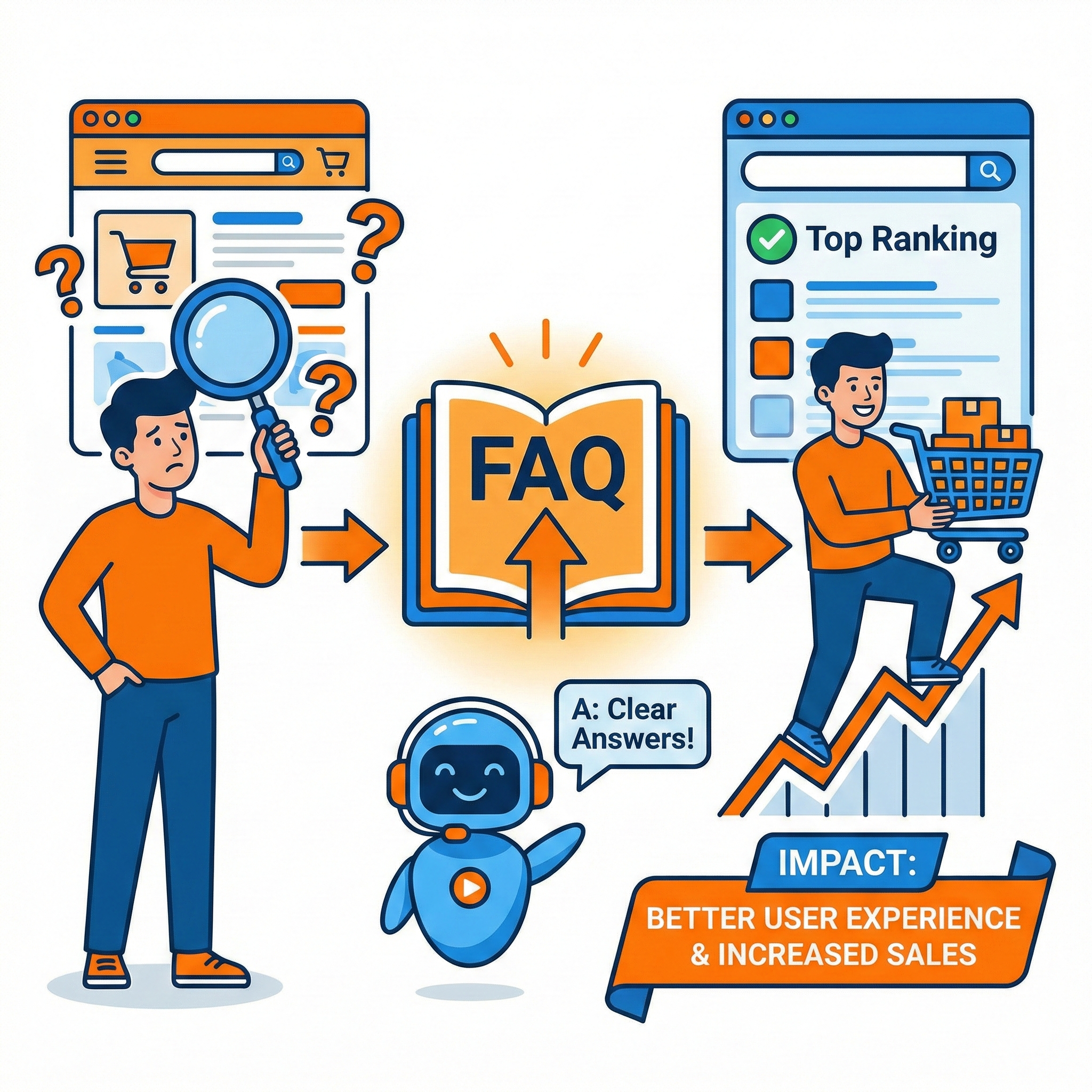
FAQ (Frequently Asked Questions) pages are among the most underrated yet powerful SEO assets for e-commerce websites. When executed correctly, they improve organic rankings, capture long-tail search traffic, reduce customer support load, enhance user experience, and significantly increase conversions.
Modern search engines prioritize helpful, intent-driven content, and FAQ pages serve as a direct response to user queries. They align perfectly with semantic search, voice search, and AI-powered search engines.
This guide explores everything you need to know about building, optimizing, and leveraging FAQ pages for e-commerce SEO success.
1. What is an FAQ Page in E-commerce?
An FAQ page is a structured resource that answers common questions customers have about products, shipping, payments, returns, policies, and purchasing decisions.
Unlike traditional static FAQ pages, modern e-commerce FAQ hubs are:
-
Search-optimized content assets
-
Conversion-support tools
-
Trust-building resources
-
Voice search-friendly knowledge hubs
They help users make decisions faster while signaling relevance and authority to search engines.
2. Why FAQ Pages Matter for E-commerce SEO
• Capture Long-Tail Search Traffic
FAQ pages target natural-language queries users type into search engines. Questions like “How long does delivery take?” or “Is cash on delivery available in Delhi?” mirror real search behavior and allow e-commerce sites to rank for long-tail keywords with lower competition but high conversion intent.
• Improve Topical Authority & Semantic Relevance
Search engines evaluate content depth and topical authority. FAQ sections allow websites to cover related subtopics comprehensively, strengthening semantic signals and helping search engines better understand the site’s relevance.
• Increase Visibility in Featured Snippets & AI Search Results
FAQ answers written clearly and concisely increase the chances of appearing in:
-
Featured snippets
-
“People Also Ask” results
-
Voice search answers
-
AI-generated search summaries
This visibility significantly improves click-through rates and brand credibility.
• Enhance User Experience & Reduce Bounce Rate
Visitors often abandon websites when they cannot find quick answers. FAQ pages provide instant clarity, reducing friction and keeping users engaged.
• Support Conversion Rate Optimization (CRO)
Addressing objections such as shipping time, return policy, authenticity, warranty, and payment security helps remove purchase barriers and increases conversions.
• Reduce Customer Support Workload
Well-structured FAQs minimize repetitive customer queries, saving time and operational costs.
3. Types of FAQ Pages in E-commerce
• General FAQ Page
A centralized page addressing common questions about ordering, payments, shipping, returns, cancellations, and account management. This page serves as a primary support and SEO content hub.
• Product-Specific FAQs
Dedicated FAQs on product pages answer questions about sizing, compatibility, warranty, materials, usage, and care instructions. These enhance purchase confidence and improve product page SEO.
• Category-Level FAQs
Category pages can include FAQs addressing questions about product differences, selection guidance, pricing, and suitability. This helps capture comparison-based and research-driven searches.
• Policy & Service FAQs
Questions related to refunds, exchanges, warranties, and service policies improve trust and transparency while supporting compliance and customer satisfaction.
4. Keyword Research for FAQ SEO
FAQ pages perform best when based on real user queries.
• Use Search Engine Suggestions
Google autocomplete and “People Also Ask” sections reveal common user questions. These reflect real search demand and should guide FAQ creation.
• Analyze Customer Support Queries
Review live chat logs, emails, and call center questions to identify recurring concerns customers raise before or after purchase.
• Explore Community Platforms & Reviews
Platforms like Reddit, Quora, and product reviews reveal practical user concerns and language patterns used by customers.
• Use SEO Tools for Question Keywords
Tools such as SEMrush, Ahrefs, and AnswerThePublic help identify question-based queries that can be incorporated into FAQ content.
5. Structuring an SEO-Friendly FAQ Page
• Use Clear Question-Based Headings
Each question should be formatted using H2 or H3 headings. This helps search engines understand the content structure and improves readability.
• Provide Direct, Concise Answers First
Start answers with a clear, direct response before expanding with additional context. This improves snippet eligibility and user comprehension.
• Maintain Logical Grouping
Organize questions into sections such as Ordering, Shipping, Payments, Returns, and Product Information to improve navigation and UX.
• Add Expandable Accordion Sections
Accordion layouts improve user experience by allowing visitors to quickly scan and expand relevant questions without overwhelming the page.
6. On-Page SEO Best Practices for FAQ Pages
• Optimize for Natural Language Queries
Write questions exactly how users ask them, such as:
-
“How long does shipping take in India?”
-
“Can I return a product after 7 days?”
Natural phrasing improves ranking potential for conversational search queries.
• Include Relevant Keywords Naturally
Use primary and related keywords within answers, ensuring they fit naturally and do not disrupt readability.
• Use Internal Linking Strategically
Link answers to relevant pages such as shipping policies, return policy pages, and product categories to enhance crawlability and authority flow.
• Maintain Scannable Formatting
Use short paragraphs, bullet lists, and bold highlights to improve readability and user engagement.
7. FAQ Schema Markup (Structured Data)
Implementing FAQ schema helps search engines understand and display FAQ content directly in search results.
Benefits of FAQ Schema:
-
Rich results in SERPs
-
Increased search visibility
-
Higher click-through rates
-
Enhanced voice search compatibility
Best Practices:
-
Mark up only visible FAQ content.
-
Avoid promotional content in answers.
-
Ensure answers are clear and factual.
8. Writing High-Quality FAQ Answers
• Address Real User Intent
Answers should directly solve user problems instead of providing generic or vague responses.
• Build Trust & Transparency
Provide honest information about delivery timelines, return conditions, and warranty coverage.
• Keep Language Simple & Clear
Avoid technical jargon. Use easy-to-understand language suitable for all audiences.
• Include Supporting Details
Add examples, scenarios, or additional guidance where necessary to enhance clarity.
9. FAQ Pages for Voice Search Optimization
Voice search queries are typically conversational and question-based. FAQ pages naturally align with this behavior.
To optimize for voice search:
-
Use conversational phrasing
-
Answer questions directly in the first sentence
-
Focus on local and intent-driven queries
-
Provide clear and structured responses
10. Leveraging FAQs to Improve Conversions
• Remove Purchase Barriers
Answer concerns related to delivery reliability, authenticity, and returns to reduce hesitation.
• Reinforce Trust Signals
Include information about secure payments, brand authenticity, and warranty protection.
• Provide Pre-Purchase Guidance
Help users choose the right size, model, or variant to reduce decision fatigue.
11. Common Mistakes to Avoid
• Creating Thin or Generic Answers
Short, vague answers reduce SEO value and fail to address user intent.
• Keyword Stuffing Questions
Over-optimizing questions harms readability and search trust.
• Not Updating FAQs Regularly
Outdated information leads to poor user experience and credibility loss.
• Ignoring Mobile Optimization
FAQ pages must be mobile-friendly, as most e-commerce traffic comes from mobile users.
• Duplicating Content Across Pages
Duplicate FAQs can dilute SEO value and create indexing issues.
12. Measuring FAQ Page SEO Performance
Track the effectiveness of your FAQ pages using:
-
Organic traffic growth
-
Featured snippet appearances
-
Keyword ranking improvements
-
Bounce rate & dwell time
-
Conversion rate improvements
-
Reduction in support queries
These metrics help evaluate both SEO impact and operational efficiency.
13. Advanced FAQ SEO Strategies
• Add FAQs to Product Pages for Rich Snippets
Embedding FAQs directly on product pages enhances relevance and increases SERP visibility.
• Build Topic Clusters Around FAQs
Use FAQ content to support blog articles, guides, and category pages, strengthening topical authority.
• Refresh FAQs Based on Seasonal Trends
Update FAQs during festivals, sale seasons, or new product launches to align with user demand.
• Optimize for AI & Generative Search
Structured, factual answers improve the chances of being referenced in AI-generated search results and answer engines.
14. Example FAQ Questions for E-commerce Websites
Ordering & Payments
-
How can I place an order on your website?
-
What payment methods do you accept?
-
Is cash on delivery available?
Shipping & Delivery
-
How long does delivery take?
-
Do you offer same-day delivery?
-
Can I track my order?
Returns & Refunds
-
What is your return policy?
-
How long does it take to process refunds?
-
Can I exchange a product instead of returning it?
Product Information
-
Are your products authentic?
-
How do I choose the right size?
-
Do products come with a warranty?
Conclusion
FAQ pages are far more than customer support resources — they are powerful SEO and conversion tools that help e-commerce businesses improve search visibility, enhance user trust, and increase revenue.
When optimized with structured content, keyword-driven questions, schema markup, and user-focused answers, FAQ pages become strategic assets that support long-term growth.
For e-commerce brands competing in an increasingly AI-driven search landscape, investing in a well-optimized FAQ ecosystem is no longer optional — it is essential.

Author