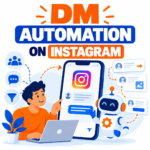
Instagram Direct Messages have become one of the most important channels for customer service, lead generation, sales conversations, and community engagement. Manually answering every inquiry, keyword comment, or Story reply does not scale. This is why DM automation has grown rapidly.
However, Instagram (Meta) enforces strict rules. Automation is allowed when it is reactive, user-initiated, and runs through official channels. It is not allowed when it involves cold outreach, bulk messaging of non-engaged users, or unofficial tools that scrape or simulate human behavior. Understanding this distinction is essential for protecting your account while still capturing the efficiency benefits of automation.
This guide covers what DM automation is, Meta’s core rules in 2026, what you can and cannot automate, native Instagram tools, third-party platforms, practical setup approaches, high-value use cases, rate limits, compliance best practices, risks, and a sustainable strategy for using automation effectively.
What Instagram DM Automation Actually Means
DM automation refers to systems that automatically send or respond to Instagram Direct Messages based on triggers such as:
- An incoming DM containing a keyword
- A comment on a post, Reel, or ad
- A reply or reaction to a Story
- A Story mention
- Certain link or button interactions
Legitimate automation is almost always reactive: the user takes an action first, which opens a messaging window, and the system replies within Meta’s rules. Proactive cold messaging to people who have never interacted with your account is not supported through official APIs and carries high risk.
Meta’s Core Rules for Instagram DM Automation (2026)
These principles govern nearly every compliant setup:
1. User must initiate or trigger the interaction
You can message someone only after they have engaged in a qualifying way (sent a DM, commented, replied to a Story, etc.). Following your account alone does not open a conversation window for automated outreach.
2. The 24-hour messaging window
After a user’s qualifying message or interaction, businesses generally have 24 hours to send automated replies, links, product information, and promotional content. Each new user reply typically resets the window. Once it closes, automated promotional messaging is restricted until the user messages again.
3. Human Agent tag / extended window
For genuine human support, a longer window (commonly up to 7 days from the user’s last message) may be available under specific conditions. This is intended for real agent responses, not automated sequences.
4. Private replies to comments
You can send one private reply (DM) per comment on a post or Reel, generally within 7 days of the comment. Live comment private replies have tighter timing rules (often only during the broadcast).
5. Official API only
Meta’s Platform policies state that programmatic access must go through official Platform APIs. Tools that log in with your password, use browser automation, or scrape the interface violate the terms and significantly increase restriction risk.
6. Rate and volume considerations
Meta publishes API call limits (for example, high per-second caps on the Send API for text and lower caps for media, plus hourly limits on private replies to comments). There is also practical account-level behavior monitoring. Tools usually enforce conservative pacing.
7. Disclosure and human handover
Where required by law or recommended by Meta, automated conversations should identify themselves as automated. Systems using the messaging API are expected to provide a path to a human agent.
These rules apply whether you use Instagram’s native features or a third-party platform connected via Meta’s APIs.
What You Can Automate Safely
- Instant or keyword-triggered replies to incoming DMs (pricing, shipping, FAQs, links).
- Comment-to-DM flows: user comments a keyword on a post/Reel/ad → receives a private reply with a link, resource, or next step.
- Story reply or reaction automations (within the allowed window).
- Welcome or onboarding sequences for people who message you first.
- FAQ / quick-reply button experiences inside conversations.
- Away messages and basic business-hour responses.
- Follow-up messages inside an open 24-hour window based on user actions (clicked, replied, etc.).
- Lead capture flows that move interested users toward email, WhatsApp, or a website (with proper consent handling).
What You Cannot (or Should Not) Automate
- Cold DMs to people who have never messaged or meaningfully interacted with you.
- Bulk messaging of all followers.
- Messaging outside the allowed window with promotional content.
- Using unofficial bots, browser extensions, or tools that require your Instagram password.
- High-volume identical spammy messages that generate negative feedback.
- Fake engagement (automated likes, follows, or comments) paired with DMs.
Tools that promise “DM all your followers” or unlimited cold outreach almost always rely on non-compliant methods.
Native Instagram / Meta Tools
Instagram and Meta Business Suite provide built-in automation options for professional accounts:
- Instant Reply — Automated response when someone starts a new conversation.
- FAQ / Suggested replies — Predefined questions users can tap.
- Keyword replies — Responses triggered by specific words in DMs.
- Away messages — Automatic replies during set hours.
- Basic inbox automations and saved replies.
These are the safest starting point. They are limited compared with full-featured third-party platforms but carry minimal compliance risk when configured correctly.
Third-Party Platforms (Official API Route)
Popular platforms that connect via Meta’s official messaging APIs (OAuth / Meta login, never password) include tools such as Manychat and similar Meta Business Partner or Graph API-based solutions. These typically support:
- Comment-to-DM and Story-reply triggers
- Multi-step conversational flows
- Keyword conditions and user attributes
- Integration with email, CRM, or e-commerce tools
- Analytics on flow performance
When evaluating any tool, confirm:
- It uses Meta’s official login and APIs (not password entry).
- It respects messaging windows and rate limits.
- It provides clear documentation on compliance.
- It offers a human handover path.
Avoid any service that asks for your Instagram password or claims to bypass Meta’s rules.
High-Value Use Cases
Lead generation and content distribution
“Comment KEYWORD for the free guide / price list / waitlist link.” The automation sends the resource via DM, captures interest, and can follow up inside the window.
Customer support and FAQs
Instant answers to common questions (hours, shipping, sizing, pricing) reduce response time and free human agents for complex issues.
E-commerce and product inquiry
Automated replies with product links, availability, or collection recommendations triggered by comments or DMs.
Event or launch promotion
Keyword-triggered delivery of ticket links, reminders, or early-access information.
Appointment or consultation booking
Flows that collect basic details and direct users to a calendar or qualifying form.
Re-engagement inside open windows
Follow-ups to people who recently messaged but did not complete a desired action.
Practical Setup Approach
- Convert to a professional (Business or Creator) Instagram account and connect it properly to Meta Business tools / a Facebook Page as required.
- Start with native Instagram automations for basic instant replies and FAQs.
- For more advanced flows, choose a reputable official-API platform and connect via Meta’s authorization process.
- Map your highest-volume questions and most effective lead magnets.
- Design simple, clear flows: trigger → helpful first message (with disclosure if appropriate) → optional questions or buttons → clear next step → human handover option.
- Test thoroughly with real accounts before scaling.
- Monitor response quality, user feedback, and account health metrics.
- Keep a human in the loop for escalations and complex conversations.
Best Practices for Performance and Safety
- Prioritize usefulness over aggressive selling in the first automated message.
- Keep copy natural and varied where possible.
- Use specific, intentional keywords rather than overly broad ones.
- Always provide an easy way for users to reach a human.
- Respect opt-outs and negative feedback immediately.
- Align landing pages or next steps with the promise made in the DM.
- Review flows regularly for broken links, outdated offers, or poor experience.
- Combine automation with genuine manual outreach for high-value prospects.
- Stay updated on Meta’s messaging documentation, as details can evolve.
Risks and How Accounts Get Restricted
Primary risk factors include:
- Using unofficial/password-based or browser-automation tools
- Attempting cold or bulk outreach
- Ignoring messaging windows
- Generating high volumes of negative user feedback or spam reports
- Overly repetitive or low-quality automated copy
- Violating other platform policies (fake engagement, etc.)
Compliant, user-initiated automation through official channels carries far lower risk when executed thoughtfully. Meta’s systems focus on spam behavior and policy violations rather than the mere existence of automation.
Measurement and Optimization
Track:
- Number of conversations started via each trigger
- Response and completion rates inside flows
- Click-throughs to links or sites
- Downstream conversions (leads, purchases, bookings)
- User sentiment and request-for-human rates
- Any account restrictions or delivery issues
Use these insights to refine keywords, message copy, offers, and handoff points.
Sustainable Long-Term Strategy
The most durable approach combines:
- Official-API automation for scalable, reactive responses and lead capture
- Native tools for simple coverage
- Human agents for relationship-building, complex support, and high-value conversations
- Content and creative that naturally invite the qualifying interactions (comments, Story replies, DMs) your automations depend on
Automation should feel like a helpful extension of your brand, not a barrier. When users receive fast, relevant answers and can easily reach a person when needed, both efficiency and trust improve.
Conclusion
Instagram DM automation is powerful and permitted when it stays within Meta’s framework: professional accounts, official APIs, user-initiated triggers, and respect for the 24-hour (and related) messaging windows. It excels at answering common questions instantly, delivering resources via comment-to-DM or Story-reply flows, and qualifying interested users at scale.
Cold outreach, unofficial bots, and attempts to message people who have not engaged remain high-risk and non-compliant. The winning strategy in 2026 is clear—use approved tools and reactive automation to handle volume, keep humans involved for quality and complexity, design genuinely helpful experiences, and continuously monitor both performance and account health.
When implemented this way, DM automation becomes a reliable growth and service channel rather than a policy liability. Start with native features or a trusted official-API platform, map your highest-impact use cases, test carefully, and expand only what delivers value to both your audience and your business.

Author