1. What is Remarketing?
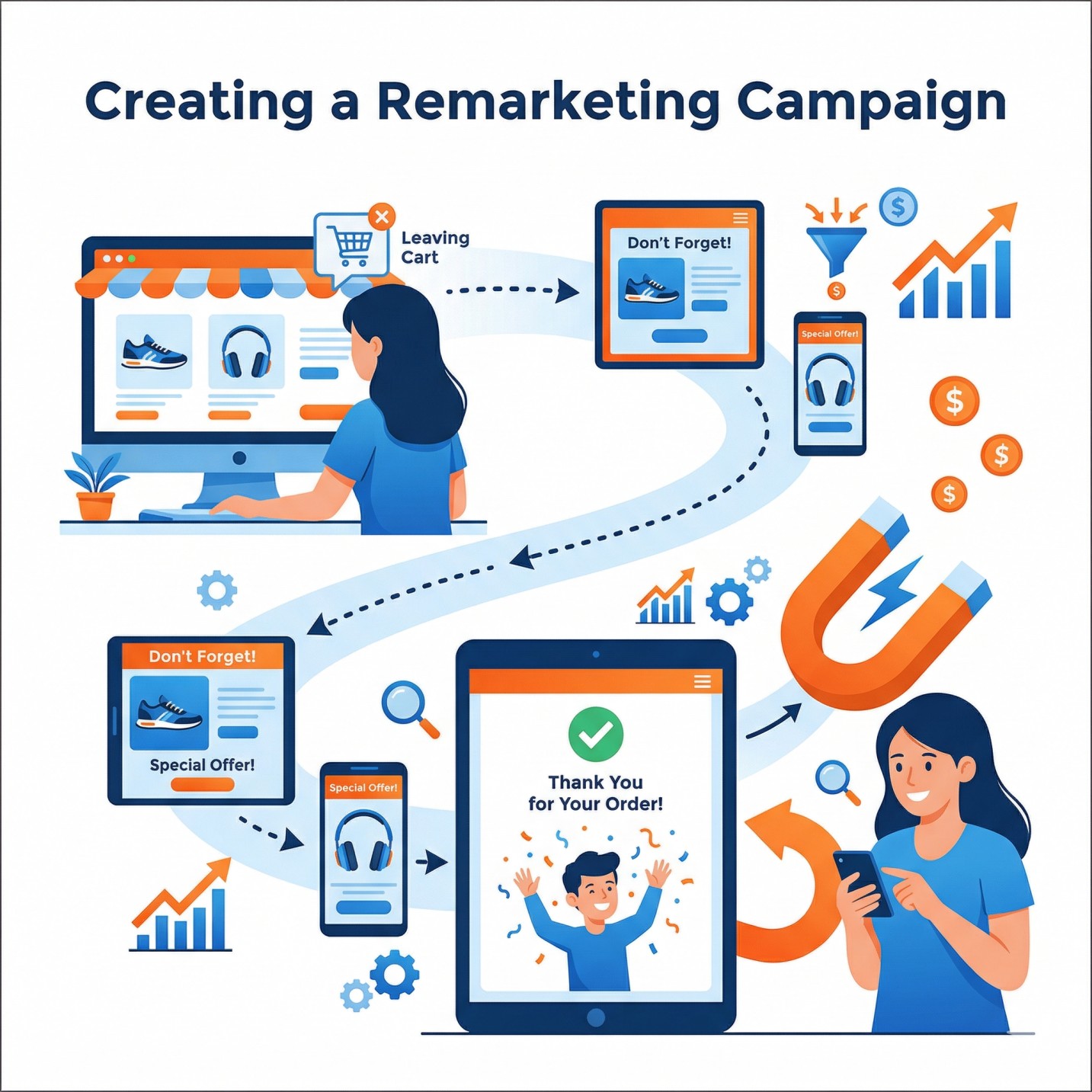
Remarketing (also called retargeting) is a strategy where you re-engage users who have already interacted with your brand but didn’t convert.
🔍 How It Actually Works (Behind the Scenes)
When a user visits your website:
- A tracking pixel drops a cookie in their browser
- That cookie stores user behavior data (pages visited, actions taken)
- Platforms like Google or Meta match this user to their network
- You show ads specifically to this user later
👉 Example:
A user visits your Shopify store, views shoes, and leaves. Later, they see ads for the same shoes on Instagram or YouTube.
2. Why Remarketing Works (Psychology + Data)
Remarketing is powerful because it aligns with human decision-making behavior.
🧠 The Rule of 7 (Marketing Principle)
People need to see your brand multiple times (7+ touchpoints) before converting.
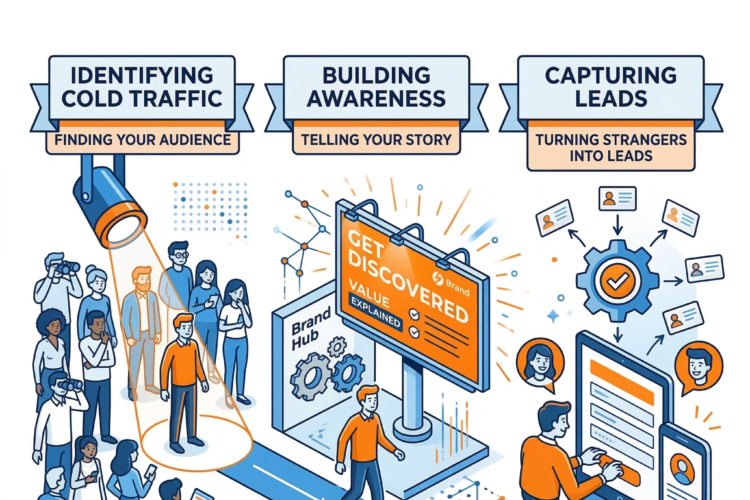
🔥 Warm vs Cold Traffic
| Type |
Awareness |
Conversion Probability |
| Cold Traffic |
Low |
Very Low |
| Remarketing Audience |
High |
Very High |
👉 Remarketing works because:
- The user already knows you
- Trust barrier is reduced
- Intent is already present
3. Types of Remarketing (Detailed Breakdown)
3.1 Standard Remarketing
✔ What it is:
Showing display ads to anyone who visited your website.
✔ Use Case:
- Brand recall
- General awareness
✔ Example:
User visits homepage → sees banner ads later on news websites.
3.2 Dynamic Remarketing (Very Powerful)
✔ What it is:
Automatically shows exact products/services users viewed.
✔ How it works:
- Requires product feed (e-commerce)
- Ads are dynamically generated
✔ Example:
User views “Nike Running Shoes” → later sees same shoes in ads
✔ Why it converts:
- Highly personalized
- Matches exact intent
3.3 Search Remarketing (RLSA)
✔ What it is:
Targets past visitors when they search again on Google.
✔ Example:
User visits your SaaS site → later searches “best CRM tools” → your ad appears
✔ Strategy:
- Increase bids for returning users
- Use stronger CTAs
3.4 Video Remarketing
✔ What it is:
Targets users who:
- Watched your YouTube videos
- Engaged with content
✔ Example:
User watches 50% of your video → sees follow-up ads
3.5 Email Remarketing (Customer Match)
✔ What it is:
Upload email lists → target users across platforms
✔ Best for:
- Existing customers
- Lead nurturing
3.6 App Remarketing
✔ What it is:
Targets users who installed but didn’t engage
✔ Example:
Push ads to users who didn’t open app after install
4. Step-by-Step Campaign Creation (Expanded)
Step 1: Define Clear Goals (Most Important Step)
Without goals, your campaign will fail.
🎯 Types of Goals:
1. Sales (E-commerce)
- Focus: ROAS
- Strategy: Dynamic ads + offers
2. Lead Generation
- Focus: Form fills
- Strategy: Trust + value
3. Brand Recall
- Focus: impressions
- Strategy: storytelling
4. Upselling / Cross-selling
- Target existing customers
⚠️ Common Mistake:
Running the same ad for all goals → leads to poor performance
Step 2: Tracking Setup (Technical Foundation)
This is where most campaigns fail.
🔧 Key Pixels:
Google Ads Tag
Tracks:
Meta Pixel
Tracks:
- Add to cart
- Purchase
- View content
LinkedIn Insight Tag
Tracks:
🔥 Advanced Setup:
Use Google Tag Manager (GTM)
- Centralized tracking
- Easy updates
- No coding required
⚠️ Common Mistakes:
- Pixel not firing
- Duplicate events
- Wrong event tracking
Step 3: Audience Segmentation (Core of Success)
Segmentation = Profit
🎯 High-Performing Segments:
1. All Visitors (Top Funnel)
- Broad audience
- Low intent
2. Product Page Visitors
3. Cart Abandoners (Gold Mine)
👉 These users are closest to purchase
4. Past Buyers
5. Time-Based Segmentation
| Segment |
Intent Level |
| 1 Day |
Very Hot |
| 7 Days |
Warm |
| 30 Days |
Cool |
| 90 Days |
Cold |
🔥 Pro Strategy:
Create layered audiences:
- Product viewers (7 days)
- Cart abandoners (3 days)
Step 4: Platform Selection Strategy
Google Ads
Strength:
- Massive reach
- Search + Display
Best for:
Meta Ads (Facebook + Instagram)
Strength:
- Visual targeting
- Advanced audience segmentation
Best for:
- E-commerce
- Lifestyle brands
LinkedIn Ads
Strength:
Best for:
YouTube Ads
Strength:
Step 5: Creating High-Converting Ads (Deep Dive)
🎯 Core Elements:
1. Headline
Bad:
Good:
- “Still thinking about it?”
- “Your cart is waiting!”
2. Personalization
Use:
- Product names
- User behavior
3. CTA (Call to Action)
Examples:
- Buy Now
- Complete Purchase
- Get Offer
4. Visual Strategy
Use:
- Product images
- Lifestyle shots
- Videos
5. Offers & Incentives
Examples:
- 10% discount
- Free shipping
- Limited-time deals
🔥 Psychological Triggers:
- Scarcity (“Only 2 left”)
- Urgency (“Ends tonight”)
- Social proof (“1000+ bought”)
Step 6: Budget & Bidding Strategy (Advanced)
💰 Budget Allocation
- 20–40% for remarketing
- Increase for high-performing audiences
🎯 Bidding Types:
1. Target CPA
- Focus on cost per conversion
2. Maximize Conversions
3. ROAS Bidding
🔥 Advanced Tip:
Bid higher for:
- Cart abandoners
- Recent visitors
Step 7: Frequency Capping (Avoid Burnout)
Too many ads = annoyance + brand damage
Recommended:
Signs of Overexposure:
- High impressions, low CTR
- Increased CPC
Step 8: Launch, Monitor & Optimize
📊 Key Metrics:
CTR (Click Through Rate)
Conversion Rate
CPA
ROAS
🔥 Optimization Checklist:
- Pause low-performing ads
- Scale high performers
- Test creatives weekly
5. Advanced Remarketing Strategies (Deep Level)
🔥 1. Sequential Remarketing (Storytelling Funnel)
Instead of repeating the same ad:
Example Funnel:
Day 1–3 → Awareness
Day 4–7 → Benefits
Day 8+ → Offer
🔥 2. Cross-Platform Remarketing
User journey:
- Sees Google ad
- Then Instagram ad
- Then YouTube ad
👉 This increases:
- Trust
- Conversion probability
🔥 3. Exclusion Strategy
Exclude:
👉 Saves budget + improves ROI
🔥 4. Lookalike / Similar Audiences
Use remarketing data to find:
🔥 5. Dynamic Product Ads
Automatically:
- Show products
- Update pricing
- Personalize ads
6. Common Mistakes (Detailed)
❌ No Segmentation
Leads to irrelevant ads
❌ Weak Creatives
Users ignore boring ads
❌ Over-targeting
Too many ads → annoyance
❌ No Testing
You must A/B test constantly
❌ Ignoring Mobile
Most users are mobile-first
7. Remarketing Funnel Strategy (Full Breakdown)
TOFU (Top of Funnel)
- Target: All visitors
- Goal: Awareness
MOFU (Middle of Funnel)
- Target: Engaged users
- Goal: Consideration
BOFU (Bottom of Funnel)
- Target: Cart abandoners
- Goal: Conversion
8. Real-Life Case Study (Expanded)
Scenario:
E-commerce fashion brand
Step 1:
User visits product page
Step 2:
Leaves without buying
Step 3:
Sees Instagram ad → “Still interested?”
Step 4:
Sees Google ad → “10% Off Today”
Step 5:
Returns → Purchases
Result:
- 3x higher conversion rate
- 40% lower CPA
9. Future of Remarketing (2026 & Beyond)
🚀 Key Trends:
1. First-Party Data
- Own your data
- CRM integration
2. AI & Automation
- Smart bidding
- Predictive targeting
3. Privacy Changes
- Cookieless tracking
- Consent-based marketing
4. Server-Side Tracking
Final Conclusion
Remarketing is not optional—it’s essential.
If you are running ads without remarketing:
👉 You are wasting 70–80% of your traffic potential.
Final Expert Tips:
- Focus on intent-based segmentation
- Use personalization aggressively
- Test creatives continuously
- Combine platforms
- Track everything properly