
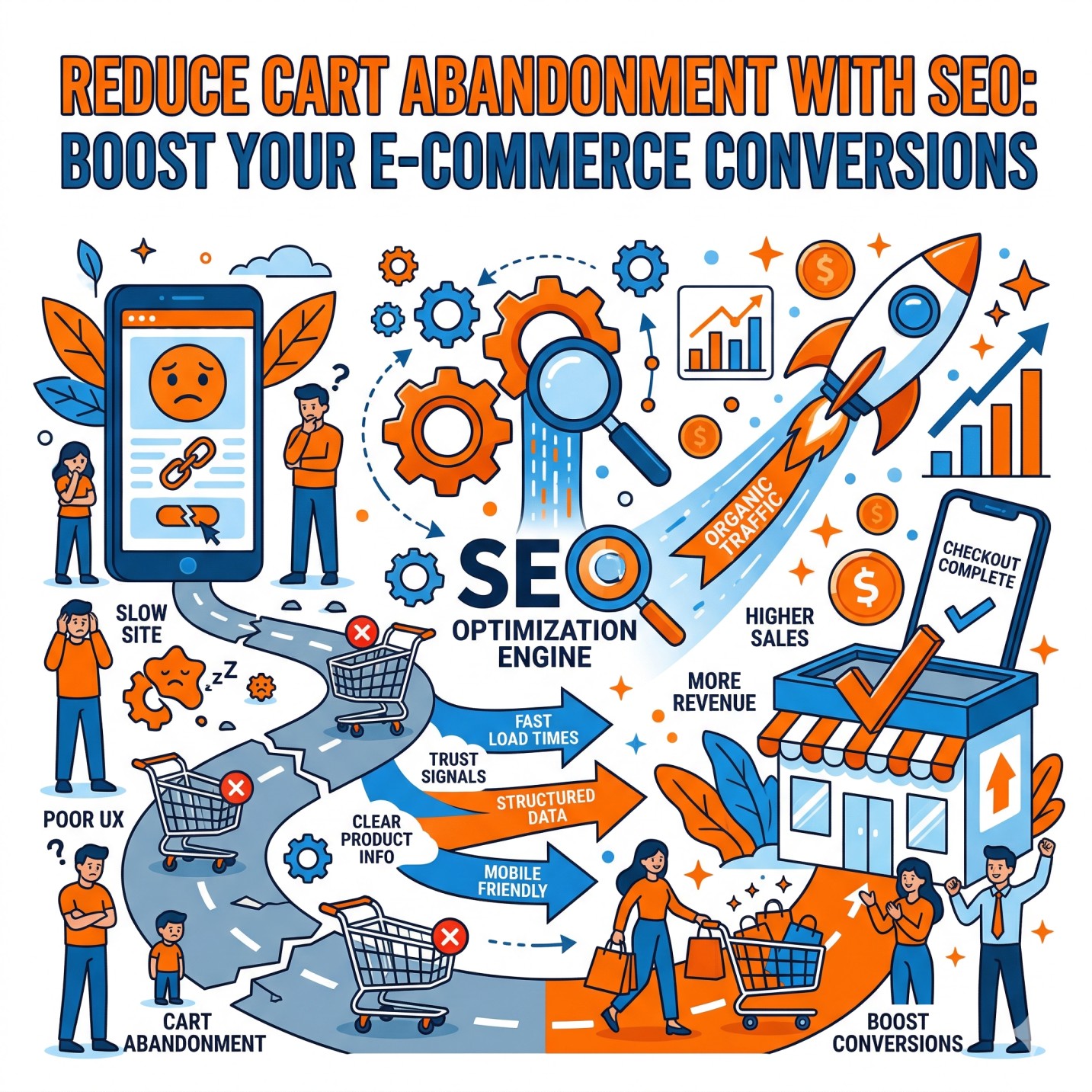
Cart abandonment remains one of the biggest challenges for online stores. Industry benchmarks show average abandonment rates hovering around 70%, with mobile rates often exceeding 85%. Shoppers add items to their cart with intent, only to leave before completing the purchase due to friction, slow loading times, poor trust signals, unexpected costs, or confusing experiences. While many solutions focus on checkout design, email recovery, or retargeting ads, SEO offers a powerful, often underutilized lever to reduce cart abandonment at its root — by attracting higher-quality traffic and delivering a faster, more trustworthy, and frictionless user experience that encourages completion.
This in-depth guide explores exactly how SEO strategies can lower your cart abandonment rate. We’ll cover the connection between SEO and abandonment, core technical and on-page tactics, advanced optimization techniques, measurement frameworks, real-world examples, common pitfalls, and forward-looking trends for 2026 and beyond. Whether you’re running a direct-to-consumer brand, a Shopify store, or a large-scale e-commerce platform, implementing these SEO-driven approaches can recover lost revenue without relying solely on discounts or paid ads.
Understanding Cart Abandonment and the Role of SEO
Cart abandonment occurs when a user adds products to their shopping cart but exits without purchasing. Common causes include:
- Slow page load times
- Complicated or lengthy checkout processes
- Hidden shipping fees or taxes
- Lack of trust (no security badges, unclear policies)
- Poor mobile experience
- Irrelevant or low-intent traffic from generic search queries
SEO directly addresses several of these root causes. Good SEO doesn’t just drive more traffic — it drives better traffic (users with higher purchase intent) to well-optimized pages that load quickly, build confidence, and guide users smoothly toward conversion.
Search engines like Google prioritize user experience signals in rankings (Core Web Vitals, mobile-friendliness, page speed). Sites that rank higher for relevant, high-intent keywords tend to deliver faster, cleaner experiences, which naturally reduce abandonment. Moreover, optimized product and category pages reduce frustration during browsing, while structured data and trust-building elements on checkout paths increase completion rates.
In short: SEO creates a virtuous cycle — better rankings → higher-quality visitors → improved on-site experience → lower abandonment → more conversions and stronger SEO signals.
Why Site Speed Is the #1 SEO Lever for Reducing Abandonment
Page speed is one of the most direct links between SEO and cart abandonment. Research consistently shows that even a 1-second delay in load time can reduce conversions by up to 7%, and roughly 50% of users abandon if a page takes longer than 2-3 seconds to load. A staggering 76% of shoppers have abandoned a cart due to slow site performance at some point.
How SEO helps here:
- Google uses page speed (including Largest Contentful Paint, Cumulative Layout Shift, and Interaction to Next Paint) as ranking factors via Core Web Vitals.
- Faster sites rank higher, attracting more organic traffic.
- Optimized sites provide a smoother journey from search result → product page → cart → checkout.
Actionable SEO tactics to boost speed and cut abandonment:
- Compress images and serve next-gen formats (WebP, AVIF).
- Enable browser caching, minify CSS/JS/HTML, and use a Content Delivery Network (CDN).
- Implement lazy loading for images and videos.
- Choose fast hosting and consider headless or server-side rendering where appropriate.
- Audit and remove render-blocking resources.
Prioritizing these improvements often yields quick wins: many stores see 10-30% reductions in abandonment after meaningful speed optimizations. Because Google rewards fast sites with better rankings, the benefits compound over time.
Mobile Optimization: Critical for Lowering Abandonment Rates
Mobile shopping now dominates, yet mobile cart abandonment rates remain significantly higher than desktop. Slow mobile experiences, tiny buttons, or non-responsive checkout flows drive users away.
SEO connection:
- Mobile-first indexing means Google primarily crawls and ranks the mobile version of your site.
- Mobile usability is a direct ranking factor.
SEO-driven mobile tactics to reduce abandonment:
- Ensure fully responsive design with large, touch-friendly elements.
- Optimize checkout for one-handed use and minimal scrolling.
- Use accelerated mobile pages (AMP) selectively for high-traffic landing pages (though test carefully as full adoption has evolved).
- Focus on mobile Core Web Vitals in your SEO audits.
Stores that achieve excellent mobile experiences often see abandonment drop substantially, especially since a large portion of organic traffic now comes from mobile searches.
Optimizing Product Pages and Checkout with On-Page SEO
Well-optimized product pages reduce abandonment by setting clear expectations and building confidence before users even reach the cart.
Key on-page SEO strategies:
- Write compelling, keyword-rich product descriptions that answer common questions (size, material, shipping, returns) to reduce uncertainty.
- Optimize title tags and meta descriptions for high-intent keywords like “buy [product] online fast shipping” or “[product] with free delivery.”
- Use high-quality images with descriptive alt text and implement image SEO best practices.
- Add internal links to related products, FAQs, or trust pages to keep users engaged without friction.
- Implement breadcrumb navigation for easy navigation back to categories.
For the checkout process itself (which is often a multi-step funnel):
- Simplify forms and reduce required fields — SEO indirectly supports this by driving traffic to pages that feel professional and trustworthy.
- Enable guest checkout to remove account-creation barriers.
- Display clear progress indicators so users know how many steps remain.
While checkout pages are typically no-indexed, the pages leading into them (product, cart) benefit hugely from SEO, creating a seamless journey that lowers drop-off.
Building Trust with Structured Data and Technical SEO
Lack of trust is a top abandonment driver. SEO elements can visibly boost credibility in search results and on-site.
Powerful tactics:
- Implement schema markup (structured data) for products, reviews, FAQs, and Organization. This enables rich snippets (stars, price, availability) in SERPs, increasing click-through rates from qualified searchers.
- Rich results make your listing stand out, attracting users who are further along in the buying journey and less likely to abandon.
- Add security badges, SSL certificates, and trust signals (payment icons, guarantees) — these can be reinforced through on-page content optimized for related keywords like “secure checkout” or “money-back guarantee.”
- Optimize FAQ and trust pages (shipping policy, returns) with targeted keywords so users find reassurance via organic search or internal navigation.
Stores using product schema often report higher perceived legitimacy, which translates to fewer hesitations at checkout.
Content Marketing and Keyword Strategies to Attract Better Traffic
Not all traffic is equal. SEO can help you target bottom-funnel, high-intent keywords that bring users ready to buy, reducing the chance they’ll abandon due to mismatched expectations.
Effective approaches:
- Create buyer-intent content such as “best [product] 2026,” comparison guides, or “how to choose [category]” articles that funnel into optimized product pages.
- Optimize category pages with detailed, unique content that helps users narrow choices quickly.
- Use long-tail keywords that signal strong purchase intent (e.g., “[brand] [product] with free shipping”).
- Build topical authority around your niche so searchers view your site as a trusted destination rather than a generic store.
This higher-quality organic traffic is more likely to convert and less prone to abandonment compared to broad top-of-funnel traffic.
Advanced SEO Techniques for Cart Recovery and Retention
SEO extends beyond initial acquisition into retention and recovery:
- Optimize “abandoned cart” or recovery landing pages if you use them.
- Create helpful post-purchase or support content that ranks well and reinforces brand trust for future visits.
- Use SEO to support multi-channel recovery — for example, ranking for branded searches so users easily return via organic results after seeing a reminder email.
- Monitor and optimize for featured snippets or “people also ask” sections that address common objections (e.g., shipping times, return policies).
Measuring Success: Key Metrics and Tools
To prove SEO’s impact on cart abandonment, track these metrics:
- Cart abandonment rate (overall and segmented by traffic source — organic vs. others)
- Organic traffic to product/cart/checkout pages
- Bounce rate and time on page for key funnel steps
- Conversion rate from organic search
- Core Web Vitals scores and page speed insights
- Revenue attributed to organic channels
Tools to use:
- Google Analytics 4 (with enhanced e-commerce tracking)
- Google Search Console for performance and indexing data
- PageSpeed Insights and Lighthouse audits
- Third-party tools like SEMrush, Ahrefs, or Hotjar for behavior insights
Set up segments to compare abandonment for organic visitors before and after SEO improvements. Expect gradual but compounding gains as rankings improve.
Real-World Impact and Case Study Patterns
Many e-commerce brands have seen meaningful reductions in abandonment through SEO-focused speed and UX improvements. Common outcomes include:
- 10-30% lower abandonment after site speed optimizations that also boosted rankings.
- Higher organic conversion rates when product pages rank for specific, intent-driven queries.
- Increased trust and completion rates from rich snippets and structured data.
One pattern across successful stores: combining technical SEO (speed + mobile) with on-page optimizations (clear descriptions + trust elements) creates a flywheel effect — better rankings bring better traffic, which further validates the site’s quality to search engines.
Common Challenges and How to Overcome Them
- Technical debt: Large sites with legacy code struggle with speed. Solution: Prioritize a phased audit and migration to modern, SEO-friendly architectures.
- Over-optimization: Keyword stuffing on product pages can hurt trust. Solution: Focus on user-first content that naturally incorporates keywords.
- Measuring attribution: Organic impact on checkout can be indirect. Solution: Use multi-touch attribution models and controlled tests (e.g., speed improvements on specific product lines).
- Algorithm changes: SEO signals evolve. Solution: Stay updated with Core Web Vitals and user experience guidelines while monitoring performance.
Future Trends: SEO and Cart Abandonment in 2026+
In 2026, expect greater emphasis on:
- AI-driven personalization within SEO-optimized experiences.
- Voice and visual search influencing how users discover products.
- Even stricter focus on experience signals as search engines prioritize helpful, fast, trustworthy sites.
- Integration of SEO with broader commerce platforms (e.g., headless setups that maintain SEO while enabling lightning-fast checkouts).
Brands that treat SEO as a core part of their conversion optimization strategy — not just traffic generation — will see the biggest reductions in abandonment.
Conclusion: Make SEO Your Secret Weapon Against Cart Abandonment
Reducing cart abandonment isn’t only about exit-intent popups, recovery emails, or one-page checkouts. SEO provides foundational improvements that make every stage of the shopping journey more efficient and trustworthy. By focusing on site speed, mobile optimization, structured data, high-intent keywords, and user-centric on-page elements, you can attract better visitors, deliver superior experiences, and convert more of those hard-earned organic sessions into sales.
Start today with a quick audit: Check your Core Web Vitals, test mobile checkout flow, review product page optimization, and identify quick wins on high-traffic pages. Implement changes, measure results over weeks and months, and iterate. The brands winning in 2026 combine strong SEO with seamless commerce experiences — turning potential abandonments into completed orders and loyal customers.
SEO-driven reductions in cart abandonment deliver compounding returns: higher rankings, more qualified traffic, better conversions, and stronger long-term revenue growth. It’s one of the smartest, most sustainable ways to protect and grow your e-commerce bottom line.
Master these strategies, and you’ll not only recover lost sales but also build a more resilient, search-engine-friendly store that customers love to buy from — again and again.

Author