

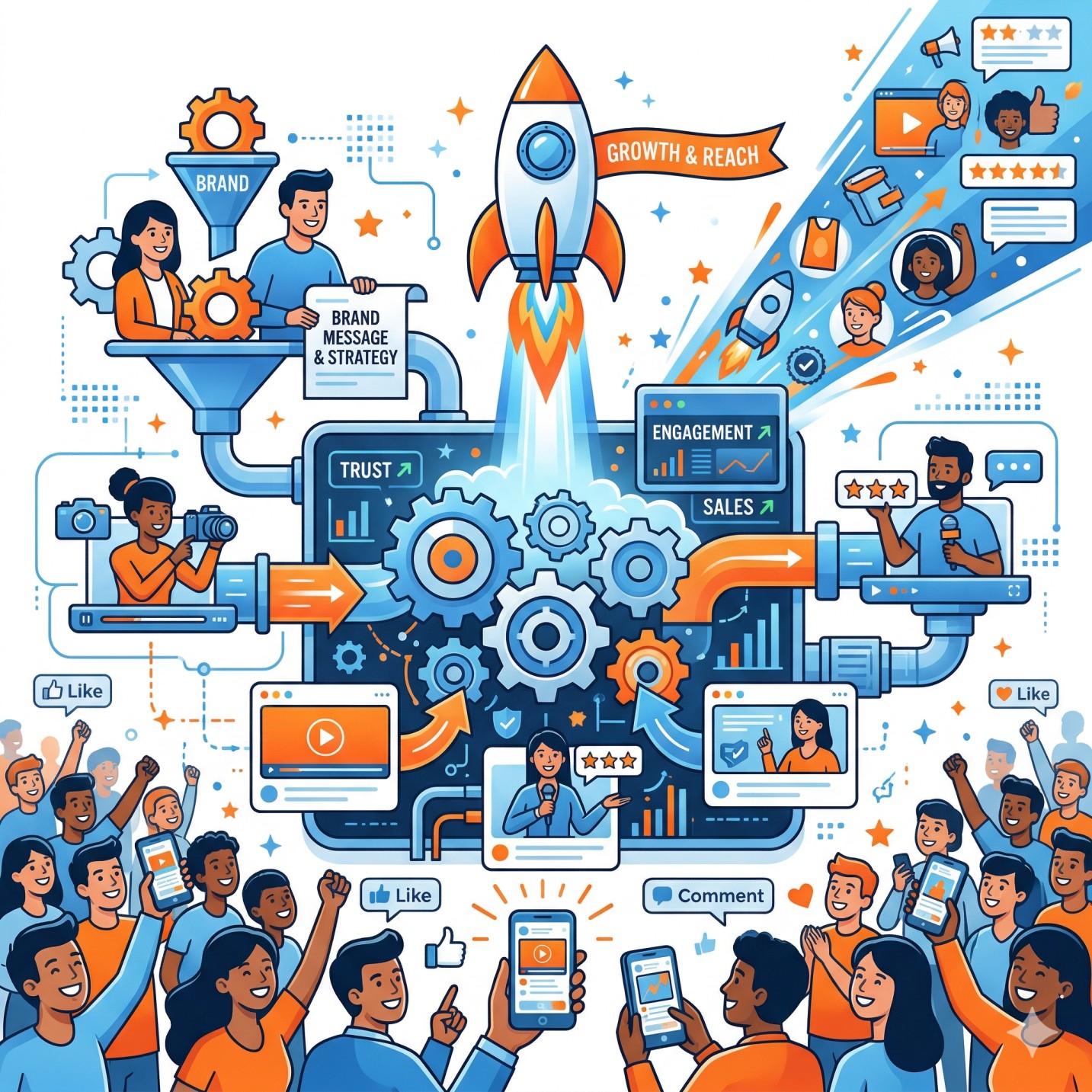
In today’s fragmented digital landscape, where attention spans are shorter than ever and consumers increasingly tune out traditional advertising, influencer content has emerged as one of the most powerful tools in a marketer’s arsenal. Whether you’re a direct-to-consumer brand, a B2B SaaS company, a local service provider, or a global enterprise, integrating influencer content isn’t just a nice-to-have tactic — it’s a strategic imperative that can drive authentic engagement, build trust at scale, and deliver measurable business results.
This exhaustive guide dives deep into every aspect of influencer content integration. We’ll define what influencer content truly means in 2026, explore its evolution, break down the different types and formats, outline a step-by-step framework for seamless integration, examine real-world use cases across industries, share proven optimization strategies, analyze compelling case studies, address common challenges, and look ahead to emerging trends. By the end, you’ll have a complete, actionable playbook to weave influencer content into your broader marketing strategy for maximum impact and ROI.
What Is Influencer Content and Why Does It Matter in 2026?
Influencer content refers to any original material — posts, videos, stories, live streams, blogs, podcasts, or user-generated-style assets — created by individuals who have built credibility, trust, and engaged audiences within specific niches. These creators (nano, micro, macro, or mega influencers) produce content that feels organic and relatable rather than overtly promotional.
In performance marketing terms, influencer content sits at the intersection of paid, owned, and earned media. It’s not just “paying someone to post about your product.” When done right, it becomes authentic storytelling that drives awareness, consideration, and conversion events — from link clicks and website visits to purchases, sign-ups, and long-term loyalty.
Why does it matter more than ever in 2026?
- Trust deficit in traditional ads: Consumers scroll past banner ads and sponsored posts at record speeds. Influencer content cuts through because it comes from a trusted voice.
- Algorithm favoritism: Social platforms reward authentic, high-engagement content from creators over branded posts.
- Fragmented attention: With TikTok, Instagram Reels, YouTube Shorts, LinkedIn, and emerging platforms like whatever new short-form video app dominates next, influencers help you meet audiences where they already are.
- Measurable performance: Advanced tracking (UTM parameters, unique promo codes, affiliate links, pixel events) turns influencer campaigns into performance channels with clear CPA, ROAS, and lifetime value metrics.
- Cost efficiency: Micro and nano influencers often deliver higher engagement rates and better ROI than celebrity endorsements, especially for niche audiences.
Brands that treat influencer content as a core channel — not a side experiment — consistently see 5-11x higher ROI compared to traditional digital ads.
The Evolution of Influencer Marketing: From 2010 to 2026
Influencer marketing began as simple product placements on blogs and early Instagram. The 2010s brought the rise of Instagram and YouTube stars, followed by the explosion of TikTok in 2020. By the mid-2020s, the industry matured dramatically:
- Shift from vanity metrics (likes/followers) to performance metrics (conversions, sales, engagement quality).
- Rise of creator economies with professional management agencies, revenue-sharing platforms, and direct brand-creator contracts.
- Privacy-first tracking replacing cookies with first-party data, unique discount codes, and server-side attribution.
- AI-assisted content creation and virtual influencers entering the mainstream.
- Regulatory clarity: stricter disclosure rules ( #ad, #sponsored) and platform tools for paid partnership labeling.
In 2026, influencer content is no longer a “tactic.” It’s a full-fledged marketing channel with dedicated budgets, dedicated teams, and sophisticated measurement frameworks that rival paid search or social ads.
Types of Influencer Content: Formats That Drive Results
Influencer content comes in many shapes. Understanding which formats align with your goals is crucial:
- Short-form Video (Reels, TikToks, Shorts): Highest engagement in 2026. Perfect for awareness and virality. Use cases: unboxing, tutorials, day-in-the-life with your product.
- Long-form Video (YouTube, IGTV, LinkedIn): Builds deeper trust and authority. Ideal for education, product deep-dives, or storytelling.
- Static Posts & Carousels: Still highly effective for Instagram and LinkedIn. Great for storytelling sequences or before-and-after transformations.
- Stories & Fleeting Content: High urgency and authenticity. Use for limited-time offers, behind-the-scenes, or Q&A.
- Live Streams & Events: Real-time interaction. Perfect for product launches, Q&A sessions, or co-hosted webinars.
- User-Generated Content (UGC) Style: Influencers create content that mimics organic customer posts — raw, authentic, and highly convertible.
- Blog Posts, Newsletters & Podcasts: Evergreen assets that drive SEO and long-term traffic.
- AR Filters, Games & Interactive Content: Emerging formats that boost shareability.
Smart brands mix formats within a single campaign: a TikTok teaser leading to a full YouTube review, then Stories for urgency, and a blog recap for SEO.
Step-by-Step Framework: How to Integrate Influencer Content into Your Strategy
Successful integration requires a systematic approach:
Step 1: Define Clear Objectives Align influencer content with specific business goals — brand awareness, lead generation, sales, retention, or community building. Tie every campaign to measurable conversion events (purchases, sign-ups, demo requests).
Step 2: Identify Your Target Audience Map audience demographics, interests, pain points, and platforms. Use tools like audience insights on Meta, TikTok Analytics, or Google Analytics to find where your ideal customers spend time.
Step 3: Find and Vet the Right Influencers
- Nano (1K-10K followers): Highest authenticity and engagement.
- Micro (10K-100K): Best ROI for most brands.
- Macro (100K-1M): Scale and reach.
- Mega (1M+): Brand halo effect. Criteria: relevance, engagement rate (aim for 3%+), audience quality (real followers, not bots), past brand work, and value alignment.
Step 4: Build Authentic Partnerships Move beyond one-off posts to long-term ambassador programs. Provide creative freedom while offering clear guidelines and assets (product samples, key messages, brand guidelines).
Step 5: Co-Create Content Strategies Brief influencers with campaign goals, key messages, and desired conversion events — but let them translate it into their unique voice.
Step 6: Implement Tracking and Measurement
- Unique promo codes or affiliate links per influencer.
- UTM parameters for every link.
- Pixel events and Conversions API for website actions.
- Platform-native insights + third-party tools for cross-channel attribution.
Step 7: Amplify and Repurpose Repurpose influencer content across your owned channels (email, website, ads). Run paid amplification on high-performing pieces to scale reach.
Step 8: Analyze, Optimize, and Scale Review performance weekly. Double down on what works, retire what doesn’t, and build evergreen influencer programs.
Deep Dive: Use Cases Across Industries and Channels
1. E-commerce and D2C Brands Influencers drive social commerce directly. Use cases: unboxing videos with shoppable links, try-on hauls, seasonal collection takeovers. A single well-timed Reel can generate thousands of site visits and add-to-cart events.
2. SaaS and B2B Companies Thought-leadership style content works best. Influencers in tech, productivity, or industry niches create tutorials, case study breakdowns, or LinkedIn carousels that position your tool as indispensable. Long-term ambassador programs turn creators into ongoing advocates.
3. Beauty, Fashion, and Lifestyle The original influencer sweet spot. Product seeding, GRWM (Get Ready With Me) videos, and affiliate-driven hauls deliver direct sales. Seasonal campaigns (holiday gift guides, summer skincare) perform exceptionally well.
4. Health, Fitness, and Wellness Authenticity is non-negotiable. Influencers share transformation stories, workout routines featuring your supplements or equipment, or mental health journeys. Compliance with regulations is critical.
5. Travel and Hospitality Destination takeovers, hotel reviews, and experience-based content drive bookings. Micro-influencers in niche travel segments (solo female travel, luxury, budget) often outperform big names.
6. Finance, Tech, and Professional Services Educators and finance creators explain complex products (credit cards, investing apps, software tools) in simple terms. LinkedIn and YouTube dominate here.
7. Local Businesses Hyper-local influencers (city-specific food bloggers, neighborhood moms) deliver foot traffic and appointments at low cost.
Key Metrics for Measuring Influencer Content Success
Track beyond vanity metrics:
- Engagement Rate (comments + saves + shares)
- Click-Through Rate and Conversion Rate
- Cost Per Acquisition / ROAS
- Earned Media Value (EMV)
- Audience Growth and Brand Sentiment
- Long-term Lifetime Value of customers acquired via influencers
Use multi-touch attribution to understand influencer content’s role in the full customer journey.
Optimization Strategies That Deliver Results in 2026
- Creative Freedom with Guardrails: Give influencers clear goals and assets, but let them create in their style.
- Content Repurposing Playbooks: Turn one influencer video into 20+ assets (clips, quotes, blog posts, ads).
- Hybrid Campaigns: Combine influencers with paid ads, email sequences, and retargeting for full-funnel impact.
- Data-Driven Creator Selection: Use past performance data and AI matching tools to predict success.
- Seasonal and Event-Led Campaigns: Tie content to holidays, product launches, or cultural moments.
- Community Building: Move from transactional posts to ongoing creator communities and ambassador programs.
- Cross-Platform Activation: Launch on TikTok, amplify on Instagram, repurpose for YouTube and LinkedIn.
Real-World Case Studies (Generalized from Industry Successes)
- A D2C skincare brand partnered with 50 micro-influencers for a summer campaign. Result: 340% increase in website traffic and 4.2x ROAS within 30 days.
- A productivity SaaS tool worked with tech YouTubers for in-depth reviews. Result: sustained 6-month increase in free trial sign-ups and lower churn among influencer-referred users.
- A fashion retailer launched an ambassador program with 12 creators. Result: consistent 15-25% of monthly revenue attributed to influencer-driven sales.
- A local fitness studio collaborated with neighborhood wellness influencers. Result: waitlist filled for 3 months straight with zero ad spend.
Common Challenges and How to Overcome Them
- Lack of Authenticity: Solution — choose aligned creators and give creative control.
- Scaling Difficulty: Solution — build tiered programs (core ambassadors + campaign-specific creators).
- Measurement Gaps: Solution — standardized tracking frameworks and regular audits.
- Regulatory Compliance: Solution — clear disclosure training and platform tools.
- Content Saturation: Solution — focus on quality over quantity and unique storytelling angles.
- Budget Allocation: Solution — start small, prove ROI, then scale budgets based on performance.
The Future of Influencer Content Integration (2026-2030)
- AI co-creation tools will help brands and creators produce content faster.
- Virtual and AI influencers will complement human creators for 24/7 availability.
- Deeper platform integrations will make shoppable influencer content seamless.
- First-party data communities will replace broad follower counts.
- Creator-led product development will blur lines between influencer and brand.
- Long-form, high-production-value content will regain importance as short-form fatigue sets in.
Brands that build genuine relationships with creators today will dominate tomorrow.
Conclusion: Make Influencer Content a Strategic Pillar, Not a Side Project
Integrating influencer content into your marketing strategy transforms how your brand shows up in the world. It adds authenticity, reach, and trust that no amount of paid media alone can achieve. When executed with clear goals, the right partners, rigorous tracking, and a commitment to genuine collaboration, influencer content becomes a high-ROI growth engine that compounds over time.
Start small if you’re new: pick one platform, three aligned micro-influencers, and one clear campaign objective. Measure everything. Learn. Iterate. Scale what works.
In 2026 and beyond, the brands winning the attention game aren’t just advertising — they’re partnering with voices their audiences already trust. Influencer content is no longer optional. It’s essential.
Your next move? Audit your current marketing mix. Identify gaps where authentic creator voices could fill them. Then reach out to your first influencer partner with a genuine, value-first proposal.
The era of influencer content as a core marketing strategy is here. Embrace it fully, and watch your brand’s growth accelerate in ways traditional channels simply cannot match. The future belongs to brands that don’t just sell products — they co-create stories with the people their customers already follow.

Author