
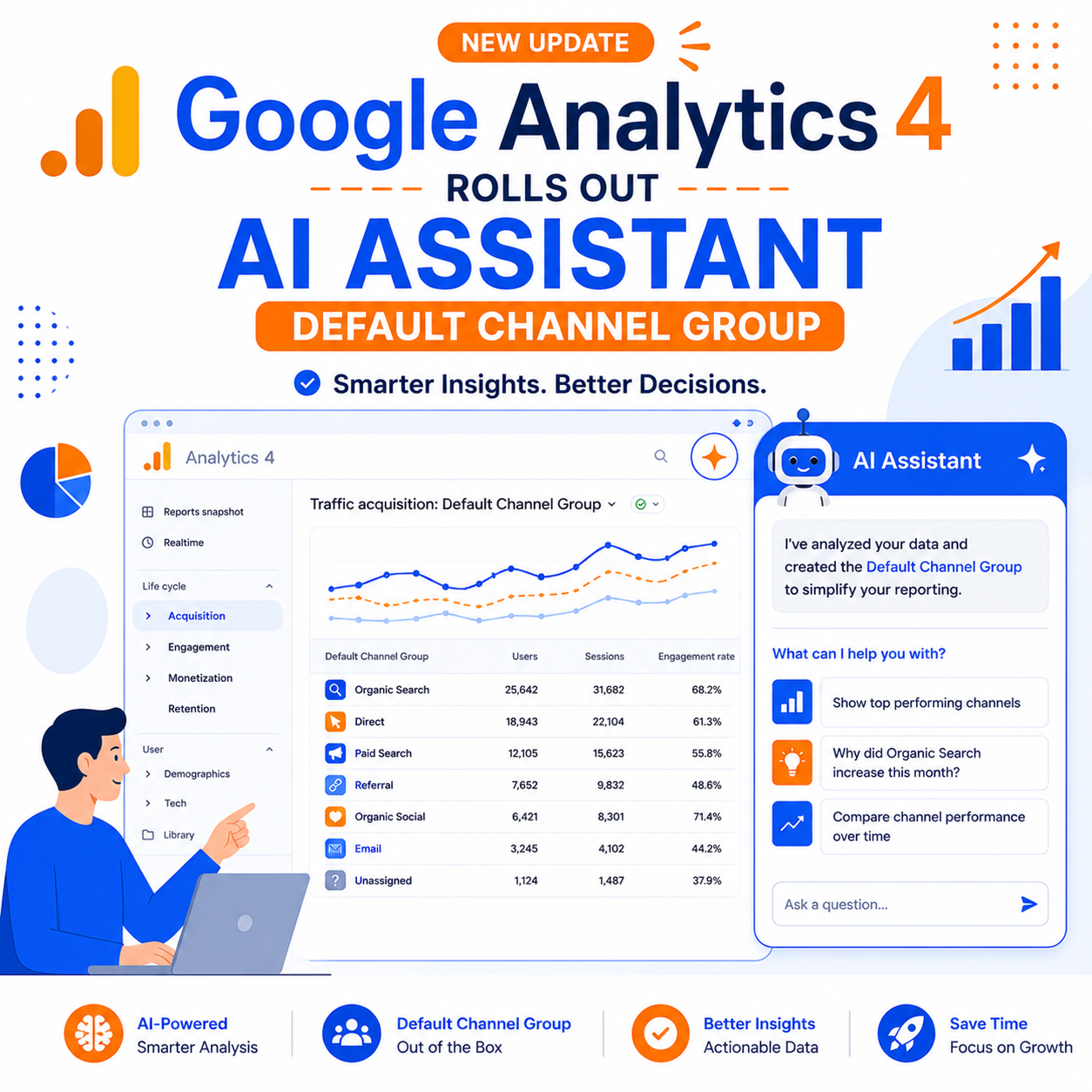
Google has officially recognized generative AI as a distinct acquisition source, introducing a native AI Assistant channel into GA4’s Default Channel Group reports as of mid-May 2026.
For digital marketers and strategists who have spent the last year building complex regex workarounds to separate chatbot traffic from generic referrals, this update standardizes attribution for AI-driven discovery right out of the box.
The Technical Details
The update automatically categorizes recognized AI chatbot referrers without requiring any manual configuration on the property level. When GA4 detects an eligible referrer header, it assigns three system values automatically:
- Medium: ai-assistant
- Channel Group: AI Assistant
- Campaign: (ai-assistant)
Google explicitly named ChatGPT, Gemini, and Claude in its initial rollout announcement, standardizing the tracking for the platforms that dominate the current AI landscape.
What This Solves (And What It Doesn’t)
Previously, AI chatbot traffic was lumped into the broad Referral bucket. This made it incredibly difficult to analyze the distinct user behavior, engagement, and conversion intent of users arriving from LLMs, who often carry much narrower and pre-qualified intent than a standard web referral.
While this update is a massive step forward for performance measurement, it does have functional limitations:
- The Referrer Dependency: The classification relies strictly on the referrer header. Traffic arriving from AI mobile apps, in-app browsers, or copied links will still fall into the Direct bucket. Industry estimates suggest the referrer header only captures 60 to 80 percent of actual AI-sourced traffic.
- Google AI Overviews Are Excluded: Traffic from Google’s own AI Overviews and AI Mode is not included in this channel. Google continues to report these within overall organic search performance.
- Retroactivity: Google rarely applies channel group logic retroactively, meaning month-over-month comparisons involving this new channel will require careful handling during the initial rollout phase.
Strategic Takeaways for Performance Optimization
- Maintain Custom Tracking (For Now): If you already have a Looker Studio dashboard or GA4 custom channel group tracking AI traffic (especially ones capturing niche bots like Perplexity or Microsoft Copilot), keep it running in parallel to validate the new native channel’s data capture over the next quarter.
- Isolate AI-Specific Landing Page Behavior: Since traffic from ChatGPT or Claude usually carries specific context, start isolating how these users behave on-site. Compare their conversion rates and engagement metrics directly against your traditional organic search and paid channels.
- The Shift Toward AISO/GEO: This update is not just a technical tracking fix; it is a major strategic signal. The world’s largest analytics platform is formally validating AI chatbots as a fundamental acquisition layer. As user discovery behavior continues to fragment, budget allocation strategies between traditional SEO and Generative Engine Optimization (GEO) now have a standardized KPI to anchor on.