
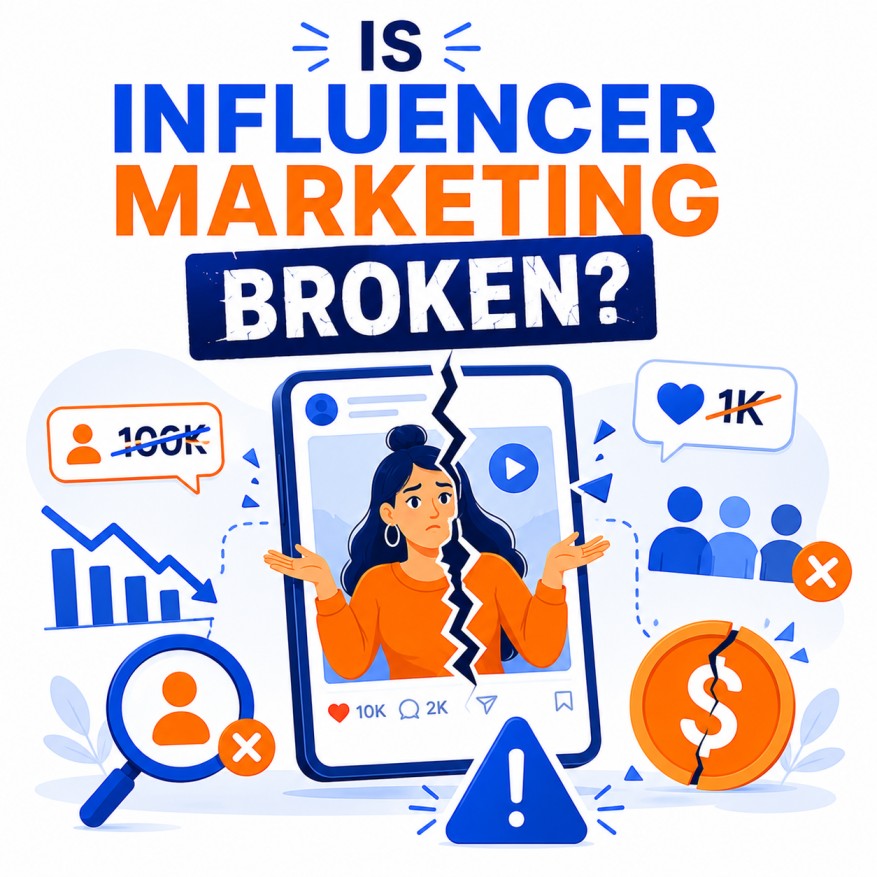
Influencer marketing in 2026 stands at a crossroads. Once hailed as the future of digital advertising, it now faces intense scrutiny. Critics argue that the space is oversaturated, plagued by fake engagement, declining ROI, creator fatigue, platform algorithm shifts, and regulatory pressures. Others maintain it remains one of the most powerful channels for authentic connection, community building, and measurable performance when executed strategically.
This exhaustive article provides a comprehensive, data-informed examination of whether influencer marketing is truly “broken” in 2026 or simply evolving. We’ll explore the current landscape, historical context, key challenges, undeniable strengths, emerging trends, success frameworks, real-world patterns, and a realistic outlook for brands, creators, and marketers.
1. The Current State of Influencer Marketing in 2026
Influencer marketing remains a massive industry, valued at over $25–30 billion globally. However, growth has slowed compared to the explosive 2018–2023 period. Several macro shifts have changed the game:
- Audience Fatigue: Consumers see 10–20 sponsored posts daily and have become highly skeptical.
- Platform Changes: TikTok, Instagram, YouTube, and Bluesky continue tweaking algorithms to favor “authentic” content over obvious promotions.
- AI Influence: Rise of virtual influencers and AI-generated content blurs lines between real and synthetic creators.
- Privacy & Measurement: Cookie deprecation and iOS restrictions have made attribution harder, forcing better first-party data strategies.
- Regulatory Scrutiny: Stricter disclosure rules (#ad, #sponsored) and tax implications for creators have increased compliance costs.
Despite these challenges, top-performing campaigns still deliver strong results — sometimes 5–15x ROAS — while poorly executed ones waste budgets.
2. Arguments That Influencer Marketing Is “Broken”
Many marketers and brands openly question its effectiveness in 2026 for these reasons:
- Saturation and Diminishing Returns: Nano and micro-influencers (under 100K followers) still perform well, but macro and mega-influencers often show declining engagement rates (2–4% or lower) due to oversaturation.
- Fake Engagement Epidemic: Bots, purchased likes/comments, and engagement pods persist, making ROI unpredictable.
- High Costs vs. Results: Celebrity and top-tier influencer deals can cost hundreds of thousands with questionable incremental lift.
- Algorithm Suppression: Platforms deprioritize overtly promotional content, hurting reach for paid partnerships.
- Creator Burnout and Authenticity Issues: Many influencers feel pressure to promote constantly, leading to less genuine content and audience distrust.
- Measurement Difficulties: Attribution remains challenging. Brands struggle to prove direct sales impact versus brand lift.
- Regulatory and Reputation Risks: Hidden sponsorships, misleading claims, or influencer scandals can damage brand trust quickly.
- Shift to Short-Term Thinking: Many campaigns focus on one-off posts instead of long-term ambassador relationships.
These issues have led some large brands to reduce influencer budgets or pivot heavily to owned channels and performance marketing.
3. Why Influencer Marketing Is Far From Broken — Evidence of Continued Effectiveness
Despite the challenges, influencer marketing is evolving rather than dying. Here’s why it remains highly effective for smart practitioners:
- Trust and Authenticity Advantage: In a world of AI-generated ads and skepticism toward traditional advertising, audiences still trust real people more than brands. Micro-influencers (10K–100K followers) frequently achieve 8–15% engagement rates.
- Superior Targeting: Niche creators reach highly engaged, intent-driven communities that are difficult to replicate with broad paid ads.
- Full-Funnel Impact: Influencer content excels at top-of-funnel awareness and mid-funnel consideration, feeding lower-funnel performance channels.
- User-Generated Content (UGC) Power: Authentic creator videos convert 4–10x better than polished brand ads.
- Community Building: Long-term ambassador programs create loyal communities and organic advocacy.
- Strong ROI When Done Right: Data from 2025–2026 shows well-executed micro-influencer campaigns often deliver 6–12x ROAS, especially in beauty, fashion, wellness, tech, and finance.
- Platform Evolution: Features like TikTok Shop, Instagram Shopping, and YouTube affiliate programs have made direct commerce easier.
- Creator Economy Maturity: Professional management agencies, better analytics tools, and revenue-sharing models have professionalized the industry.
4. Key Trends Shaping Influencer Marketing in 2026
- Rise of Niche & Hyper-Local Influencers: Smaller, specialized creators outperform generalists.
- Long-Term Partnerships: Brands move from one-off posts to 6–12 month ambassador programs.
- AI + Human Hybrid Creators: Virtual influencers handle scale while human creators provide authenticity.
- Performance-Based Compensation: Pay-per-performance, affiliate commissions, and revenue share replace flat fees.
- Video-First Dominance: Short-form video (Reels, Shorts, TikTok) accounts for 80%+ of successful campaigns.
- Community & Membership Models: Creators with paid communities or Discords offer deeper access.
- Regulatory Clarity: Standardized disclosure tools and platforms reduce risk.
- Cross-Platform Strategies: Creators active on multiple platforms (Instagram + YouTube + Bluesky + LinkedIn) deliver better results.
5. When Influencer Marketing Works Best in 2026
Influencer marketing delivers exceptional results in these scenarios:
- Product Launches: Creating buzz and social proof.
- Niche Markets: Reaching passionate communities (fitness, gaming, parenting, personal finance).
- Visual & Lifestyle Categories: Beauty, fashion, travel, food, wellness.
- Trust-Dependent Industries: Health supplements, financial tools, SaaS, education.
- UGC & Testimonial Campaigns: Encouraging authentic reviews.
- Seasonal & Event-Driven Promotions: Holidays, product drops, collaborations.
It is less effective for highly regulated industries (pharma, insurance) or when audiences demand extreme privacy.
6. Best Practices for Effective Influencer Marketing in 2026
- Shift from Reach to Resonance: Prioritize engagement quality and audience alignment over follower count.
- Rigorous Vetting: Analyze real engagement rates, audience demographics, past brand work, and authenticity.
- Co-Creation Approach: Give creators creative freedom while providing clear guidelines and assets.
- Multi-Format Content: Request Reels, Stories, carousels, long-form YouTube videos, and blog posts.
- Performance Tracking: Use unique promo codes, UTM links, pixel tracking, and affiliate platforms.
- Long-Term Relationships: Invest in 3–12 month partnerships instead of one-offs.
- Diversify Creator Tiers: Mix nano, micro, and a few mid-tier creators for balanced reach and authenticity.
- Compliance First: Always require clear disclosures and maintain documentation.
7. Measurement Frameworks That Actually Work
- Direct Attribution: Promo codes, affiliate links, dedicated landing pages.
- Multi-Touch Attribution: Understand influencer content’s role in the customer journey.
- Brand Lift Studies: Measure awareness, consideration, and preference shifts.
- Incrementality Testing: Compare results with and without influencer campaigns.
- Earned Media Value (EMV): Calculate equivalent paid media value.
- Long-Term Value: Track repeat purchases and customer lifetime value from influencer-acquired users.
8. Real-World Patterns from Successful Campaigns
Brands winning in 2026 typically:
- Work with 20–100 micro-influencers instead of a few big names.
- Focus on genuine alignment between brand values and creator audience.
- Combine influencer content with paid amplification (spark ads) and email/remarketing.
- Measure beyond vanity metrics (likes/followers) to actual revenue.
- Build creator communities and ambassador programs rather than transactional relationships.
9. The Future of Influencer Marketing: 2026–2030 Outlook
Influencer marketing is not broken — it is maturing. The next phase will emphasize:
- Quality over quantity.
- Data transparency and performance accountability.
- Hybrid human + AI creator models.
- Deeper integration with commerce (shoppable everything).
- Greater focus on community-owned platforms and decentralized social.
Brands that adapt by treating influencers as strategic partners rather than ad slots will thrive. Those stuck in 2020-era tactics (mass gifting, vanity metrics) will struggle.
Conclusion: Influencer Marketing Is Evolving, Not Broken
Influencer marketing in 2026 is neither dead nor broken — it is more nuanced, competitive, and data-driven than ever before. The era of easy wins through follower count alone is over, but the opportunity for authentic, high-ROI campaigns has never been stronger for those willing to do the work.
Success today requires strategy, alignment, transparency, rigorous measurement, and long-term thinking. The brands and creators who embrace these principles are achieving outstanding results, while those treating it as a spray-and-pray tactic are seeing declining returns.
The future belongs to sophisticated influencer marketing programs that prioritize genuine relationships, measurable business outcomes, and audience value. If you approach it with intelligence and respect for both creators and consumers, influencer marketing remains one of the most effective tools in your marketing arsenal.
Start by auditing your current influencer efforts against the principles in this guide. Shift from volume to value. Invest in the right partnerships. Measure rigorously. And most importantly — focus on creating real value for audiences. When you do that, influencer marketing is not only effective — it becomes a sustainable growth engine for years to come.

Author