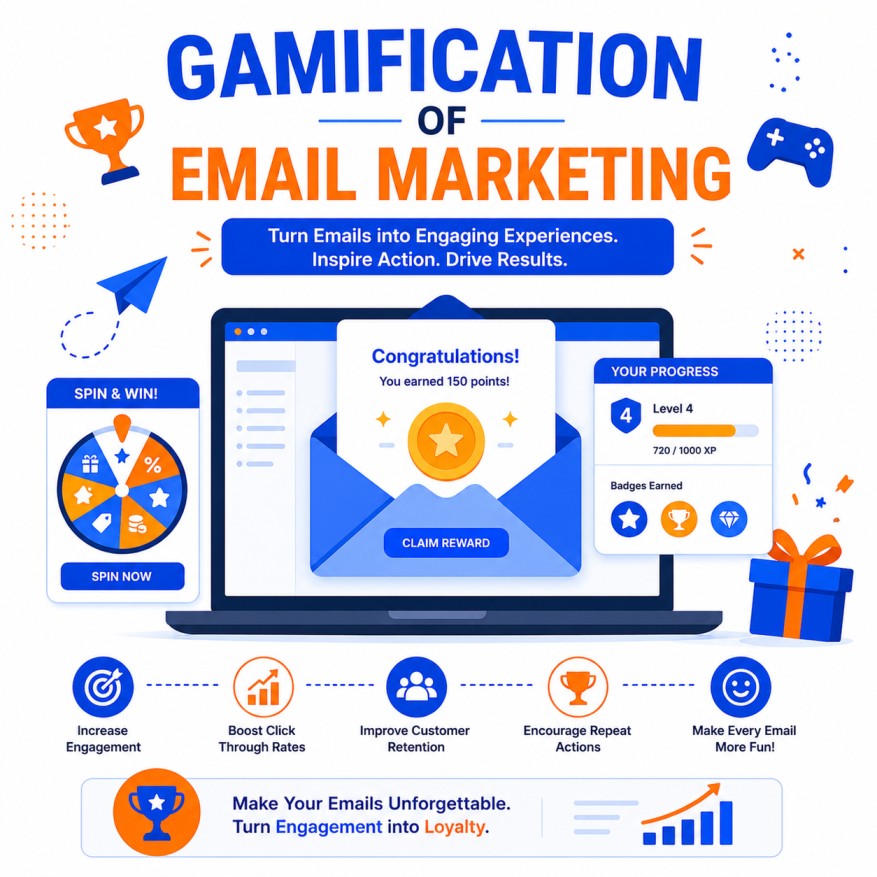
Email marketing has always been one of the highest-ROI channels, but in 2026, standing out in an overcrowded inbox has become increasingly difficult. Subscribers are bombarded with hundreds of emails weekly, leading to declining open rates and click-through rates. Enter gamification — the strategic application of game design elements (points, badges, leaderboards, challenges, levels, and rewards) into non-game contexts like email marketing.
Gamification transforms passive email subscribers into active participants. It taps into core human psychological drivers such as competition, achievement, progress, status, and reward-seeking behavior. When done correctly, gamified email campaigns can dramatically increase engagement, improve customer retention, drive repeat purchases, and create memorable brand experiences.
This exhaustive, in-depth guide explores every aspect of gamifying email marketing. You’ll learn the psychology behind it, proven mechanics, step-by-step implementation strategies, real-world success stories, tools, measurement frameworks, challenges, and future trends for 2026 and beyond.
What Is Gamification in Email Marketing?
Gamification in email marketing involves incorporating game-like features into email campaigns to make them more interactive, fun, and rewarding. Instead of one-way promotional messages, you create two-way experiences where subscribers earn rewards for actions such as opening emails, clicking links, completing surveys, making purchases, referring friends, or engaging with your content.
Core Objectives:
- Increase email open rates and CTR
- Boost customer lifetime value (CLV)
- Improve retention and reduce churn
- Encourage user-generated content
- Build emotional connection with the brand
- Collect valuable zero-party data
The Psychology Behind Gamification
Gamification works because it activates powerful psychological principles:
- Dopamine Hits: Rewards and progress triggers release dopamine, creating pleasure loops.
- Variable Rewards: Unpredictable rewards (like loot boxes) are highly addictive.
- Progression & Mastery: The brain loves seeing progress bars fill up and achieving levels.
- Social Proof & Competition: Leaderboards tap into status-seeking behavior.
- Loss Aversion: Limited-time challenges create urgency.
- Self-Determination Theory: Satisfies needs for competence, autonomy, and relatedness.
Studies consistently show gamified experiences can increase engagement by 30–100%+ compared to traditional emails.
Key Gamification Elements You Can Use in Emails
- Points System Award points for actions (opening email, clicking, purchasing, watching video). Display current points balance and what they can be redeemed for.
- Badges & Achievements Unlockable digital badges for milestones (e.g., “First Purchase Hero”, “Loyalty Legend”, “Product Expert”).
- Leaderboards Weekly or monthly rankings showing top engagers. Create community competition.
- Levels & Progression Subscribers advance from “Newbie” to “VIP” to “Elite” based on activity.
- Challenges & Quests Time-bound missions like “Open 5 emails this week” or “Complete your profile for bonus points.”
- Rewards & Redemption Points can be exchanged for discounts, free shipping, exclusive content, physical gifts, or charity donations.
- Streaks & Consistency Rewards Reward users who open emails multiple days in a row.
- Loot Boxes & Mystery Rewards Random rewards for engagement to create excitement.
- Interactive Elements Polls, quizzes, scratch cards, spin-to-win wheels, or mini-games embedded in emails.

Types of Gamified Email Campaigns
- Onboarding Gamification: Welcome series with progressive challenges.
- Loyalty Programs via Email: Ongoing points and tier systems.
- Seasonal & Event Campaigns: Holiday challenges or limited-time quests.
- Referral Programs: Reward both referrer and referred with points.
- Educational Gamification: Turn product education into a game (quizzes with rewards).
- Re-engagement Campaigns: Win-back challenges for inactive users.
- Post-Purchase Gamification: Encourage reviews, referrals, and repeat purchases.
Step-by-Step Guide to Implementing Gamification in Email Marketing
Step 1: Define Goals and KPIs Decide what you want to achieve (higher opens, repeat purchases, data collection, etc.).
Step 2: Choose the Right Platform Best tools in 2026:
- Klaviyo (excellent for e-commerce)
- Braze (enterprise-level)
- ActiveCampaign
- LoyaltyLion or Smile.io (integrated loyalty)
- Antavo or Gamify
Step 3: Design Your Gamification System
- Create a points structure.
- Define tiers and rewards.
- Design badges and visual assets.
- Plan communication cadence.
Step 4: Segment Your Audience Not everyone responds equally to gamification. Test with engaged segments first.
Step 5: Create Compelling Email Templates
- Eye-catching subject lines mentioning points or challenges.
- Progress bars and visual elements.
- Clear instructions on how to earn rewards.
Step 6: Technical Integration
- Connect your email platform with your website/CRM for real-time point tracking.
- Use dynamic content blocks.
- Ensure mobile optimization.
Step 7: Launch, Test, and Iterate Start small with a pilot campaign. Measure results and optimize.
Real-World Success Stories and Case Studies
- Duolingo: Masterful use of streaks and points in email reminders.
- Sephora Beauty Insider: Tiered loyalty with email updates on points and exclusive rewards.
- Nike Run Club: Challenges and badges sent via email.
- Starbucks Rewards: Highly successful points-based gamification across email and app.
- Smaller Brands: Many D2C companies report 40–80% increases in email engagement after adding simple points systems.
Best Practices for 2026
- Keep it fun and optional — never forced.
- Ensure rewards feel valuable and attainable.
- Maintain brand alignment (don’t make it feel childish unless your brand is playful).
- Use personalization heavily.
- Balance competition with collaboration (team challenges).
- Provide clear value exchange.
- Respect privacy and consent.
- Combine with excellent landing pages for redemption.
Measuring Success
Key Metrics:
- Open Rate & CTR of gamified vs non-gamified emails
- Points earned / redeemed
- Engagement lift
- Repeat purchase rate
- Customer Lifetime Value
- Referral rate
- Churn reduction
Use multi-touch attribution to understand long-term impact.
Challenges and How to Overcome Them
- Over-Complexity: Solution — Start simple with points + one reward type.
- Fatigue: Solution — Vary mechanics and don’t over-send.
- Low Participation: Solution — Make initial rewards easy to earn.
- Technical Issues: Solution — Choose robust platforms with good integrations.
- Perceived Cheapness: Solution — Keep design premium and rewards meaningful.
Future Trends in Gamified Email Marketing
- AI-powered personalized challenges based on user behavior.
- AR/VR experiences unlocked via email.
- Blockchain-based digital collectibles as rewards.
- Deeper integration with social media and community platforms.
- Predictive gamification (AI suggests next best challenge for each user).
Conclusion: Make Email Marketing Fun Again
Gamification represents one of the most exciting opportunities in email marketing today. By turning routine communications into rewarding experiences, you can dramatically improve engagement, build deeper customer relationships, and drive sustainable business growth.
The most successful brands in 2026 will be those that treat subscribers not as recipients, but as active players in their brand universe. Start small, stay authentic, measure everything, and continuously improve.
Your Action Plan:
- Audit your current email performance.
- Choose one simple gamification mechanic (e.g., points system).
- Design a 30-day pilot campaign.
- Launch, measure, and learn.
- Scale what works.
Gamification doesn’t just improve metrics — it makes your brand more memorable, enjoyable, and human. In an increasingly digital world, creating joy and achievement through email can become a powerful competitive advantage.