
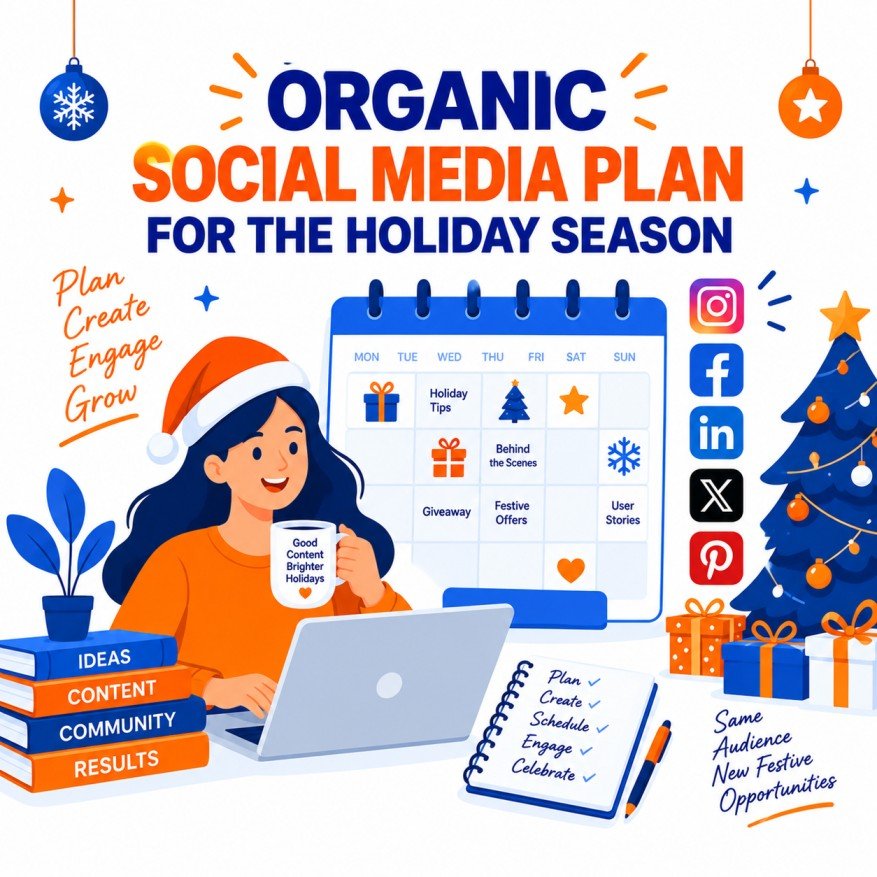
The holiday season is one of the highest-stakes periods for organic social media. Consumer attention peaks, competition intensifies, shopping intent rises, and emotional content performs strongly. Brands that plan early, stay authentic, and balance festive energy with genuine value consistently outperform those that improvise in November.
An organic social media plan for the holidays is more than a content calendar of Christmas posts. It is a structured system that aligns business goals, audience needs, platform strengths, content themes, production timelines, community management, and measurement. This guide walks through the full process of building that plan so you can enter the season prepared, agile, and effective.
1. Start with Clear Goals and Success Metrics
Before choosing holidays or designing graphics, define what success looks like.
Common holiday organic goals include:
- Increasing brand awareness and reach during peak cultural moments
- Driving traffic to gift guides, product pages, or landing pages
- Growing engaged followers and community
- Generating user-generated content (UGC) and social proof
- Supporting sales indirectly through consideration and trust
- Strengthening brand affinity and emotional connection
- Building content assets that can be repurposed into paid or email
Translate each goal into measurable KPIs: reach, impressions, engagement rate, video views, profile visits, link clicks, saves, shares, follower growth, UGC volume, and assisted conversions where trackable. Set realistic targets based on historical holiday performance rather than vanity ambitions.
Prioritize two or three primary goals so the plan stays focused.
2. Map the Holiday Calendar Relevant to Your Audience and Brand
Not every holiday deserves equal effort. Create a tiered calendar:
Tier 1 (Major investment) — High cultural or commercial relevance (e.g., Thanksgiving, Black Friday/Cyber Monday period, Christmas, Hanukkah where relevant, New Year). These typically need 8–12 weeks of lead time for planning and production.
Tier 2 (Moderate activation) — Strong secondary moments (Halloween as a warm-up, Small Business Saturday, Giving Tuesday, Boxing Day, specific cultural or regional holidays that fit your audience).
Tier 3 (Light or opportunistic) — Fun or niche days that can be covered with lighter content if capacity allows.
Research key dates for the current year, including shopping events (Black Friday, Cyber Monday, Green Monday, last shipping dates) and cultural observances that matter to your customers. Include regional or international holidays if you serve multiple markets. Work backward from each major date to set internal deadlines for creative, copy, approvals, and scheduling.
3. Understand Audience Mindset Across the Season
Holiday audience behavior shifts in phases:
- Early season (October–early November): Inspiration, discovery, gift idea gathering
- Peak shopping window (mid-to-late November): Deal-seeking, comparison, urgency
- Mid-to-late December: Last-minute gifting, shipping cutoffs, emotional and reflective content
- Post-holiday / New Year: Returns, resolutions, year-in-review, fresh starts
Segment your audience where possible (existing customers vs. new, gift-givers vs. self-purchasers, different demographics). Note how their platform habits and content preferences change during the season. Use past engagement data, social listening, and customer feedback to inform tone and offers.
4. Choose Platforms and Define Roles
Not every platform needs the same volume or style of content. Assign clear roles:
- Instagram — Visual storytelling, Reels, carousels, Stories, gift guides, UGC reposts, behind-the-scenes
- TikTok — Trend participation, short-form entertainment, authentic demos, rapid creative testing
- Facebook — Community, longer-form updates, events, broader demographic reach
- Pinterest — Early planning and gift inspiration (high intent for many categories)
- LinkedIn — Professional or B2B angles, company culture, thought leadership around the season
- X (Twitter) — Real-time conversation, customer service, quick updates
- YouTube — Longer gift guides, tutorials, or seasonal series if resources allow
Focus energy on the platforms where your audience is most active and where organic distribution still performs relatively well. Maintain a consistent brand voice while adapting format and length to each channel.
5. Build Content Pillars and Themes
Organize content around a small set of pillars that can flex across the season:
- Festive product or service showcases and gift ideas
- Behind-the-scenes and human moments (team, process, preparation)
- Customer stories, reviews, and UGC
- Educational or helpful content (how to choose, gift guides, shipping info, care tips)
- Brand values, gratitude, and community appreciation
- Entertaining or trend-driven seasonal content
- Limited-time offers or promotions (used sparingly in organic to avoid fatigue)
- Year-in-review and forward-looking New Year content
Develop overarching seasonal narratives or campaigns rather than isolated posts. For example, a multi-week “Gift Guide” series, a gratitude campaign, or a “Days of Holiday Tips” sequence creates continuity and makes planning easier.
6. Plan Content Formats and Creative Approach
Holiday organic content that performs well tends to be:
- Visually warm, festive, and on-brand (without overusing clichés)
- Authentic and human rather than overly polished corporate
- Easy to consume (short-form video, carousels, clear visuals)
- Conversation-starting (questions, polls, challenges)
- Useful (practical gift ideas, checklists, timelines)
Prioritize short-form video (Reels, TikToks, Shorts) because of strong algorithmic distribution. Support with static images, carousels, Stories, and live sessions where appropriate. Plan for user-generated content collection and amplification—encourage customers to share with a branded hashtag or by tagging you.
Create modular assets: core visuals and copy blocks that can be adapted across platforms and dates. Leave room in the calendar for reactive or trend-based content so the plan stays agile.
7. Establish Posting Cadence and Timing
Increase frequency thoughtfully during peak periods without sacrificing quality. Typical approaches:
- Maintain a strong baseline cadence and layer additional seasonal posts around key dates
- Heavier volume in the weeks leading into major shopping events
- Balanced mix of promotional, value, and community content
- Strategic use of Stories and ephemeral formats for real-time updates (shipping cutoffs, stock alerts, daily inspiration)
Identify best posting times from your historical data, then adjust for holiday shifts in audience behavior (evenings, weekends, and lunch hours often see activity spikes). Schedule evergreen and planned seasonal content in advance, but keep capacity for same-day or next-day reactive posts.
8. Build the Production and Approval Timeline
Work backward from key dates:
- 10–12 weeks out: Finalize strategy, themes, major campaign concepts, and resource needs
- 8–10 weeks out: Brief creative, begin asset production, identify UGC or creator opportunities
- 6–8 weeks out: Complete core content batch, begin scheduling
- 4 weeks out: Refine around confirmed promotions and shipping deadlines
- 2 weeks out: Final checks, community management staffing plan, contingency content
- Ongoing: Daily monitoring and rapid response capability
Create clear ownership, approval workflows, and contingency templates so the team can move quickly when trends or opportunities appear. Empower faster approvals during the peak season.
9. Integrate Community Management and Engagement
Organic holiday success depends heavily on conversation. Plan for:
- Increased response capacity (comments, DMs, mentions)
- Proactive engagement with relevant seasonal conversations and UGC
- Clear escalation paths for customer service issues that surface on social
- Guidelines for tone—warm, helpful, and on-brand even under volume pressure
- Amplification of positive customer content
Holiday audiences expect faster, more human responses. Treating community management as a core part of the plan (not an afterthought) protects reputation and turns interactions into loyalty.
10. Coordinate with Other Channels (While Keeping Organic Distinct)
Align messaging and timing with email, website, paid social, and influencer activity so the customer experience feels cohesive. However, keep organic content valuable on its own—avoid making every post a hard sell. Use organic as a testing ground for creative that can later inform paid campaigns, and repurpose high-performing organic assets.
11. Measurement, Optimization, and Post-Season Review
Track performance against your predefined KPIs weekly during the season. Monitor:
- Which themes, formats, and platforms drive the strongest results
- Engagement quality and sentiment
- Traffic and conversion assistance
- Content fatigue signals
- Community health metrics
Be prepared to double down on winning formats and pause underperforming ones. After the season, conduct a thorough retrospective: what worked, what did not, audience insights gained, asset library created, and recommendations for the following year. Document learnings while they are fresh.
12. Practical Best Practices and Common Pitfalls
Do:
- Start planning early
- Stay authentic and brand-true
- Balance promotion with value and emotion
- Prepare modular, reusable creative
- Leave flexibility for real-time moments
- Prioritize short-form video and visual storytelling
- Staff community management adequately
- Respect cultural sensitivity and inclusivity across holidays
Avoid:
- Posting on every possible holiday without relevance
- Overly sales-heavy organic feeds
- Last-minute scrambling that reduces quality
- Ignoring mobile experience and accessibility
- Neglecting shipping and fulfillment messaging that customers need
- Inconsistent branding or tone across platforms
- Failing to collect and reuse UGC
Sample High-Level Timeline Overview
- Summer / Early Fall: Strategy, goal setting, calendar mapping, initial creative concepts
- Early–Mid Fall: Content production sprint, scheduling of core assets, UGC seeding
- Late October–November: Launch warm-up content, ramp engagement, prepare peak shopping assets
- Peak shopping window: High-cadence execution, real-time optimization, strong community presence
- Mid–Late December: Shift toward last-chance, emotional, and reflective content
- Early January: New Year content, performance analysis, planning insights capture
Conclusion
A strong organic social media plan for the holiday season combines advance preparation with built-in agility. By defining clear goals, mapping relevant holidays, understanding shifting audience mindsets, choosing platform roles, building flexible content pillars, establishing realistic production timelines, and treating community engagement as essential, brands can cut through seasonal noise with content that feels timely, useful, and human.
The most successful holiday organic programs do not simply “post more.” They tell coherent seasonal stories, respect the audience’s time and emotions, and create assets and relationships that continue delivering value after the decorations come down. Start early, stay focused on authenticity and usefulness, measure rigorously, and leave room to respond to the unexpected moments that often become the season’s biggest organic wins.

Author