
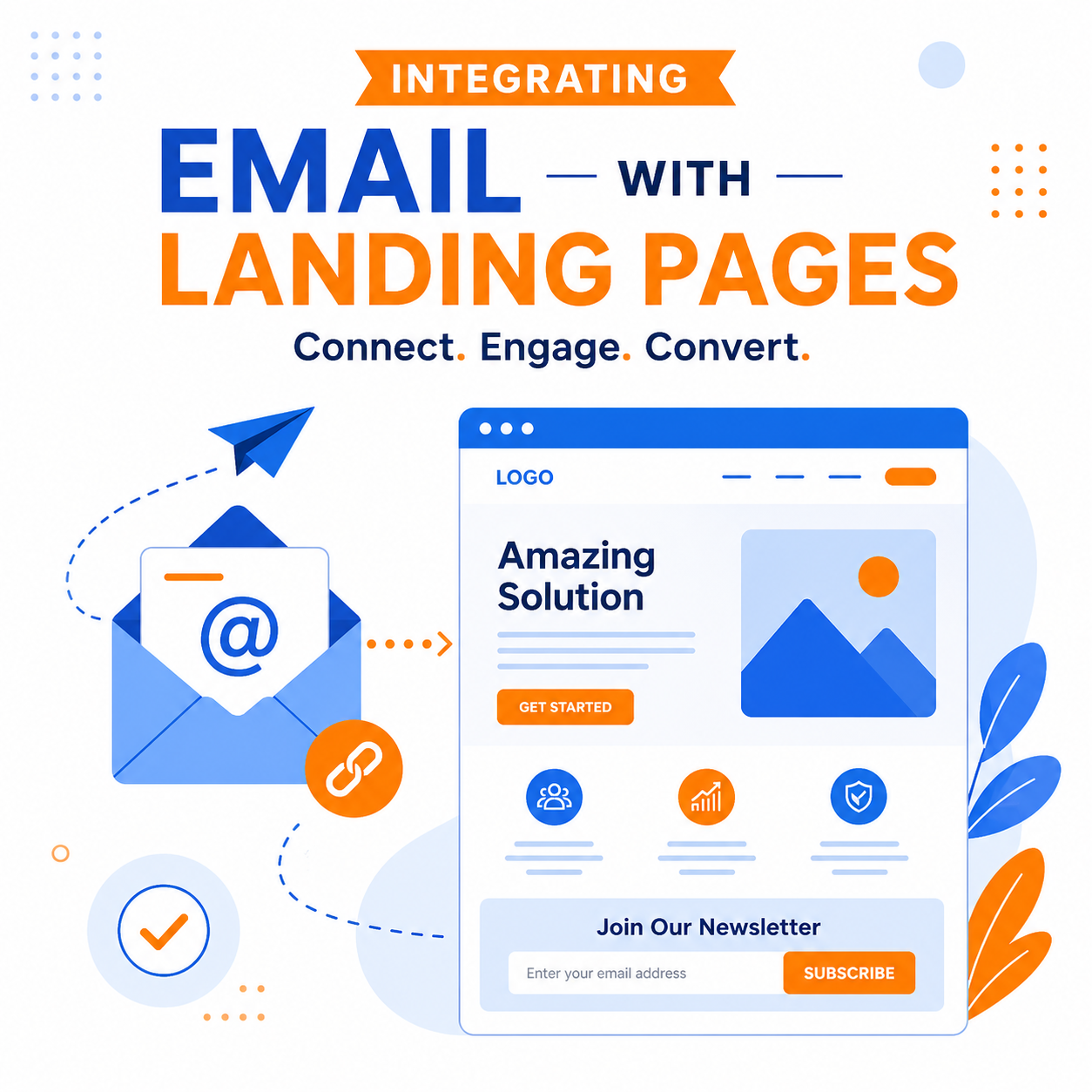
In the modern marketing ecosystem, email and landing pages are two of the highest-ROI channels available. When integrated intelligently, they create a powerful synergy that drives higher conversion rates, better user experiences, and increased customer lifetime value. Email brings warm, permission-based traffic with high intent, while landing pages provide focused, distraction-free environments optimized for conversion. Together, they form a complete system for turning subscribers into customers.
This exhaustive, in-depth guide explores every aspect of integrating email marketing with landing pages. We’ll cover definitions, strategic importance, technical setup, best practices, advanced techniques, industry-specific use cases, integration with other channels (SEO, remarketing, Bluesky, Google Ads Performance Max/Demand Gen, heatmaps, etc.), measurement frameworks, optimization strategies, common challenges with solutions, real-world patterns, and future trends for 2026 and beyond. Whether you run a D2C brand, SaaS company, agency, or local business, this article will serve as your complete playbook.
Why Integrating Email with Landing Pages Matters in 2026
Email remains one of the most effective owned channels, often delivering 30-40x ROI. Landing pages, when well-designed, can convert 2-10x better than regular website pages. However, their true power is unlocked only when they work together seamlessly.
Key benefits of integration include:
- Higher Relevance: Email traffic is pre-qualified and segmented, allowing hyper-personalized landing pages.
- Better Conversion Rates: Context from the email reduces friction and increases trust.
- Improved User Experience: Consistent messaging from email to landing page reduces cognitive load.
- Stronger Attribution: Clear tracking from email → landing page → conversion event.
- Lower CPA and Higher ROAS: Warm email traffic converts more efficiently than cold traffic.
- Data Feedback Loop: Landing page behavior informs future email segmentation and personalization.
In 2026, with stricter privacy rules and rising ad costs, this integration has become essential for sustainable growth. Brands that master it consistently outperform those that treat email and landing pages as separate silos.
Core Concepts: Email vs Landing Pages vs Integrated Journeys
- Email acts as the invitation and context provider. It builds desire, creates urgency, and drives the click.
- Landing Page serves as the dedicated conversion environment — focused on one goal with minimal distractions.
- Integrated Journey connects the two with consistent messaging, seamless design, personalized content, and proper tracking.
The goal is to create a “zero-friction handoff” where the subscriber moves from inbox → email → landing page → conversion event with minimal drop-off.
Types of Email-to-Landing Page Integrations
- Promotional Campaign Integration Flash sales, product launches, or seasonal offers sent via email that drive to dedicated promotional landing pages.
- Abandoned Cart & Browse Abandonment Recovery Emails that link to pre-filled or personalized cart recovery landing pages.
- Lead Generation & Gated Content Newsletter sign-up or content download emails leading to optimized lead capture landing pages.
- Welcome Series & Onboarding Multi-email sequences that progressively direct users to different landing pages (account setup, first purchase, feature tour).
- Win-Back & Re-engagement Campaigns Emails for inactive subscribers linking to special reactivation landing pages with exclusive offers.
- Post-Purchase & Loyalty Flows Thank-you emails directing to upsell/cross-sell landing pages or review collection pages.
- Event & Webinar Promotion Emails driving registrations to dedicated event landing pages.
Technical Setup: How to Integrate Email with Landing Pages
Step 1: Tracking Infrastructure
- Use UTM parameters consistently: utm_source=email, utm_medium=newsletter, utm_campaign=summer-sale-2026, utm_content=hero-cta.
- Implement Google Tag Manager (GTM) on both email links and landing pages.
- Enable server-side tracking and Enhanced Conversions for better attribution in a cookieless world.
- Use unique tracking links or dynamic parameters for segmentation.
Step 2: Personalization at Scale
- Dynamic content in emails (using merge tags or conditional logic).
- Personalized landing pages using URL parameters, query strings, or JavaScript.
- Tools like Klaviyo, ActiveCampaign, or Braze allow dynamic URL generation (e.g., yoursite.com/offer/?email={{email}}&segment=high-value).
Step 3: Design Consistency
- Match email design elements (colors, fonts, imagery, tone) with the landing page.
- Use the same hero image, headline style, and CTA design for continuity.
- Maintain brand voice across both touchpoints.
Step 4: Landing Page Best Practices for Email Traffic
- Fast loading speed (Core Web Vitals optimized).
- Mobile-first design (majority of email opens are on mobile).
- Single clear goal with one primary CTA.
- Trust signals (security badges, testimonials, guarantees).
- Personalized headlines (e.g., “Welcome back, Nitin” or “Your 20% off is waiting”).
- Reduced navigation to minimize distractions.
- Exit-intent popups or smart offers based on time on page.
Step 5: A/B Testing Framework
- Test email elements (subject line, CTA copy) against landing page variations.
- Use tools like Google Optimize, VWO, or Convert for landing page testing.
Advanced Integration Techniques in 2026
- AI-Powered Dynamic Landing Pages: Use tools that automatically adjust content based on email behavior, past purchases, or segment.
- Progressive Profiling: Landing pages collect additional data that feeds back into your email segmentation.
- Behavioral Triggering: If a user clicks a specific link in an email, direct them to a tailored landing page (e.g., “Product Deep Dive” vs “Pricing”).
- Omnichannel Continuity: Show the same offer on the landing page that was mentioned in the email, then reinforce via remarketing ads.
- Heatmap Integration: Analyze how email-driven traffic behaves on landing pages using tools like Hotjar or Microsoft Clarity to identify friction points.
- SEO + Email Synergy: Create evergreen landing pages that rank in search while being promoted via email for compounded traffic.
Industry-Specific Use Cases
E-commerce & D2C Brands
- Abandoned cart emails linking to personalized cart pages with saved items and urgency timers.
- Product launch emails driving to dedicated collection landing pages with size guides and reviews.
- Post-purchase emails leading to “Complete Your Look” upsell landing pages.
SaaS and Subscription Businesses
- Trial signup confirmation emails directing to personalized onboarding dashboards or feature highlight landing pages.
- Upgrade emails linking to comparison or ROI calculator landing pages.
- Webinar promotion emails driving to registration pages with agenda and speaker bios.
B2B Lead Generation
- Content download emails leading to thank-you landing pages with related resources and demo CTAs.
- Event invitations directing to detailed event landing pages with agenda and registration forms.
Local Businesses
- Appointment booking emails linking to calendar-integrated landing pages.
- Special offer emails driving to location-specific offer pages.
Measurement and Analytics Framework
Key metrics to track:
- Email CTR → Landing Page Arrival Rate
- Landing Page Bounce Rate (email traffic segment)
- Time on Landing Page
- Landing Page Conversion Rate (goal completion)
- Overall Email-to-Conversion Rate
- Revenue per Email (for e-commerce)
- Cost per Acquisition from email-driven traffic
Tools:
- Google Analytics 4 with enhanced e-commerce and custom segments for email traffic.
- Platform-native analytics (Klaviyo, Mailchimp, etc.).
- Heatmap and session replay tools to understand behavior.
- Attribution platforms for multi-touch visibility.
Set up custom dashboards comparing email-only vs email + landing page performance.
Optimization Strategies That Deliver Results
- Message Match: Ensure the headline and offer on the landing page exactly match the email promise.
- Speed Optimization: Landing pages for email traffic should load under 2 seconds.
- Personalization Layers: Use first name, location, past behavior, or segment in headlines and offers.
- Social Proof Placement: Position testimonials and reviews prominently for email-driven visitors.
- Mobile Optimization: Test the entire journey on mobile devices.
- Urgency and Scarcity: Use countdown timers or limited stock indicators that sync with email messaging.
- Form Simplification: Reduce fields on landing pages reached from email.
- Post-Conversion Experience: Thank-you pages should reinforce the decision and suggest next steps.
Regular A/B testing and heatmap analysis should be part of your monthly routine.
Common Challenges and Solutions
- Inconsistent Branding: Solution — Create style guides and templates for both email and landing pages.
- Tracking Breaks: Solution — Use consistent UTM parameters and verify GTM implementation regularly.
- High Bounce Rates: Solution — Improve message match and page speed; use heatmaps to diagnose issues.
- Privacy Restrictions: Solution — Rely on first-party data and server-side tracking.
- Creative Fatigue: Solution — Rotate offers and refresh landing page designs periodically.
- Segment Mismatch: Solution — Regularly audit email segments against landing page performance.
Integration with Broader Marketing Ecosystem
- With SEO: Build evergreen landing pages that rank organically and promote them via email.
- With Remarketing: Add email clickers to remarketing audiences for Performance Max or Demand Gen campaigns.
- With Bluesky & Social: Drive email sign-ups from Bluesky conversations and promote landing pages there.
- With Heatmaps & CRO: Continuously optimize landing pages based on actual email traffic behavior.
- With Newsletters vs Campaigns: Use newsletters to drive to educational landing pages; use promotional campaigns for direct conversion landing pages.
Future Trends in Email + Landing Page Integration (2026+)
- AI-generated personalized landing pages in real time.
- Interactive and dynamic elements (polls, configurators) embedded in landing pages.
- Deeper zero-party data collection on landing pages feeding back into email personalization.
- Voice and visual search influencing how users reach landing pages from email.
- Tighter privacy-compliant measurement using modeled conversions.
Conclusion: Build a Seamless Email-to-Landing Page System
Integrating email with landing pages is no longer optional — it is a fundamental requirement for high-performing marketing in 2026. When done correctly, this integration creates frictionless customer journeys that respect the subscriber’s time while maximizing business outcomes.
Start by auditing your current email campaigns and mapping every major email type to its destination landing page. Check for message match, loading speed, mobile experience, and tracking accuracy. Then implement personalization, conduct A/B tests, and use heatmap insights to remove friction points.
The brands winning today treat email and landing pages as two halves of the same conversation. Email starts the dialogue with relevance and trust. The landing page continues and completes it with focus and clarity.
Master this integration, and you will see higher open rates translate into higher conversions, better customer experiences, and stronger long-term loyalty. In an increasingly noisy and privacy-conscious digital world, seamless email-to-landing page journeys may be one of the most sustainable competitive advantages available.
Begin today: Pick one high-volume email campaign, optimize its landing page for perfect message match and speed, add personalization, and measure the difference. Iterate relentlessly. The results will compound across your entire marketing funnel.
Your subscribers have already given you permission. Now it’s time to deliver the experience they deserve — from inbox to conversion — without friction or disappointment. That is the true power of integrating email with landing pages.

Author