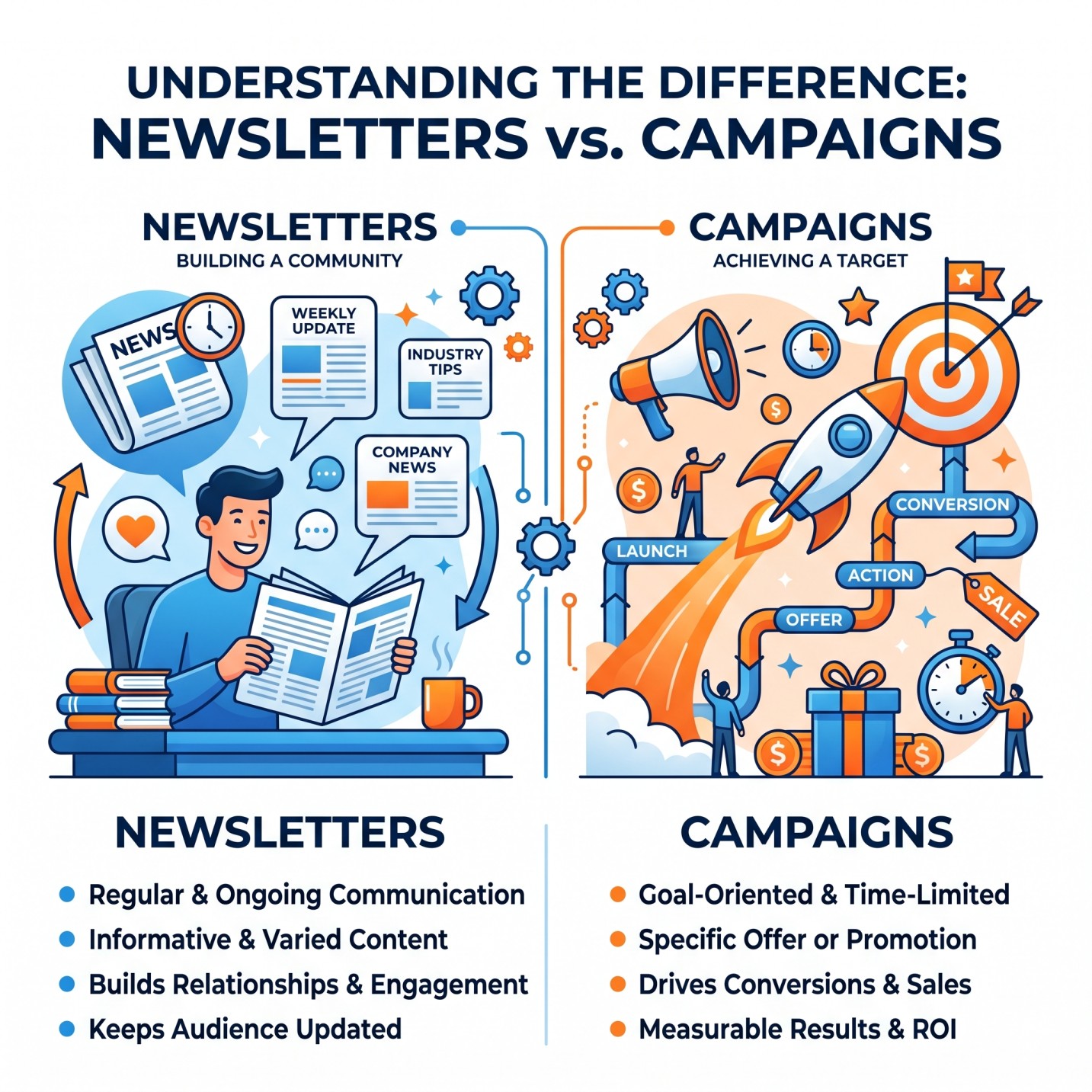
In the ever-evolving world of digital marketing, email remains one of the most powerful owned channels for building relationships, driving engagement, and generating revenue. However, confusion often arises around two key concepts: newsletters and campaigns. Many marketers use the terms interchangeably, but they serve distinct purposes, require different strategies, and deliver different results when executed properly.
A newsletter is typically a regularly scheduled, value-driven communication focused on informing, educating, and nurturing subscribers over time. In contrast, an email campaign is a targeted, goal-oriented effort — often promotional or transactional — designed to prompt a specific action, such as a purchase, sign-up, or download. While both fall under the broader umbrella of email marketing, understanding their differences is crucial for building an effective, high-ROI email strategy that aligns with performance marketing goals like conversion events, customer lifetime value, and sustainable growth.
This exhaustive guide explores the nuances in depth. We’ll define each clearly, trace their evolution, break down key differences across multiple dimensions, examine types and formats, provide real-world use cases across industries, outline integration strategies with other marketing channels (including SEO, remarketing, and influencer content), share optimization best practices for 2026, present case study patterns, address common challenges, and look ahead to emerging trends. By the end, you’ll have a complete playbook to leverage both newsletters and campaigns strategically.
Defining Newsletters and Campaigns Clearly
What Is a Newsletter? A newsletter is a recurring email sent on a consistent schedule (weekly, bi-weekly, monthly) that delivers primarily informational, educational, or entertaining content. It acts like a digital magazine or update roundup, helping subscribers stay informed about industry news, company updates, tips, insights, or curated resources. The primary goal is to build long-term trust, loyalty, and engagement rather than drive an immediate sale. Newsletters should feel helpful and relationship-oriented, not overly salesy.
What Is an Email Campaign? An email campaign refers to a strategic, often time-bound or triggered communication (or series of communications) designed to achieve a specific marketing objective. Campaigns can be promotional (e.g., flash sale), automated (e.g., abandoned cart recovery), transactional (e.g., order confirmation), or nurturing (e.g., drip sequences). The focus is on persuasion and action — guiding recipients toward measurable conversion events such as purchases, lead qualification, or renewals.
In essence, newsletters are one type of email within the broader email marketing ecosystem, while campaigns represent purposeful, results-driven initiatives that may include newsletters as a component but often go beyond them.
The Evolution of Newsletters and Campaigns in Email Marketing
Email marketing dates back to the 1990s with simple blasts. Newsletters gained popularity in the early 2000s as brands like Morning Brew or Substack-style publications showed the power of consistent, valuable content for audience building. Campaigns evolved alongside automation tools, shifting from one-off promotional blasts to sophisticated journeys powered by segmentation, personalization, and triggers.
By 2026, several shifts have reshaped both:
- Privacy regulations and inbox competition favor value-first newsletters to maintain deliverability and engagement.
- AI-driven personalization and automation make campaigns more intelligent and behavior-based.
- Performance marketing integration ties both to conversion events, ROAS tracking, and first-party data.
- The rise of “fewer, better emails” emphasizes quality over volume, with newsletters building the relationship foundation and campaigns driving the revenue spikes.
Key Differences: A Side-by-Side Comparison
Here are the core distinctions across multiple dimensions:
- Primary Goal
- Newsletter: Build relationships, educate, engage, and foster loyalty. Increase open rates, time spent, and long-term retention.
- Campaign: Drive specific actions and conversions (sales, sign-ups, downloads). Focus on immediate or short-term ROI.
- Content Focus
- Newsletter: Informational and value-packed — articles, tips, roundups, stories, behind-the-scenes, industry insights. Subtle or no hard selling.
- Campaign: Persuasive and action-oriented — offers, promotions, product highlights, urgency-driven messaging with strong CTAs.
- Frequency and Timing
- Newsletter: Regular and predictable (e.g., every Tuesday). Builds habit and anticipation.
- Campaign: Event-driven, time-sensitive, or triggered (e.g., after cart abandonment, seasonal sale, or user behavior). Can be one-off or part of a sequence.
- Structure and Length
- Newsletter: Longer, scannable format with multiple sections, links, and digest-style content. Allows subscribers to choose what to engage with.
- Campaign: Concise, focused on one main message or offer. Single strong CTA or limited options to reduce decision fatigue.
- Audience Targeting
- Newsletter: Usually sent to the entire (or broadly segmented) subscriber list. Aims for broad engagement.
- Campaign: Highly segmented or personalized based on behavior, purchase history, or stage in the customer journey.
- Measurement Focus
- Newsletter: Engagement metrics — open rate, click-through rate on various links, time spent, forward/share rate, subscriber retention.
- Campaign: Conversion metrics — CPA, ROAS, revenue generated, conversion rate, attributed sales.
- Tone and Brand Role
- Newsletter: Conversational, helpful, authoritative. Positions the brand as a trusted advisor.
- Campaign: Urgent, benefit-driven, promotional. Positions the brand as a solution provider.
Newsletters with occasional CTAs can blur lines, but the intent remains different: newsletters nurture; campaigns convert.
Types of Newsletters and Email Campaigns
Common Newsletter Types
- Curated content roundups (blog posts, industry news).
- Educational or tips-based (how-to guides, best practices).
- Company or personal updates (behind-the-scenes, founder letters).
- Resource digests (free tools, downloads).
- Community or member newsletters.
Common Campaign Types
- Promotional (sales, discounts, product launches).
- Abandoned cart or browse abandonment recovery.
- Welcome and onboarding sequences.
- Drip or nurture campaigns (lead nurturing over time).
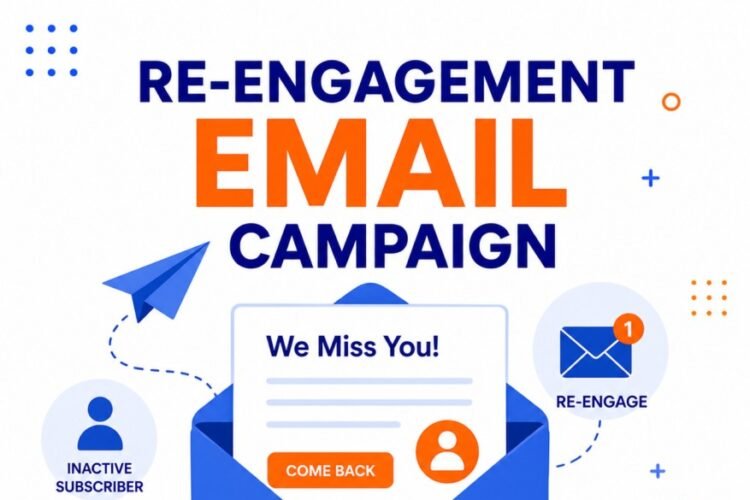
- Re-engagement or win-back campaigns.
- Transactional (order confirmations, shipping updates).
- Event invitations or webinar follow-ups.
- Seasonal or holiday campaigns.
Many brands use newsletters as the consistent “heartbeat” while deploying targeted campaigns for revenue-generating moments.
Use Cases Across Industries and Integration with Performance Marketing
E-commerce and D2C Brands
- Newsletter: Weekly product inspiration, styling tips, or trend roundups to keep the brand top-of-mind and drive organic traffic via SEO-optimized links.
- Campaign: Flash sale announcements, abandoned cart reminders, or post-purchase upsell sequences tied directly to conversion events and ROAS tracking.
SaaS and Subscription Businesses
- Newsletter: Educational content on industry trends, product tips, or customer success stories to reduce churn and build authority.
- Campaign: Trial extension offers, upgrade prompts, or webinar invitations aimed at moving users along the funnel.
B2B Services and Lead Generation
- Newsletter: Thought leadership articles, case studies, or market insights to nurture long sales cycles.
- Campaign: Gated content downloads, demo booking drives, or event promotions with clear lead conversion goals.
Content and Media Sites
- Newsletter: Curated story digests or exclusive previews to boost engagement and time-on-site.
- Campaign: Sponsored content promotions or premium subscription drives.
In performance marketing contexts, both feed into the same ecosystem: newsletters warm audiences for better campaign performance, while campaigns provide data (e.g., click behavior) to refine newsletter segmentation. Integrate with remarketing by syncing email engagers into ad audiences, or use SEO-driven content in newsletters to improve organic traffic quality.
How Newsletters and Campaigns Work Together in a Cohesive Strategy
The smartest brands don’t choose one over the other — they orchestrate both:
- Use newsletters to grow and retain a healthy list with high engagement.
- Deploy campaigns to monetize that engaged audience at key moments.
- Leverage automation: Trigger campaigns based on newsletter interaction (e.g., clicked a link → enter nurture sequence).
- Track holistically: Measure how newsletter engagement correlates with campaign conversion lifts.
Example flow: A weekly newsletter builds trust → A promotional campaign offers a discount to engaged subscribers → Abandoned cart campaign recovers lost sales → Post-purchase newsletter reinforces loyalty.
Optimization Strategies and Best Practices for 2026
For Newsletters:
- Prioritize value and consistency to combat inbox fatigue.
- Use AI for personalization while keeping a human tone.
- Optimize for mobile with scannable layouts and clear sections.
- Include subtle CTAs and track which content drives website visits.
For Campaigns:
- Heavy segmentation and dynamic content.
- Strong, single-focused CTAs with urgency where appropriate.
- Rigorous A/B testing on subject lines, send times, and offers.
- Tie directly to conversion events with proper tracking (UTMs, pixels).
General 2026 Best Practices:
- Emphasize first-party data and consent.
- Focus on quality over quantity — fewer, more relevant sends perform better.
- Combine with other channels: SEO for content ideas, remarketing for reinforcement, influencer content for social proof.
- Monitor deliverability, spam scores, and engagement trends closely.
- Use automation platforms for triggered journeys while maintaining editorial control for newsletters.
Real-World Case Study Patterns
Successful brands show clear patterns:
- E-commerce retailers using weekly newsletters for inspiration see higher open rates and better response to subsequent promotional campaigns.
- SaaS companies with educational newsletters experience lower churn and higher upgrade rates from targeted campaigns.
- Publishers blending curated newsletters with occasional sponsored campaigns maintain strong subscriber loyalty while generating revenue.
One common success factor: Treating newsletters as the relationship foundation leads to campaigns that convert 2-5x better than cold outreach.
Common Challenges and How to Overcome Them
- Blurring Lines Leading to Subscriber Fatigue: Solution — Clearly separate value content from promotions; test send frequency.
- Low Engagement on Newsletters: Solution — Audit content relevance; segment aggressively; ask for feedback.
- Poor Campaign Performance: Solution — Ensure audiences are warmed via newsletters; use behavioral triggers.
- Deliverability Issues: Solution — Maintain clean lists, honor unsubscribes, and provide genuine value.
- Measurement Gaps: Solution — Use unified analytics to connect newsletter engagement with downstream conversions.
The Future of Newsletters and Campaigns in 2026+
In 2026 and beyond, expect:
- Greater AI assistance for content generation and personalization without losing authenticity.
- Shift toward interactive and dynamic emails.
- Tighter integration with privacy-first technologies and zero-party data.
- Emphasis on lifecycle journeys where newsletters and campaigns form seamless, automated systems.
- “Fewer, better” philosophy: Brands that respect inboxes with high-value communication will win long-term loyalty.
Conclusion: Leverage Both for Sustainable Email Success
Newsletters and campaigns are not competitors — they are complementary pillars of a strong email marketing strategy. Newsletters build the trust and engagement foundation that makes campaigns more effective. Campaigns, in turn, provide the revenue engine and behavioral data that refine future newsletters.
To succeed, audit your current email program: Map your newsletters for consistency and value, then layer targeted campaigns for conversion opportunities. Align everything with broader goals — from SEO-driven traffic to remarketing amplification and performance marketing metrics.
Start today by defining clear objectives for each, segmenting your list thoughtfully, and testing relentlessly. In an era of inbox overload and rising privacy standards, the brands that master the balance between helpful newsletters and purposeful campaigns will build deeper customer relationships, drive higher lifetime value, and achieve superior ROI.
Email marketing isn’t about volume — it’s about relevance and timing. Master the difference between newsletters and campaigns, integrate them intelligently, and watch your owned channel become one of your most reliable growth engines in 2026 and beyond. The inbox remains a powerful space; use it wisely by delivering what subscribers truly want: value first, offers when the moment is right.

Author