Conversion Rate Optimization (CRO) is the disciplined, data-driven process of turning more website visitors into paying customers. For e-commerce businesses, this means designing and continuously refining a funnel — a structured customer journey from first awareness to repeat purchase — with conversion as the primary goal at every stage.
An effective e-commerce funnel is more complex than ever due to rising ad costs, privacy changes, sophisticated customer expectations, and intense competition. Average e-commerce conversion rates still hover between 2–4%, with top performers reaching 8–15% through rigorous CRO.
This exhaustive, highly detailed guide provides a complete playbook for creating, optimizing, and scaling a high-converting e-commerce funnel. It is packed with in-depth strategies, bullet-point frameworks, technical tactics, psychological principles, tools, testing methodologies, real-world examples, and actionable steps.
1. Understanding the E-Commerce Funnel in the Context of CRO
A CRO-optimized e-commerce funnel is not linear — it is a dynamic, multi-touch system designed to minimize friction and maximize trust at every step.
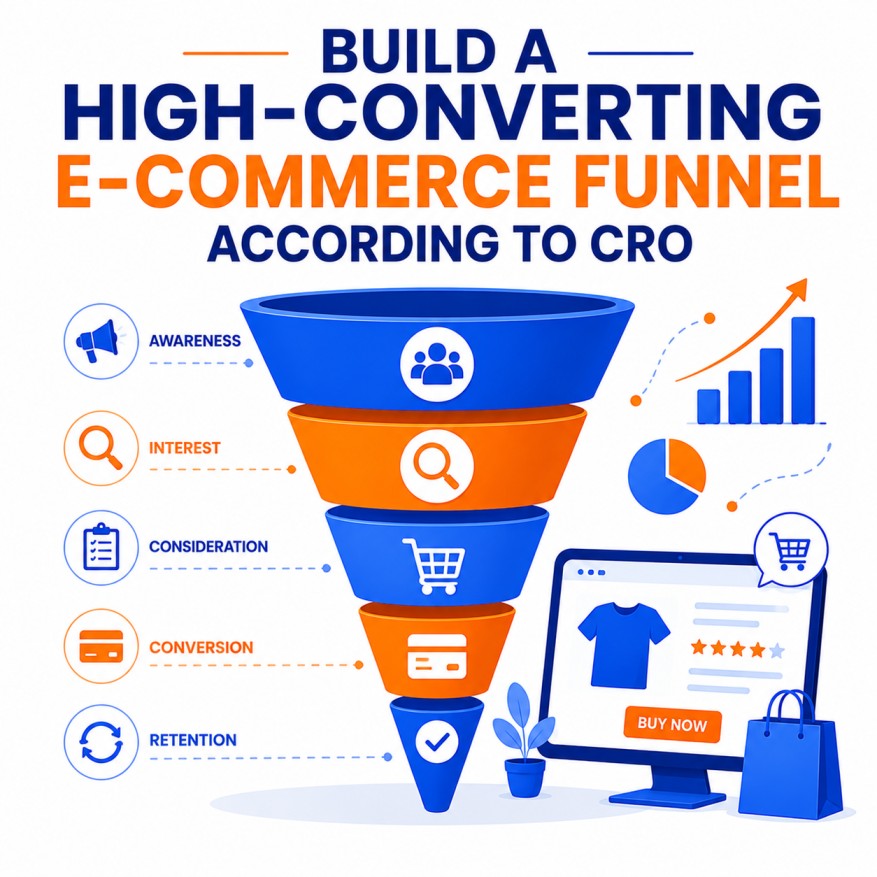
Classic E-Commerce Funnel Stages:
- Awareness (Top of Funnel – TOFU)
- Interest / Discovery
- Consideration / Evaluation
- Decision / Cart
- Purchase / Checkout
- Post-Purchase / Retention / Loyalty (Bottom of Funnel – BOFU)
CRO Mindset: At every stage, ask: “How can we increase the percentage of people who move to the next stage?”
Key CRO Principles for E-Commerce:
- Focus on micro-conversions (add to cart, start checkout, email sign-up) as leading indicators.
- Prioritize user experience (UX) and trust signals.
- Use data and testing relentlessly.
- Align messaging across all touchpoints (ads → landing page → product page → checkout).
Stage 1: Awareness & Traffic Acquisition (TOFU)
Goal: Attract qualified, high-intent visitors at reasonable cost.
CRO-Focused Strategies:
- Target bottom-funnel and mid-funnel keywords in SEO and paid search.
- Use precise audience targeting in Meta Ads, Google Ads, and TikTok.
- Create high-value lead magnets (quizzes, checklists, free tools) to capture emails early.
- Optimize landing pages for message match with ad creative.
- Focus on intent-based traffic over pure awareness.
Tactics to Improve Conversion from Traffic:
- Strong hero sections with clear value propositions.
- Fast-loading pages (Core Web Vitals optimization).
- Trust signals visible immediately (reviews, security badges).
- Exit-intent offers to capture leaving visitors.
Stage 2: Interest & Product Discovery
Goal: Help visitors quickly find relevant products.
Key Pages: Homepage, Category pages, Collection pages, Search results.
CRO Optimization Tactics:
- Homepage:
- Clear navigation and mega menu.
- Personalized recommendations (based on browsing history or segments).
- Hero banner with strong offer and CTA.
- Social proof carousel and bestseller sections.
- Category & Collection Pages:
- Smart filtering and sorting options.
- Grid layout optimized for quick scanning.
- Quick view functionality.
- Rich snippets and schema markup.
- Search Experience:
- Predictive search, autocomplete, and typo correction.
- Faceted navigation.
- “No results” pages with smart suggestions.
Advanced CRO Ideas:
- AI-powered product recommendations.
- Visual search integration.
- User-generated content (photos, reviews) prominently displayed.
Stage 3: Consideration & Product Pages (Core Conversion Layer)
This is often the highest-leverage stage for CRO.
Essential Elements on Product Pages:
- High-quality images and zoom functionality.
- 360° views or lifestyle photos.
- Detailed, benefit-focused descriptions.
- Clear pricing with any discounts highlighted.
- Variant selectors (size, color) that are easy to use.
- Trust signals: “Free Shipping”, “30-Day Returns”, “Secure Checkout”.
- Social proof: Reviews, ratings, “X people bought this recently”.
- Urgency/scarcity: “Only 3 left”, countdown timers.
- Strong “Add to Cart” button with visual feedback.
CRO Testing Priorities:
- Test different image sequences and video embeds.
- A/B test product description length and format.
- Experiment with pricing presentation (anchoring, bundles).
- Optimize mobile experience (most product views happen on mobile).
Stage 4: Cart & Checkout Optimization (Biggest Leakage Point)
Cart abandonment rates average 65–75%. This stage offers massive CRO upside.
Cart Page Optimization:
- Show added items clearly with easy edit/remove options.
- Display trust signals and security badges.
- Offer upsells/cross-sells (“Frequently bought together”).
- Include progress indicators.
- Provide coupon field with smart suggestions.
Checkout Optimization (Critical)**:
- Offer guest checkout as default.
- Minimize form fields (use autofill, address lookup).
- Multi-step checkout with clear progress bar.
- Show order summary at every step.
- Multiple payment options (Apple Pay, Google Pay, Shop Pay, crypto if relevant).
- Transparent shipping and tax calculations early.
- Strong guarantees and return policy reminders.
Advanced Tactics:
- One-page checkout where possible.
- Abandoned cart recovery flows (email + SMS + retargeting).
- Dynamic retargeting for cart abandoners.
Stage 5: Post-Purchase & Retention Funnel
CRO doesn’t end at purchase — retention drives long-term profitability.
Post-Purchase Optimization:
- Thank-you page with upsells, review requests, and referral offers.
- Order confirmation emails with tracking and next steps.
- Loyalty program onboarding.
- Post-purchase surveys for feedback and segmentation.
Retention Strategies:
- Win-back campaigns for lapsed buyers.
- Subscription models where appropriate.
- Personalized recommendation emails.
- VIP programs and tiered loyalty.
Full-Funnel CRO Testing & Experimentation Framework
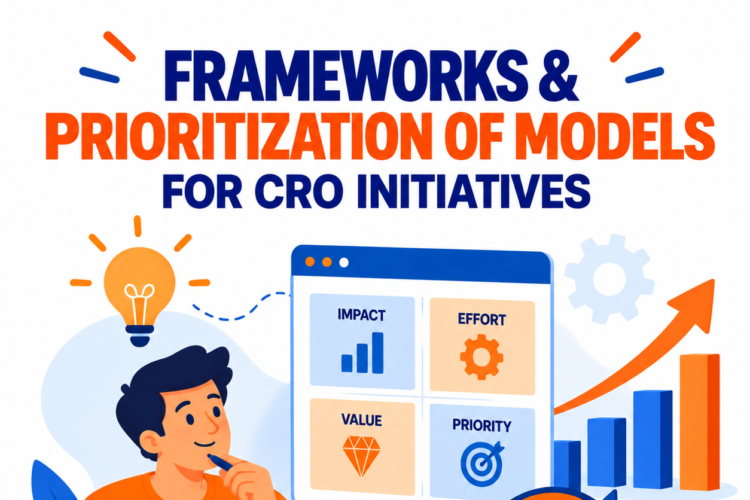
- Prioritize tests using ICE Score (Impact, Confidence, Ease).
- Start with high-traffic pages (homepage, product, checkout).
- Use A/B testing, multivariate testing, and bandit algorithms.
- Combine quantitative data (analytics) with qualitative insights (heatmaps, session recordings, surveys).
- Test one variable at a time initially, then scale to bolder changes.
Tools Stack for E-Commerce CRO
- Analytics: Google Analytics 4 + BigQuery
- Heatmaps & Recordings: Microsoft Clarity, Hotjar, FullStory
- Testing: VWO, Optimizely, Convert
- Personalization: Dynamic Yield, Klaviyo
- Checkout Optimization: Rebuy, CartHook, Bold Commerce
- Surveys: Qualaroo, Hotjar, Typeform
Measurement & Key Metrics Across the Funnel
- TOFU: Traffic quality (bounce rate, time on site).
- MOFU: Add-to-Cart Rate, Product Page Conversion Rate.
- BOFU: Cart Abandonment Rate, Checkout Completion Rate.
- Overall: Revenue per Visitor (RPV), Average Order Value (AOV), Customer Lifetime Value (CLV).
- Micro-Conversions: Email sign-ups, quiz completions, video plays.
Common E-Commerce Funnel Mistakes & How to Fix Them
- Too many distractions on product pages → Solution: Clean, focused design.
- Complicated checkout → Solution: Guest checkout + fewer fields.
- Weak mobile experience → Solution: Mobile-first design and testing.
- Lack of trust signals → Solution: Prominent reviews and guarantees.
- Ignoring post-purchase → Solution: Strong thank-you and retention flows.
90-Day Action Plan to Build & Optimize Your E-Commerce Funnel
Month 1: Map current funnel, install analytics & heatmaps, audit top pages.
Month 2: Optimize homepage, product pages, and checkout flow with A/B tests.
Month 3: Implement retention flows, advanced personalization, and scale winning elements.
Conclusion: CRO Is the Ultimate E-Commerce Growth Engine
A well-optimized e-commerce funnel is your most powerful asset. By applying CRO principles systematically across awareness, discovery, consideration, purchase, and retention, you can dramatically increase revenue without proportionally increasing traffic.
The difference between average and exceptional e-commerce businesses often comes down to funnel optimization. Start small, test relentlessly, listen to your data and users, and iterate continuously.
Your customers are ready to buy. Remove friction, build trust, deliver value at every stage, and watch your conversion rates — and revenue — compound over time.