Analyzing the customer funnel through the lens of Conversion Rate Optimization (CRO) is one of the most powerful ways to unlock sustainable growth for any online business. The customer funnel represents the journey a prospect takes from initial awareness to becoming a loyal, repeat customer. CRO-focused funnel analysis helps you identify exactly where visitors drop off, why they leave, and how to remove friction to improve conversion rates at every stage.
This exhaustive, highly detailed guide provides a complete playbook for analyzing and optimizing the customer funnel using CRO principles. It is packed with in-depth explanations, extensive bullet points, step-by-step frameworks, tools, metrics, qualitative and quantitative techniques, real-world examples, common pitfalls, advanced strategies, and actionable implementation plans.
1. Understanding the Customer Funnel in CRO Context
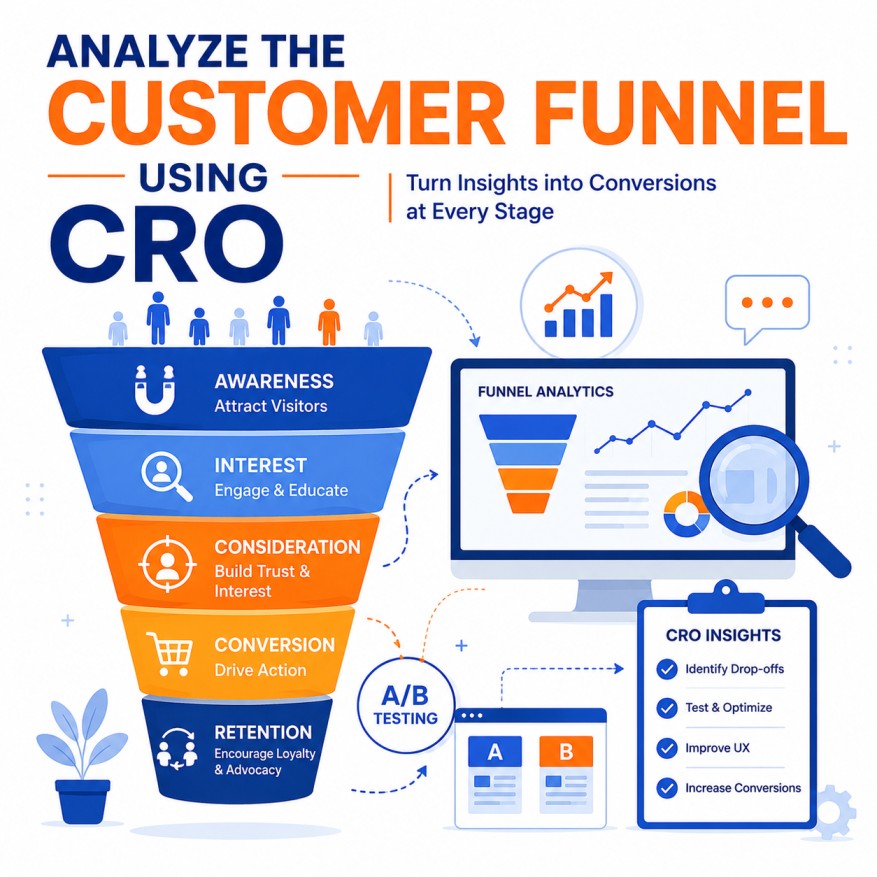
The customer funnel is a visual representation of the buyer’s journey. In CRO, we treat it as a diagnostic tool rather than a rigid linear path.
Classic Funnel Stages:
- Awareness (Top of Funnel – TOFU)
- Interest / Consideration
- Evaluation / Decision
- Purchase / Conversion
- Post-Purchase / Retention / Loyalty (Bottom of Funnel – BOFU)
CRO Perspective: Every stage has micro-conversions and friction points. The goal is to maximize the percentage of people who move from one stage to the next.
Why Funnel Analysis is Essential:
- Reveals hidden bottlenecks that overall conversion rate metrics hide.
- Allows prioritization of optimization efforts based on impact.
- Helps align marketing, product, and sales teams around customer experience.
- Drives both short-term wins and long-term customer lifetime value (CLV) growth.
2. Step-by-Step Guide to Customer Funnel Analysis Using CRO
Step 1: Map Your Current Funnel
- Document every touchpoint from first impression to repeat purchase.
- Include all channels (organic, paid, email, social, direct).
- Create visual funnel diagrams with drop-off rates at each stage.
Step 2: Set Up Comprehensive Tracking
- Implement Google Analytics 4 with enhanced e-commerce tracking.
- Use server-side tracking and Conversions API where possible.
- Set up event tracking for micro-conversions (add to cart, start checkout, form submissions).
- Integrate heatmaps, session recordings, and form analytics.
Step 3: Segment Your Data
- New vs Returning users.
- Traffic source (organic, paid search, social, email, direct).
- Device type (desktop, mobile, tablet).
- Geographic and demographic segments.
- Behavioral segments (high vs low engagement).
Step 4: Quantitative Analysis
- Calculate drop-off rates between each stage.
- Identify stages with the biggest absolute and percentage losses.
- Compare performance across segments and time periods.
- Calculate micro-conversion rates and overall funnel efficiency.
Step 5: Qualitative Analysis
- Review session recordings for user frustration or confusion.
- Analyze heatmaps for attention patterns and dead clicks.
- Read user surveys, support tickets, and exit-intent feedback.
- Conduct user testing and interviews.
Step 6: Identify Root Causes
- Technical issues (slow loading, broken elements).
- UX friction (confusing navigation, poor mobile experience).
- Messaging problems (weak value proposition, lack of trust).
- Offer-related barriers (pricing transparency, guarantees).
- Trust and social proof gaps.
Step 7: Prioritize and Hypothesize
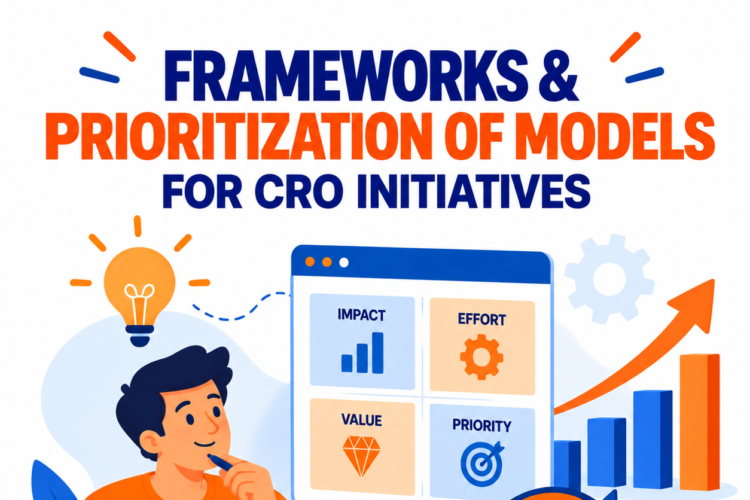
- Use frameworks like ICE (Impact, Confidence, Ease) or PIE (Potential, Importance, Ease).
- Create specific, testable hypotheses for each major leakage point.
Step 8: Test, Implement, and Measure
- Run A/B or multivariate tests on prioritized pages.
- Implement winning variations.
- Monitor long-term impact on overall funnel performance.
3. In-Depth Analysis by Funnel Stage
Awareness Stage (TOFU):
- Metrics: Impressions, Click-Through Rate (CTR), Landing Page Bounce Rate.
- Common Issues: Poor ad-to-landing page message match, slow loading, irrelevant traffic.
- Optimization Tactics: Strong hero sections, clear value propositions, fast load times, trust signals.
Interest / Consideration Stage:
- Metrics: Time on site, pages per session, scroll depth, product page views.
- Common Issues: Overwhelming navigation, lack of clear next steps, weak product presentation.
- Optimization Tactics: Smart filtering, personalized recommendations, compelling imagery, social proof.
Evaluation / Decision Stage:
- Metrics: Add-to-Cart Rate, Product Page Conversion Rate, Time on Product Page.
- Common Issues: Missing details, poor variant selection, lack of urgency or trust.
- Optimization Tactics: Detailed descriptions, comparison tables, reviews, scarcity elements.
Purchase / Checkout Stage:
- Metrics: Cart Abandonment Rate, Checkout Start Rate, Completion Rate.
- Common Issues: Complicated forms, surprise fees, lack of payment options.
- Optimization Tactics: Guest checkout, progress indicators, trust badges, one-page checkout where possible.
Post-Purchase / Retention Stage:
- Metrics: Repeat Purchase Rate, Customer Lifetime Value, Referral Rate.
- Common Issues: Poor onboarding, lack of follow-up, weak loyalty programs.
- Optimization Tactics: Thank-you pages with upsells, personalized post-purchase emails, loyalty programs.
4. Advanced Funnel Analysis Techniques
- Funnel Visualization Tools: Use GA4 funnel exploration or specialized tools like Mixpanel.
- Cohort Analysis: Track behavior of users acquired in the same period.
- Path Analysis: Understand common user journeys and drop-off points.
- RFM Analysis (Recency, Frequency, Monetary) for retention insights.
- Predictive Analytics: Use machine learning to forecast churn or next best action.
5. Tools and Technology Stack for Funnel Analysis
- Analytics: Google Analytics 4, Mixpanel, Amplitude.
- Behavioral: Microsoft Clarity, Hotjar, FullStory.
- A/B Testing: VWO, Optimizely.
- Funnel Visualization: GA4 Explorations, Heap.
- Attribution: Northbeam, Triple Whale (for e-commerce).
6. Common Funnel Leakage Points and CRO Fixes
- High homepage bounce → Improve hero section and navigation.
- Low add-to-cart → Enhance product pages with better imagery and trust signals.
- High cart abandonment → Simplify checkout and offer multiple payment options.
- Low repeat purchases → Strengthen post-purchase experience and loyalty programs.
7. Building a Continuous Funnel Analysis Culture
- Schedule regular funnel reviews (weekly for high-traffic sites).
- Create cross-functional CRO teams.
- Document insights and learnings in a shared knowledge base.
- Celebrate wins from funnel optimizations.
- Train teams on CRO principles and data literacy.
8. Future Trends in Customer Funnel Analysis
- AI-powered automated funnel diagnostics.
- Real-time behavioral segmentation and personalization.
- Greater integration of offline and online journey data.
- Privacy-compliant predictive modeling.
- Focus on emotional journey mapping alongside behavioral data.
9. 90-Day Action Plan to Master Customer Funnel Analysis
Month 1: Map your funnel, implement comprehensive tracking, and run initial heatmap and session recording analysis. Month 2: Deep-dive into quantitative and qualitative data, identify top 3 leakage points, and launch initial tests. Month 3: Implement winning changes, measure impact, and establish ongoing monitoring processes.
Conclusion: Turn Your Funnel into a Conversion Machine
Analyzing the customer funnel with a CRO mindset is one of the highest-leverage activities any business can undertake. By systematically identifying drop-offs, understanding user behavior, and removing friction at every stage, you can dramatically improve conversion rates and customer lifetime value.
The most successful companies treat their funnel as a living system — constantly measured, tested, and refined. Start today by mapping your current funnel and gathering behavioral data. The insights you uncover will guide you toward more efficient growth, better user experiences, and sustainable profitability.
Your customers want to buy from you. Remove the obstacles in their path, and they will. Master customer funnel analysis with CRO, and watch your business transform.
The framework is here. The opportunity is now. Begin your journey to a high-converting funnel today.