
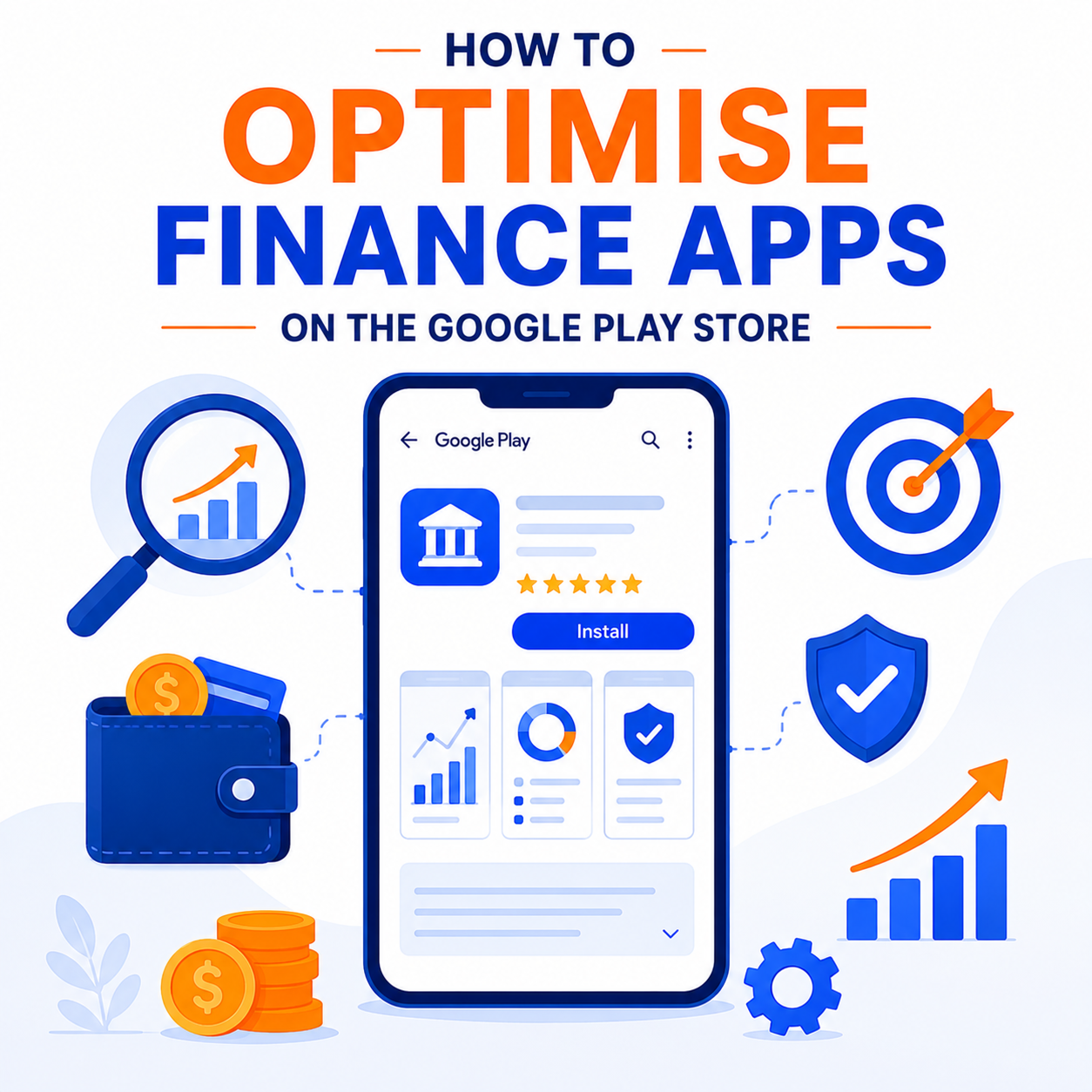
The Google Play Store is one of the most competitive marketplaces in the world, especially for Finance apps — including banking, investment, budgeting, crypto, lending, insurance, and personal finance management tools. With millions of apps available and users becoming increasingly selective about financial tools, simply launching an app is no longer enough. Success in 2026 demands a sophisticated, multi-layered optimization strategy that combines App Store Optimization (ASO), user acquisition, retention, compliance, security, performance marketing, and continuous data-driven iteration.
This exhaustive, in-depth guide covers everything you need to know to optimize a Finance app on Google Play. From foundational ASO techniques to advanced growth strategies, technical requirements, compliance considerations, monetization models, and future trends — this article serves as your complete playbook for achieving higher rankings, better conversion rates, sustainable user growth, and strong revenue performance.
1. Understanding the Finance App Landscape on Google Play in 2026
Finance apps represent one of the highest-value categories on Google Play due to high user lifetime value (LTV), strong monetization potential (subscriptions, transaction fees, premium features), and significant search volume. However, the category is extremely competitive and heavily regulated.
Key Trends in 2026:
- Rising demand for embedded finance, AI-powered personal finance, crypto & DeFi integrations, and sustainable/ESG investing tools.
- Users prioritize security, transparency, and simplicity.
- Google’s algorithm favors apps with strong engagement signals, retention rates, ratings, and compliance standards.
- Privacy regulations (GDPR, CCPA, India’s DPDP, etc.) and financial regulations (KYC, AML) heavily influence visibility and trust.
- Average Finance app conversion rates from install to active user are low (15–35%), making optimization critical.
2. Google Play’s Ranking Algorithm: What Matters Most
Google uses a complex mix of factors to rank apps:
- Performance Metrics: Install velocity, retention (Day 1, Day 7, Day 30), session depth, and churn rate.
- Engagement Signals: Ratings, reviews quality/quantity, uninstall rates.
- Relevance: Keyword optimization, category alignment, and user behavior matching.
- Technical Quality: Crash rate, ANR (Application Not Responding) rate, loading speed.
- User Satisfaction: High ratings (4.5+ stars) and positive review sentiment.
- Policy Compliance: Strict enforcement of financial services policies.
Finance-Specific Ranking Boosters:
- Strong security certifications (SOC 2, ISO 27001, PCI-DSS).
- High trust signals in the app listing.
- Consistent updates with new features and security patches.
- Positive editorial reviews or “Featured” placements.
3. App Store Optimization (ASO) for Finance Apps
a. Title Optimization
- Max 30 characters.
- Include primary keyword naturally (e.g., “Finance Tracker: Budget & Invest”).
- Brand name + key benefit works best for Finance apps.
b. Keyword Research
- Use tools like AppTweak, Sensor Tower, Mobile Action, or Google Play Console search suggestions.
- Target high-intent keywords: “budget planner”, “investment tracker”, “crypto wallet”, “personal finance app”, “stock market tracker”.
- Long-tail keywords convert better: “best budgeting app for beginners 2026”.
c. Short Description & Full Description
- Short Description (80 characters): Strong hook with main benefit.
- Full Description (up to 4,000 characters): Detailed, scannable, keyword-rich, benefit-focused.
- Use bullet points.
- Include features, security info, testimonials.
- Add relevant keywords naturally.
d. Visual Assets Optimization
- Icon: Clean, professional, trustworthy (blue/green colors often perform well in Finance).
- Screenshots: 8 screenshots maximum. First screenshot is critical — show core value immediately.
- Use annotated screenshots with clear text overlays.
- Showcase key flows: Dashboard, Budgeting, Investments, Security features.
- Feature Graphic: High-impact banner highlighting unique selling points.
- Video Trailer: 30–120 seconds. Highly recommended for Finance apps. Show real user journeys and security features.
e. Localization
- Localize title, description, screenshots, and keywords for top countries (US, India, Brazil, Indonesia, UK, Germany, etc.).
- Finance apps benefit hugely from localization due to currency, language, and regulatory differences.
4. Technical & Compliance Optimization
Finance apps face strict scrutiny:
- Security: Implement strong encryption, biometric login, two-factor authentication.
- Compliance: Follow Google’s Financial Services policy. Get necessary licenses and clearly state them.
- Privacy: Transparent privacy policy, minimal data collection, clear consent flows.
- Performance: Optimize for low-end devices (critical in emerging markets like India).
- App Size: Keep under 50MB if possible for better conversion.
Regular security audits and transparent changelog notes help build trust and improve rankings.
5. User Acquisition Strategies
Organic Growth:
- Strong ASO as the foundation.
- Content marketing (blogs, YouTube tutorials).
- Community building on Reddit, Bluesky, and LinkedIn.
- Influencer partnerships (finance creators and micro-influencers).
Paid User Acquisition:
- Google Ads (App campaigns, Performance Max, Search).
- Meta Ads and TikTok for awareness.
- Microsoft Ads for high-intent professional users.
- Apple Search Ads (for cross-promotion).
Creative Strategy: Focus on trust, simplicity, and results in all creatives.
6. Retention & Engagement Optimization
High retention is one of the strongest ranking signals:
- Onboarding: Simple, delightful first-time experience with progressive disclosure.
- Push Notifications & In-App Messages: Personalized, value-driven (not spammy).
- Email + SMS Flows: Integrate with Google Play for post-install nurturing.
- Gamification: Points, badges, streaks for budgeting or investing habits.
- Personalization: AI-driven insights and recommendations.
- Loyalty & Rewards: Cashback, premium features, referral programs.
Aim for >40% Day 30 retention for competitive Finance apps.
7. Monetization Models for Finance Apps
- Freemium: Core free + premium subscriptions.
- Subscription: Monthly/Yearly plans (most successful model in 2026).
- Transaction Fees: For payments, investments, or lending.
- In-App Purchases: One-time unlocks or advanced features.
- Partnership Revenue: Affiliate commissions from banks, brokers, or insurance providers.
Optimize pricing pages and subscription flows through rigorous A/B testing.
8. Analytics, Measurement & Iteration
Essential Tools:
- Google Play Console (vitals, statistics, ANR/crash reports)
- Firebase Analytics + BigQuery
- AppsFlyer or Adjust for attribution
- Mixpanel or Amplitude for behavioral analytics
- Hotjar or Microsoft Clarity for session replays
Key Metrics to Track:
- Install-to-activation rate
- Retention curves
- Revenue per user (ARPU)
- Churn rate
- Lifetime Value (LTV)
- Keyword ranking positions
- Conversion rate by traffic source
Set up weekly optimization reviews and monthly strategy audits.
9. Common Pitfalls & How to Avoid Them
- Over-optimizing for keywords at the expense of user experience.
- Ignoring security and compliance (leads to app suspension).
- Poor localization in high-potential markets.
- Weak onboarding leading to high early churn.
- Over-reliance on paid acquisition without strong organic base.
- Neglecting regular app updates and feature additions.
10. Case Study Patterns from Successful Finance Apps
Top-performing Finance apps in 2026 typically:
- Combine strong ASO with educational content marketing.
- Focus heavily on trust and security in listings.
- Use personalized, AI-powered experiences.
- Maintain high update frequency.
- Excel at both acquisition and long-term retention.
11. Future Trends for Finance Apps on Google Play (2026–2028)
- Deeper AI integration (conversational finance assistants).
- Embedded finance and open banking features.
- Web3 and decentralized finance (DeFi) elements.
- Greater emphasis on financial wellness and mental health integration.
- Voice and visual search optimization.
- Stricter regulatory compliance requirements.
Final Action Plan: Your 90-Day Optimization Roadmap
Days 1–30: Complete ASO overhaul (title, visuals, description, localization). Days 31–60: Improve technical performance, security, and onboarding. Days 61–90: Launch targeted user acquisition campaigns and retention flows. Ongoing: Weekly performance reviews and monthly deep optimizations.
Conclusion
Optimizing a Finance app on Google Play in 2026 requires a holistic approach that balances technical excellence, user trust, regulatory compliance, creative marketing, and data-driven iteration. The most successful apps treat optimization as a continuous process rather than a one-time launch activity.
Start today by auditing your current Google Play listing against the strategies in this guide. Focus first on ASO and technical quality, then scale user acquisition while protecting retention. With disciplined execution, your Finance app can achieve top rankings, sustainable growth, and strong profitability even in a highly competitive category.
The opportunity is massive — users are actively searching for better financial tools. Deliver a secure, valuable, and delightful experience, optimize relentlessly, and position your app for long-term success on the Google Play Store.

Author